
Phallaceae
Phallaceae
The Phallaceae family, commonly known as stinkhorns, represents a group of saprotrophic fungi that act as essential decomposers in terrestrial ecosystems.
What the section contains
Phallaceae
The primary representative is the Common Stinkhorn (Phallus impudicus). These fungi obtain their energy by breaking down organic matter, such as woody debris, leaf litter, and compost.
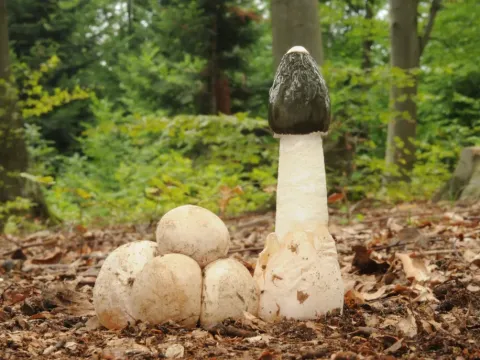
Their life cycle involves the formation of subterranean egg-like structures, from which the ephemeral, foul-smelling fruiting bodies emerge under favorable conditions.
These organisms are not plant pathogens. They do not infect live plant tissues; however, their presence indicates a high concentration of decaying organic matter in the soil.
The biological success of Phallaceae is linked to their efficient spore dispersal mechanism, which utilizes insects attracted to the putrid scent of the fungal gleba.
The most distinctive sign of a stinkhorn presence is a strong, nauseating odor similar to rotting flesh, which can be detected from a distance.
In the soil, white mycelial cords (rhizomorphs) can be found branching through decomposing organic material or mulched garden beds.
Fruiting bodies emerge suddenly, transitioning from a white, egg-like stage into a vertical, spongy stalk topped with a dark, slimy, spore-laden cap.
The presence of flies and other insects clustering around a dark, foul-smelling substance on the ground is a common indicator of mature fungi.
Gardeners may observe rapid decomposition of bark mulch or organic amendments, revealing the fungal activity beneath the surface.
Phallaceae fungi thrive in environments with high moisture levels and a steady supply of dead organic matter, such as old stumps or buried roots.
Shaded, protected areas with poor air circulation are ideal for their development, as these conditions prevent the rapid evaporation of soil moisture.
The application of uncomposted woody organic material or excessive mulching creates a nutrient-rich habitat that encourages spore germination.
Optimal temperatures for growth range between 15°C and 25°C, making them most active during warm, humid periods of the growing season.
Soil pH that is slightly acidic or neutral tends to favor the development of the fungal network over other soil organisms.
As saprotrophs, these fungi are not harmful to healthy, established plants and do not induce diseases in crops or garden ornamentals.
Indirect harm may occur if the mycelial mats become too dense, potentially competing with plant roots for nutrients or disrupting water infiltration.
The strong odors associated with the fungi are often considered a nuisance in residential landscapes and can attract unwanted insects to the vicinity.
The sudden appearance and rapid decay of the fruiting bodies can temporarily disrupt the aesthetic appearance of flowerbeds or pristine lawns.
Significant soil colonization by the mycelium might lead to temporary compaction, affecting the soil's structure and overall health of the immediate micro-environment.
Control measures should focus on habitat modification, starting with the removal of buried wood, rotting stumps, and other woody debris.
Avoiding the use of uncomposted organic matter and improving soil drainage are key strategies to discourage fungal colonisation.
Regular cultivation and aeration of the soil break the mycelial network and prevent the formation of mature fruiting bodies.
Increasing sunlight exposure through better plant spacing helps to lower humidity levels in the garden environment.
- Manually remove and dispose of fungal 'eggs' before they burst.
- Scrape away the top layer of infested soil and replace it with clean material.
- Manage irrigation carefully to prevent waterlogged conditions in garden beds.
- Apply lime if the soil is excessively acidic, creating a less hospitable environment.
- Practice proper composting to ensure that all organic amendments are fully broken down before application.