
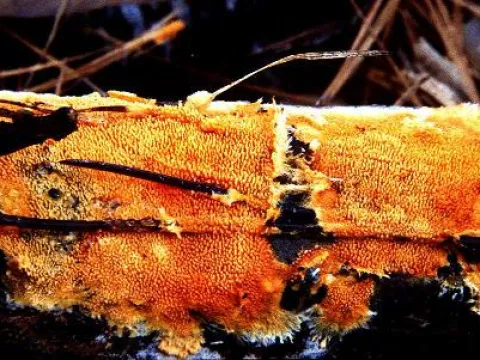
Phanerochaetaceae fungi
Phanerochaetaceae
Phanerochaetaceae is a family of basidiomycete fungi belonging to the order Polyporales. While many members of this family are harmless saprotrophs living on dead organic matter, some species act as significant pathogens, causing wood decay in living trees.
What the section contains
Phanerochaetaceae fungi
The disease initiates when fungal spores land on exposed wood, such as pruning wounds, storm-damaged branches, or sunscald lesions. Once established, the mycelium penetrates the xylem, where it produces extracellular enzymes to break down lignin and cellulose.
The life cycle of these fungi involves the production of fruiting bodies that can take various forms, including crust-like, membranous, or cushion-shaped structures on the bark. These fruiting bodies are the primary source of spore dispersal.
The infection type is generally categorized as white or brown rot, depending on the specific enzymatic activity of the fungus. This process compromises the structural integrity of the wood, leading to compromised nutrient transport.
Research into this family continues to evolve, as taxonomic classifications are frequently updated using molecular markers. From an agronomic perspective, these fungi are managed as opportunistic pathogens that thrive in neglected or stressed tree populations.
The most visible indicator of infection is the emergence of fungal fruiting bodies on the surface of the bark, particularly in bark crevices or near branch unions. These structures may appear as leathery or flattened patches of various colors.
Symptoms in the foliage include premature yellowing, wilting, and thinning of the canopy. Affected branches become brittle and are prone to breaking under normal wind loads, revealing inner decay when they snap.
Upon removing the bark at the site of infection, one can often observe white or yellow fungal mycelium. The underlying wood typically shows discoloration, becoming soft, spongy, and sometimes displaying distinct black zone lines, which are characteristic of wood-decay processes.
A hollow sound upon tapping the trunk is a strong indicator of advanced internal rot. This condition often results from the internal destruction of the heartwood, which renders the tree mechanically unstable and dangerous.
In the final stages, the tree exhibits a complete cessation of fruit production. Any remaining fruits are often undersized, deformed, and prone to rapid deterioration, making the entire harvest commercially non-viable.
Development of Phanerochaetaceae is heavily dependent on moisture levels. High relative humidity and persistent moisture within the wood tissues provide the necessary environment for spores to germinate and for mycelium to thrive.
Orchards with poor canopy ventilation and dense planting patterns are at a higher risk. Lack of airflow prevents bark from drying quickly after rainfall, creating prolonged periods of surface moisture that favor fungal establishment.
Mechanical injuries, including those from incorrect pruning, heavy machinery collisions, or environmental stress like frost cracks, serve as the primary entry points for these pathogens. Without timely sealing, these wounds remain susceptible for extended periods.
Trees weakened by poor soil quality, nutrient deficiencies, or secondary pest attacks are significantly more susceptible to infection. A healthy tree with a robust defense system is better equipped to compartmentalize and restrict the spread of wood-decay fungi.
Temperature plays a crucial role in the infection rate. Moderate temperatures during the growing season combined with high humidity accelerate the degradation of lignified tissues, making the progression of rot much faster in these conditions.
The primary harm caused by these fungi is the destruction of the tree's vascular system, which hinders the upward movement of water and nutrients. This physiological stress leads to general decline, reduced vigor, and eventual death of the affected parts.
Economic damage is substantial, as it often necessitates the removal of mature, productive trees. The loss of canopy and productive capacity significantly impacts the overall profitability of the orchard operation.
Infected trees act as reservoirs for further spread. Airborne spores can travel significant distances, spreading the infection to neighboring healthy trees and making containment difficult in dense orchard settings.
Fruit quality is severely impacted by the impairment of the host plant. Trees struggling with wood decay cannot support adequate carbohydrate levels, leading to poor fruit development, low sugar content, and a higher susceptibility to post-harvest disorders.
Mechanical hazards pose a significant risk to workers and machinery. Trees weakened by internal decay are unpredictable and may collapse during harvesting operations, causing potential damage to equipment and endangering staff on the site.
Proactive management focuses on sanitation and wound protection. All pruning should be performed using sharp, disinfected tools, and large wounds (over 2 cm) must be sealed immediately with professional-grade wound paint to prevent spore access.
Regular sanitation rounds are essential. Dead, diseased, or broken wood should be pruned and removed from the orchard promptly. It is critical to burn or remove infected materials rather than leaving them as debris on the orchard floor.
Maintaining proper tree health through balanced fertilization and appropriate irrigation helps trees resist opportunistic infections. Stronger trees can better compartmentalize wounds, effectively sealing off infected wood from healthy tissues.
When localized rot is detected early, surgical removal of the decayed wood may be attempted. The excision must reach healthy, intact wood, followed by the application of copper-based fungicides to inhibit further fungal activity.
Stump removal is highly recommended. Stumps left in the field are major sources of inoculum, where fungi can persist for years and potentially infect the root systems of adjacent healthy trees through contact.