
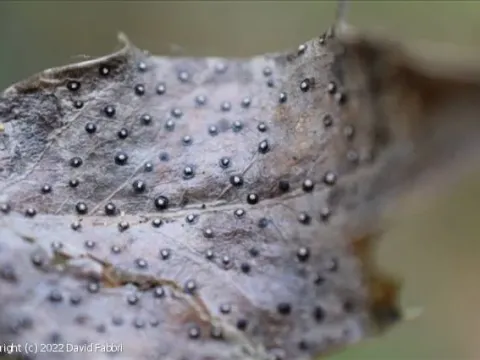
Phacidium lauri leaf spot
Phacidium lauri
The causative agent of this disease is the ascomycete fungus Phacidium lauri. It is a specialized pathogen that primarily targets Laurus nobilis (Bay Laurel) plants, colonizing both leaf tissues and young stems.
What the section contains
Phacidium lauri leaf spot
The fungus completes its life cycle by producing apothecia, small cup-shaped fruiting bodies, directly within the infected plant tissues. These structures release thousands of spores into the environment.
The pathogen is highly persistent, capable of overwintering in fallen leaves and decaying debris around the base of the plant, which serves as the primary inoculum source for the following season.
Infection occurs when spores land on susceptible plant surfaces. Upon germination, the fungal hyphae penetrate the cuticle, colonizing the plant tissue and gradually causing the characteristic necrotic spots.
The fungus is well-adapted to the growth cycle of laurel, making it a persistent issue in nurseries and landscapes where environmental conditions are favorable for fungal proliferation.
The most recognizable symptom of the disease is the appearance of small, irregular leaf spots. These spots often start as yellowish-brown lesions before turning dark brown or black.
A hallmark sign of Phacidium lauri is the presence of small, black, pinhead-sized fruiting bodies that emerge on the undersides of the leaves within the necrotic areas.
As the infection advances, the leaves lose their vibrant green color, become chlorotic, curl, and eventually drop prematurely from the branches, often leading to significant defoliation.
In cases of severe infestation, the disease spreads to the petioles and tender stems, causing dieback and stunting the overall growth of the laurel shrub or tree.
The presence of a thin, velvety fungal layer may also be observed on the leaf surface under conditions of high humidity, indicating active sporulation of the pathogen.
The development of Phacidium leaf spot is heavily dependent on moisture. Prolonged periods of high humidity and rainfall are the primary drivers of spore dispersal and germination.
Temperature plays a crucial role, with the fungus thriving in moderate climates. Temperatures between 15°C and 22°C (59°F–72°F) are optimal for the pathogen’s metabolic activity and colonization speed.
Poor aeration within the canopy is a major contributing factor. Dense foliage prevents leaves from drying quickly after rain, creating the exact microenvironment the fungus needs to survive and spread.
Plants weakened by poor soil drainage, lack of nutrients, or improper pruning are significantly more susceptible to successful infection compared to healthy, well-maintained specimens.
Overcrowded nursery conditions are especially problematic, as they facilitate rapid spread of spores from infected plants to neighboring healthy ones, often leading to widespread outbreaks.
The disease significantly impacts the aesthetic appeal of the plant, rendering it unsuitable for ornamental use in gardens and public landscapes.
Heavy defoliation strips the plant of its photosynthetic capacity, leading to a decline in vigor, slow growth, and reduced resilience against secondary environmental stresses.
In commercial operations, the damage is even more severe, as the cosmetic degradation of the leaves makes the bay laurel unusable for culinary or medicinal purposes.
If left untreated, the cumulative effect of the disease can weaken the entire plant to the point of permanent damage or death, particularly in young or stressed specimens.
Furthermore, an infected plant acts as a reservoir of spores that can endanger surrounding flora, necessitating strict quarantine and hygiene measures in professional horticultural settings.
Effective management begins with strict sanitation. Removing and destroying all fallen leaves and infected plant debris is essential to eliminate the primary sources of infection.
Pruning is a vital tool for control. By thinning the canopy, you improve air circulation, allowing leaves to dry out faster and reducing the humidity levels around the foliage.
Chemical control involving copper-based fungicides can be applied as a protective measure, especially during the spring season when young, susceptible growth is emerging.
- Avoid overhead irrigation to keep leaves dry.
- Apply balanced fertilization to support plant vigor.
- Implement regular pruning to increase air circulation.
- Use fungicides preventively during wet weather.
- Inspect new plants for symptoms before introducing them to the garden.
Always rotate fungicides with different modes of action if multiple applications are necessary, ensuring long-term effectiveness and preventing the development of resistant fungal strains.