
Phaeoacremonium dieback
Phaeoacremonium viticola
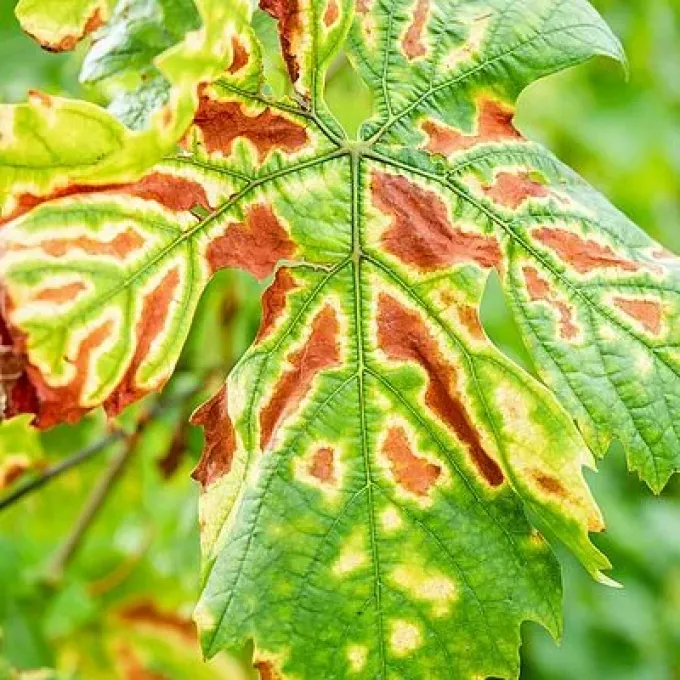
Description
Symptoms
Initial symptoms include chlorosis and stunted growth of the foliage. Leaves may appear smaller than normal and show interveinal necrosis, which indicates a disruption of nutrient transport.
During the growing season, affected vines display uneven maturation of shoots and significantly shortened internodes. The overall vigor of the plant is reduced compared to healthy neighbors.
A diagnostic sign can be seen in cross-sections of the trunk or cordons, where dark necrotic spots or streaks are present. These streaks correspond to the fungal colonization of the xylem vessels.
Apoplexy, or sudden wilting of entire shoots or branches, is common during periods of high temperature and water stress. This occurs because the blocked vessels can no longer supply enough water.
Chronic infection leads to bark cracking and the death of permanent arms. As the infection progresses, the entire vine may eventually collapse and become unproductive.
Pathogen
The causative agent of the disease is the fungus Phaeoacremonium viticola, which belongs to the complex of pathogens causing grapevine trunk diseases. It acts as a systemic pathogen that colonizes the vascular tissues of the vine.
The fungus penetrates the vine through various mechanical wounds, particularly those made during pruning. Once inside, the mycelium spreads slowly through the permanent woody parts of the vine.
The biological cycle of the pathogen is highly dependent on environmental moisture, which facilitates sporulation. Conidia are spread by wind-driven rain and pruning equipment during management activities.
The fungus has a notable ability to survive in wood debris and soil for long periods. This reservoir of inoculum makes it difficult to eradicate the disease once it is established in a vineyard.
As a vascular pathogen, it impairs the movement of water and nutrients, leading to progressive decline. Over several years, this process results in the eventual death of the affected plant parts.
Conditions for development
The primary condition for disease development is the presence of fresh wounds on the vine wood. Pruning, especially in humid and cool conditions, creates the perfect entry point for fungal spores.
Contaminated pruning tools are the main vectors for the spread of Phaeoacremonium viticola. Without regular disinfection, the tools carry the pathogen from infected vines to healthy ones.
Environmental stress, including drought or waterlogging, lowers the plant's resistance. Weakened vines are more susceptible to the colonization and spread of the fungal mycelium.
Dense planting schemes that reduce airflow promote a microclimate favorable for spore germination. High humidity levels in the canopy during the spring are particularly conducive to new infections.
Improper viticultural practices, such as excessive mechanical injury to the vine trunk during cultivation, increase the risk of disease. Maintaining vine health is critical for preventing infection.
Why it matters
Phaeoacremonium dieback causes significant economic losses by reducing the lifespan of a vineyard. The need for premature replanting significantly increases maintenance costs for growers.
Yield and quality are negatively impacted, as infected vines often produce underdeveloped clusters with poor sugar accumulation. This affects the overall quality of the wine produced.
The disease is difficult to manage because the fungus is protected within the woody tissue. Conventional spray programs are largely ineffective once the infection has become systemic.
Infected vines serve as a permanent source of inoculum, threatening healthy neighboring vines. This leads to the gradual degradation of the entire vineyard block over time.
The cumulative effect of vine loss and reduced harvest productivity makes this disease one of the most critical threats to modern sustainable viticulture.
Protection
The most important control measure is strict sanitation during pruning. All pruning tools must be disinfected frequently using appropriate chemical solutions to prevent the spread of spores.
Pruning wounds should be protected using antifungal pastes or paints immediately after cutting. This provides a physical and chemical barrier against fungal colonization.
Dead and heavily infected wood should be removed and destroyed by burning. Sanitation is essential to minimize the inoculum levels within the vineyard ecosystem.
Using certified, high-quality, disease-free nursery stock is the foundation for a healthy vineyard. Rigorous inspection of new plants is a vital preventative step for growers.
Good vineyard management practices, including balanced nutrition and correct irrigation, help maintain the vigor of the vines. Strong plants are better equipped to tolerate and resist infections.
Discussion
No discussions yet — be the first.