
Phacidium needle cast
Phacidium lacerum
Description
Symptoms
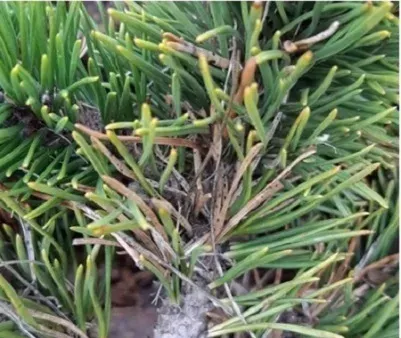
Symptoms become visible in early spring, right after the snow melts. The needles of affected trees turn a distinct reddish-brown color, creating a stark visual contrast against the healthy green foliage.
As the disease progresses, small, dark, circular or elongated fruiting bodies appear on the surface of the dead needles. These apothecia eventually rupture, revealing the fungal reproductive structures.
Premature needle cast is a hallmark symptom of this disease. Severe infections lead to extensive foliage loss, leaving branches bare and significantly reducing the tree's photosynthetic capacity.
In humid conditions, a fine white mycelial mat can be observed on the underside of the needles. This is a key diagnostic feature for identifying the presence of Phacidium lacerum in young plantations.
- Reddish-brown needle discoloration in spring.
- Presence of dark fruiting bodies (apothecia).
- Premature casting of infected needles.
- White mycelial growth on needle surfaces.
- General stunting and lack of vitality.
Pathogen
The disease is caused by the ascomycete fungus Phacidium lacerum. It is a specialized pathogen that primarily targets young pine trees in nurseries and young forest plantations, often causing significant damage.
The fungus develops apothecia, which are fruiting bodies formed beneath the epidermis of the needles. During the maturation process, these bodies rupture the plant tissue to release spores, facilitating the infection of new hosts.
This pathogen is highly adapted to cold environments and can survive through harsh winter conditions. It remains viable on fallen, infected needles, which act as the primary inoculum source for future infection cycles.
Spores are dispersed primarily by wind and rain splashes. Once they land on healthy needles, the mycelium penetrates the plant tissue, eventually leading to chlorosis and necrosis of the infected parts.
The biological cycle of Phacidium lacerum is closely linked to microclimatic conditions. High humidity and minimal airflow allow the fungus to colonize needles effectively, especially during the early spring thawing period.
Conditions for development
Dense planting configurations are a major factor promoting the spread of the disease. Poor air circulation maintains high relative humidity within the canopy, providing an ideal environment for the fungus to thrive.
Accumulated snow, especially when it remains for extended periods in late winter, creates a micro-environment beneath the snowpack where the fungus can grow without interference from other organisms.
Weakened trees, often growing on nutrient-poor or waterlogged soils, are more susceptible to infection. Environmental stressors reduce the plant's natural defense mechanisms, making it easier for the pathogen to colonize.
Failure to implement sanitation measures, such as removing debris, leads to an accumulation of fungal spores in the area. These spores can persist in the needle litter for several seasons, awaiting favorable conditions.
Temperature fluctuations during the transition from winter to spring often trigger the rapid development of the pathogen. Mild, wet weather during this period significantly accelerates the rate of infection.
Why it matters
The primary impact of Phacidium needle cast is the large-scale browning and shedding of needles, which leads to the weakening of young pine stock. In nursery settings, this can result in total loss of crop.
Infected trees suffer from reduced growth rates due to the loss of functional photosynthetic tissue. This stunts the development of young plantations and affects their long-term timber production value.
Persistent infection makes trees more vulnerable to secondary invaders, including bark beetles and other pathogenic fungi. A tree weakened by Phacidium is unlikely to survive additional environmental or biological stressors.
From a forestry management perspective, managing an outbreak of Phacidium needle cast incurs high costs for sanitary thinning, replanting, and the application of protective chemicals.
In ornamental landscaping, the visual damage caused by the fungus ruins the aesthetic appeal of the trees. The loss of foliage and the resulting misshapen crowns significantly reduce the value of the ornamental plantings.
Protection
Effective prevention starts with selecting suitable planting sites with good soil drainage. Avoiding low-lying, damp areas can significantly reduce the risk of humidity-related fungal outbreaks.
Strict sanitation practices, including the collection and destruction of fallen needles, are essential. Removing the reservoir of inoculum prevents the disease from recurring in subsequent years.
Chemical control using copper-based fungicides or systemic treatments can be effective if applied before the spores disperse. Monitoring the timing of treatments is crucial for optimal results.
Maintaining balanced soil nutrition helps strengthen the trees' natural resistance. Healthy, vigorous plants are much better equipped to fend off fungal attacks and survive minor infections.
Early monitoring of plantations is vital for identifying outbreaks. If the disease is detected, prompt isolation and removal of infected plants can prevent the spread of the fungus to healthier sectors of the plantation.
Discussion
No discussions yet — be the first.