
Phaeoacremonium
Phaeoacremonium
The disease is caused by fungi belonging to the genus Phaeoacremonium, with Phaeoacremonium minimum being the most recognized species involved in grapevine wood diseases.
What the section contains
Phaeoacremonium
These pathogens are vascular fungi that colonize the xylem of grapevines, progressively destroying the wood and disrupting the plant's ability to transport essential resources.
The fungus is a key component of the «Esca» disease complex, often working in synergy with other pathogens to cause rapid decline of the grapevine canopy.
Infection cycles involve the production of spores, which are released and dispersed by rain and wind, contaminating pruning wounds and spreading throughout the vineyard.
The pathogen can survive as saprophytic growth in dead wood, making it a persistent threat that remains present in the vineyard environment for many years.
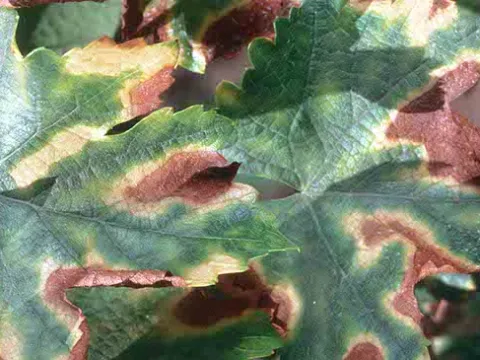
Symptoms often appear as interveinal chlorosis on leaves, eventually developing into necrotic spots that form a distinct mottled or "tiger-stripe" pattern.
Internal wood inspection typically reveals dark brown to black streaks, wood discoloration, and decay, which indicates a severe restriction in the plant's vascular flow.
The most dramatic symptom is "apoplexy," characterized by the sudden wilting and death of the entire vine during hot summer weather, often without prior warning signs.
Stunted growth, shortened internodes, and the production of weak, brittle canes are common indicators of established Phaeoacremonium infection within the trunk.
Fruit symptoms include small brown spots and uneven ripening, which significantly degrade the yield quality and make the clusters unsuitable for winemaking.
The primary route of infection is through pruning wounds, especially when pruning occurs during rainy weather, which favors the germination of fungal spores.
High temperatures during the growing season stress the vines, accelerating the development of symptoms in already infected plants that may have been asymptomatic.
Mechanical damage to the trunk and large pruning cuts left unprotected are critical factors that allow the fungus to enter the vascular system.
Inadequate sanitation in the vineyard, such as failing to remove infected wood or failing to clean pruning tools, significantly increases disease prevalence.
Vineyard sites with poor drainage or high humidity levels provide an environment that supports fungal activity and secondary spread of the pathogen.
The disease causes significant economic loss due to the gradual reduction in vine vigor and the premature death of productive vines in the plantation.
Once a vine is infected, there is no effective curative chemical treatment, leading to the necessity of vineyard renovation or expensive replacement of plants.
Yield losses are substantial, as infected vines produce less fruit and the berries suffer from poor sugar accumulation and off-flavors.
The cumulative effect of Phaeoacremonium reduces the lifespan of the vineyard, requiring earlier investment in replanting compared to healthy sites.
The silent nature of the initial infection makes it difficult to detect, causing the disease to become widespread throughout the orchard before management is applied.
The best control strategy is prevention: perform pruning during dry weather and apply pruning wound protectants immediately after cutting to seal the wood.
Implement strict vineyard sanitation by promptly removing and destroying infected vines and pruning debris to reduce the inoculum load in the area.
Use only healthy, certified nursery stock to prevent the introduction of Phaeoacremonium into new vineyard blocks, as the disease is often systemic.
Maintain plant health through balanced fertilization and proper irrigation to help the vines better withstand the stress caused by vascular pathogens.
- Sanitize all pruning tools using alcohol or bleach solutions between vines
- Apply biological fungicides containing Trichoderma to wounds
- Train staff to identify early symptoms for prompt removal of sick vines
- Avoid over-pruning older vines to minimize large wound surfaces