
Peltigerales
Peltigerales
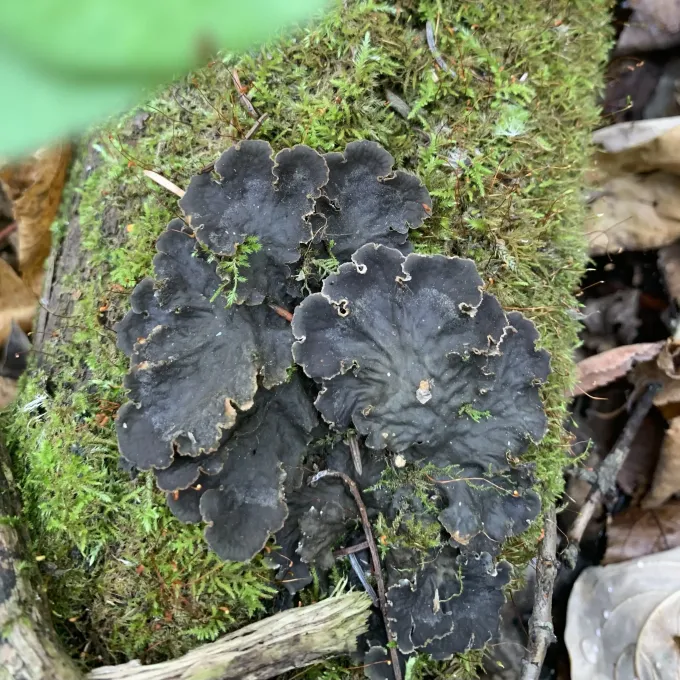
Description
Symptoms
The primary visual sign of Peltigerales is the development of large, leaf-like, or lobed thalli on tree trunks or soil surfaces.
These structures may appear grey, brown, or greenish, often having a leathery texture that changes based on humidity levels.
Unlike parasitic fungi, they do not cause leaf yellowing, tissue necrosis, branch wilt, or any systemic decline of the host plant.
The attachment to the bark is purely mechanical, and the underlying bark tissue typically remains healthy and intact throughout the colonization.
- Leathery, lobed thalli covering the bark.
- Variation in appearance based on moisture.
- Absence of rot or plant tissue damage.
Pathogen
Peltigerales is an order of fungi that functions as a lichen, living in a symbiotic relationship with green algae or cyanobacteria.
It is crucial to clarify that Peltigerales are not plant pathogens; they do not cause diseases, as they do not invade or parasitize plant tissues for nutrients.
These organisms are classified as epiphytes, meaning they use the surface of trees or soil simply as a substrate to grow and photosynthesize.
Their biological structure consists of a thallus that draws moisture and minerals from the air and dust rather than from the host plant's sap.
In agronomic terms, they are often considered harmless, serving more as environmental indicators of air purity than as threats to crop production.
Conditions for development
Peltigerales thrive in environments with consistently high humidity and moderate temperatures, which are essential for their metabolism.
They are frequently found in neglected, shaded areas of orchards where airflow is limited, preventing the bark from drying out.
A lack of regular orchard maintenance, such as pruning and canopy thinning, allows these lichens to establish themselves over time.
They are extremely sensitive to air quality, and their presence usually indicates that the local environment is free from significant pollution.
Long-term colonization occurs mostly on older, mature trees with stable, rough bark surfaces that have not been cleaned for many years.
Why it matters
There is no direct physiological harm to crops, as Peltigerales do not infect the plant or draw nutrients from its vascular system.
In some cases, dense lichen cover may slightly inhibit gas exchange on the bark, although this rarely impacts the overall vitality of the tree.
The main concern is that the dense mats can serve as a refuge for overwintering pests, such as scales or mite eggs, which are harmful to the crop.
In ornamental horticulture, their presence is often viewed as a negative aesthetic factor, signaling an unkempt or aging garden.
Ultimately, they should be treated as a sign that the tree is growing slowly or that the canopy is too dense, rather than a pathogen to be eradicated.
Protection
Mechanical removal is the safest and most effective way to clean tree bark, using soft brushes or plastic scrapers during the dormant season.
Applying traditional lime wash with copper-based additives helps neutralize the surface and prevents the re-establishment of lichen colonies.
Improving cultural practices, such as proper pruning, increases sunlight penetration and improves airflow, which makes the habitat unfavorable for them.
Copper-based fungicides used for disease control can also inadvertently inhibit lichen growth on the surface of branches and trunks.
Maintaining tree vigor through balanced fertilization and hydration is the best long-term strategy to ensure the tree remains healthy and competitive.
Discussion
No discussions yet — be the first.