
Peltula
Peltula
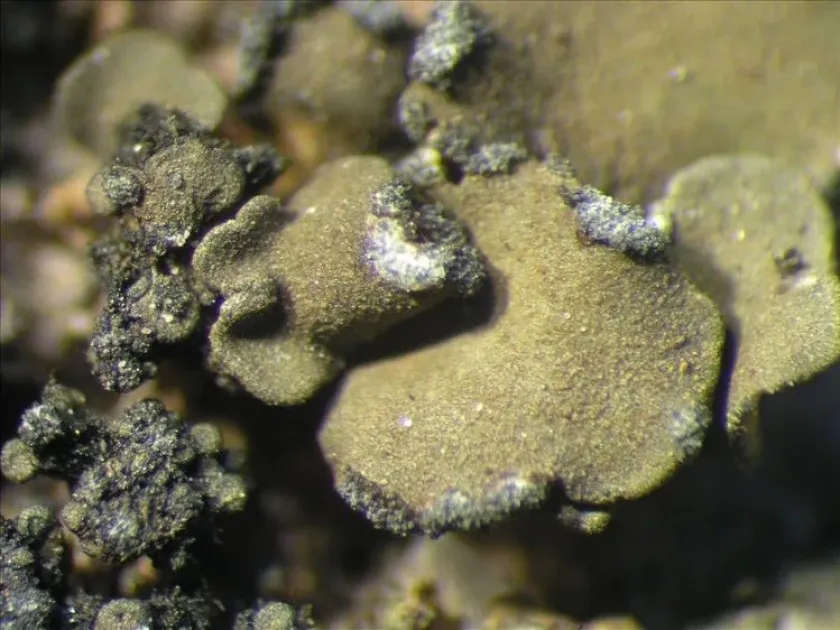
Description
Symptoms
Peltula lichens typically appear as small, leathery, squamulose, or crustose patches that adhere firmly to bark, soil, or rocky surfaces.
The coloration of the thallus is generally olive-green, brown, or grayish, often darkening significantly when saturated with water.
They are characterized by a morphology that allows them to withstand extreme fluctuations in moisture, becoming brittle when dry and pliable when wet.
Unlike fungal growths that might cause soft rot or localized tissue death, Peltula remains attached to the surface without damaging the underlying cambium or cork layers.
Colonies can form discrete patches that, if left undisturbed for years, may expand to cover significant portions of a tree trunk or branch.
Pathogen
Peltula is a genus of lichens, which are complex organisms formed by a symbiotic relationship between a fungus and a photosynthetic partner like algae or cyanobacteria.
These organisms are not pathogenic in the sense of attacking or infecting living plant tissue to extract nutrients, unlike fungi or bacteria.
In botanical and agronomic terms, Peltula is considered an epiphyte, using the plant as a physical anchor rather than a food source.
While they are common on trees, their presence is not a primary cause of disease, but rather an indicator of environmental conditions and tree health status.
Understanding the biology of Peltula helps distinguish it from true parasitic infections that require targeted fungicide treatments.
Conditions for development
The development of Peltula is favored by high relative humidity and moderate environmental temperatures, particularly in areas with good airflow.
They are sensitive indicators of air quality and are typically absent from highly polluted environments, thriving instead in clean, rural, or forested areas.
These lichens require long periods of stability, meaning they are rarely found on rapidly growing shoots or trees that are regularly maintained and pruned.
Dispersal occurs via spores or thallus fragments transported by wind, which colonize damp, rough surfaces where they can establish stable growth.
In gardens, they frequently appear on older, neglected fruit trees that have not been subjected to mechanical bark cleaning or chemical washing.
Why it matters
The direct harm caused by Peltula to the plant is minimal to nonexistent, as they do not consume the host's photosynthetic sugars or vascular sap.
However, dense mats of lichens can become micro-habitats for various insect pests, including scales and mites, which may hide under the lichen coverage.
Extensive colonization might interfere with the natural gas exchange of the bark, potentially causing stress to tree trunks that are already compromised.
From an aesthetic perspective, heavy lichen cover is often perceived as a sign of neglect, which may lower the perceived quality of a commercial orchard.
Ultimately, they are viewed more as a sign of tree senescence or lack of intensive maintenance rather than a direct threat to plant survival.
Protection
Mechanical removal using soft brushes during the dormant season is the safest and most effective method for controlling lichen on tree bark.
Whitewashing tree trunks with lime-based solutions creates an alkaline surface that prevents the settlement and growth of lichen spores.
Regular pruning and maintenance to encourage vigorous plant growth ensure that the bark remains clean and less susceptible to colonization by epiphytes.
General orchard hygiene, including the application of copper-based sprays during winter dormancy, can help manage populations of lichens and mosses effectively.
Monitoring for lichen expansion serves as a useful diagnostic tool to determine if a tree requires increased nitrogen fertilization or improved overall care.
Discussion
No discussions yet — be the first.