
Octavianiaceae
Octavianiaceae
Description
Symptoms
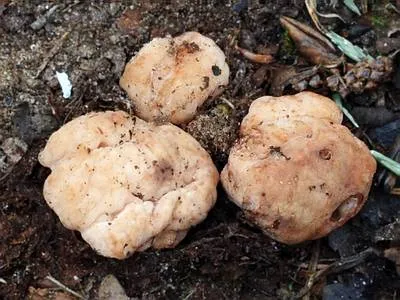
A sign of these fungi's presence is the discovery of spherical or irregularly shaped fruiting bodies in the topsoil layers.
Externally, they resemble tubers or small stones, often hidden under fallen leaves or a layer of humus.
Cross-sectioning a mature fruiting body reveals a complex, often marbled internal structure filled with a mass of spores.
The color of the internal part (gleba) varies from whitish to ochre or brown depending on the maturation stage.
Another characteristic feature is a specific odor, which can range from musky to a faint earthy mushroom scent.
Pathogen
The Octavianiaceae family belongs to the Boletales order, which includes a group of fungi with a gasteroid type of fruiting bodies.
Biologically, these organisms act as saprotrophs or mycorrhizal symbionts that develop within leaf litter or soil environments.
The primary genus within this taxonomic group is Octaviana, characterized by a subterranean lifestyle.
From an agronomic perspective, these fungi are not plant pathogens but act as beneficial components of the soil biota.
They form specialized spore structures known as the gleba, protected by a dense outer layer (peridium) until the spores reach maturity.
Conditions for development
The development of Octavianiaceae fungi is directly dependent on the presence of organic matter in the soil and moisture levels in forest or woodland ecosystems.
Optimal conditions for their growth include high soil moisture and the presence of symbiotic connections with tree species.
Temperature must remain moderate, as these fungi do not tolerate severe freezing or prolonged drought conditions well.
Spore dispersal is carried out primarily by small soil animals and insects that feed on the mature fruiting bodies.
In agricultural zones, their presence correlates with proximity to shelterbelts where the necessary microclimate is maintained.
Why it matters
Members of the Octavianiaceae family do not cause direct damage to agricultural crops and are not classified as phytopathogens.
Their presence in fields does not require protective measures, as they do not attack root systems or above-ground plant parts.
They do not cause rots, wilts, or spots typical of true diseases affecting crops and plantations.
There is no economic loss associated with them; conversely, they may contribute to soil structure improvement through organic matter decomposition.
They should not be confused with root parasites, as their ecological niche consists of symbiosis and processing dead organic residues.
Protection
Protection or control measures against these fungi are unnecessary as they are a natural part of forest ecosystems.
The application of fungicides against them is impractical and economically unjustifiable, as they pose no threat to the harvest.
Preventive measures to eradicate fungi of this family should not be taken, so as not to disrupt the balance of soil microflora.
Maintaining the health of an agroecosystem involves preserving biodiversity, where such fungi play a positive role.
Any chemical control attempts could negatively affect beneficial mycorrhizal fungi that assist in the growth of woody plants.
Discussion
No discussions yet — be the first.