
Octospora
Octospora
Description
Symptoms
Infection typically begins with subtle changes in the moss color, often leading to yellowing or browning as the infected cells lose their chlorophyll and structural integrity.
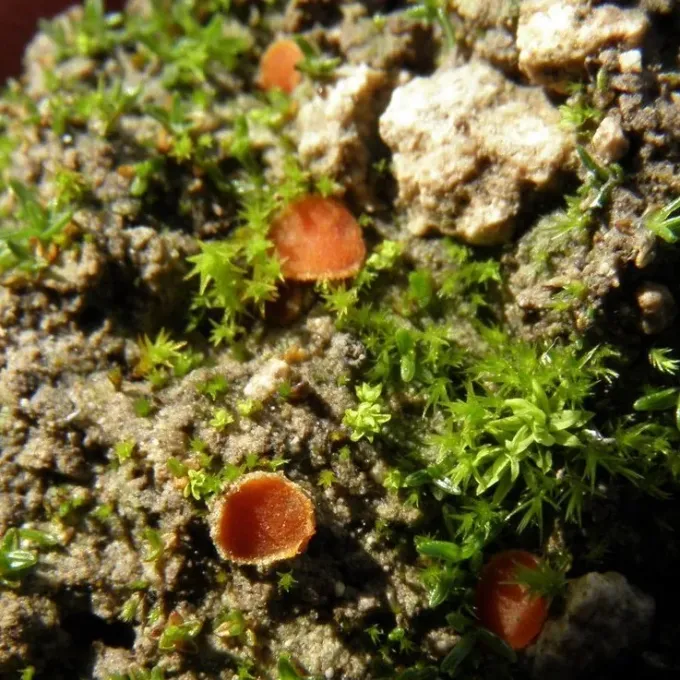
The most visible sign of an Octospora outbreak is the sudden appearance of small, cup-shaped apothecia emerging directly from the stems or leaves of the moss colony.
As the infection progresses, the moss shows clear signs of stunted growth, loss of turgor, and a general decline in the density of the moss carpet.
In later stages of the disease, necrotic patches appear where the moss tissue dies off completely, leading to bare spots in the decorative covering.
Early identification through periodic visual inspections is crucial, as the small size of the fruiting bodies can make them easy to overlook in the initial stages of infection.
Pathogen
The genus Octospora consists of ascomycetous fungi that are highly specialized parasites of bryophytes. Unlike many common pathogens, these fungi live in a close biological association with their moss hosts.
These fungi belong to the order Pezizales. They are characterized by the production of distinctive fruiting bodies known as apothecia, which appear as small, often brightly colored cups or discs on the moss surface.
The fungus interacts with the host using haustoria, specialized structures that penetrate the cells of the moss to extract nutrients, ultimately compromising the plant's health.
Reproduction is primarily achieved through spores released from the apothecia. These spores are dispersed by water splashes or air currents, allowing the pathogen to colonize new areas within its habitat.
Studying Octospora is essential for professionals in botany and horticulture to understand how these organisms affect the diversity and health of moss populations in managed environments.
Conditions for development
High relative humidity is the most critical environmental factor for the development of Octospora. The fungus thrives in damp, shaded environments with minimal airflow.
Moderate temperatures, often seen during cool and rainy seasons, provide the optimal conditions for the fungus to complete its life cycle and produce visible apothecia.
Standing water on the moss surface acts as a medium for spore germination, making over-watered garden areas or humid greenhouse environments particularly susceptible.
Lack of proper ventilation is a major contributor to the spread of the fungus, as it allows humidity levels to remain high around the base of the moss plants.
The presence of dense moss colonies provides an ideal substrate for the fungus to spread rapidly from plant to plant through proximity and moisture films.
Why it matters
The primary harm caused by Octospora is the aesthetic degradation of moss gardens, terrariums, and specialized moss cultivation areas used in landscaping.
Severe infections can lead to the total loss of moss colonies, which is particularly problematic when cultivating rare or sensitive bryophyte species.
By killing the moss, the fungus exposes the underlying soil, which can change the micro-habitat and encourage the growth of invasive weeds or other unwanted organisms.
The pathogen disrupts the local microflora and can create decay, which may negatively influence the health of other ornamental plants sharing the same space.
Persistent infestations serve as a clear indicator of suboptimal horticultural conditions, necessitating urgent changes to irrigation and climate control practices.
Protection
The most effective management strategy is to optimize the moisture levels. Reducing watering frequency and improving soil drainage can prevent the accumulation of excess water.
Increasing air circulation by fans or thinning out dense plantings helps to lower humidity levels, creating an environment that is less favorable to fungal growth.
Physical removal of infected moss sections, along with a small portion of the surrounding substrate, is a recommended method to limit the spread of the fungus.
While some fungicides might be effective, they must be used with caution, as bryophytes are often sensitive to the chemical components found in standard agricultural treatments.
Good sanitation practices, including disinfecting gardening tools after use, are essential to prevent the cross-contamination of spores between different moss colonies.
Discussion
No discussions yet — be the first.