
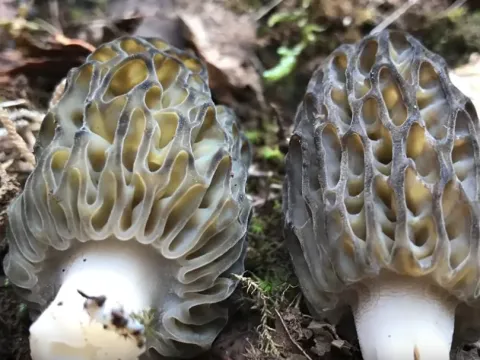
Threeteeth morel
Morchella tridentina
It is critical to clarify that Morchella tridentina (the threeteeth morel) is not a plant pathogen or a disease agent. It is a well-known edible mushroom belonging to the Morchellaceae family.
What the section contains
Threeteeth morel
This species is considered a saprotroph or a facultative mycorrhizal fungus that lives in symbiosis with various types of trees without harming them. It does not possess the mechanisms required to infect, colonize, or damage living plant tissues.
Classifying this fungus as a plant disease is a common misconception based on its sudden appearance in gardens during the spring. It is completely distinct from the pathogenic fungi that cause blights, wilts, or rusts.
The mushroom does not secrete phytotoxins or enzymes capable of degrading plant cell walls in living organisms, meaning your crops are perfectly safe from it.
In the agricultural ecosystem, this fungus functions as a decomposer, assisting in the breakdown of organic matter in the soil rather than acting as a parasite.
The only sign of its presence is the development of its fruiting bodies in the spring. These have a characteristic conical, honeycomb-like cap that is easily recognizable.
These mushrooms typically emerge in areas with rich, moist soil, particularly where leaf litter or wood mulch is present. This is a sign of good soil health rather than an infection.
Plants growing in the immediate vicinity of these mushrooms typically appear perfectly healthy and show no symptoms of stress or pathogen colonization.
You should not confuse the fruiting bodies of this mushroom with symptoms of plant diseases, such as fungal rots, which are usually accompanied by tissue decay and lesions on the host.
The presence of this fungus is often fleeting, appearing only for a few weeks before the environmental conditions become too dry or hot for its growth.
The growth of Morchella tridentina is strictly governed by environmental conditions, requiring cool, moist spring weather with temperatures ranging from 10 to 15 degrees Celsius.
These fungi thrive in well-drained, nutrient-rich soils that have high levels of decomposing organic material, such as decaying wood or plant detritus.
They are frequently found in sites that have been recently disturbed or in areas where organic matter has been allowed to accumulate over several seasons.
The lifecycle is highly dependent on humidity levels and the presence of stable, cool thermal conditions in the early spring season.
No specific management is required regarding its conditions of development, as it does not disrupt the health or physiology of surrounding vegetation.
Threeteeth morel causes absolutely no harm to agricultural or ornamental crops. It is not listed as a pest or disease in any agronomic databases.
It does not compete with plants for water or nutrients in a way that would inhibit crop development or reduce total harvest yields.
On the contrary, the presence of saprotrophic fungi often indicates a biologically active soil environment, which is highly beneficial for nutrient cycling.
There is zero risk of this mushroom spreading from the soil to the leaves, stems, or fruits of your cultivated plants.
Gardeners and farmers should consider this organism a natural component of the soil ecosystem rather than a threat to their production systems.
As this is not a plant disease, there is no need for control measures, and fungicides should never be used to combat this fungus.
Using chemical fungicides can unnecessarily disturb the beneficial microbial balance of your soil, which is far more important for plant health than the elimination of a harmless mushroom.
If you find the appearance of the mushrooms aesthetically undesirable, they can be manually removed by cutting the fruiting bodies at the soil surface.
No preventative measures are needed, as the organism poses no risk to your plants and contributes to the natural fertility of the growing environment.
Focus your plant protection efforts on true threats and pathogens rather than the harmless components of the natural fungal diversity in your garden.