
Quince Monilinia
Monilinia cydoniae
The first symptoms of the disease appear in spring on young leaves and blossoms, which suddenly wilt, turn brown, and dry out, looking as if they have been scorched.
What the section contains
Quince Monilinia
Lesions appear on young shoots, leading to deformation and eventual dieback, often accompanied by the emergence of fungal spores on the affected areas.
During the flowering period, the infection attacks blossoms, causing them to blacken and fall off, which leads to a significant loss of potential fruit set.
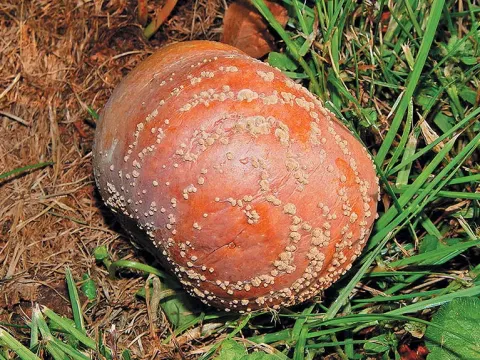
On the fruits, the disease manifests as brown spots that rapidly expand, eventually covering the entire surface and softening the internal tissues.
In the final stage, greyish or yellowish tufts form on the fruit surface, representing masses of spores ready to be spread by wind or rain to healthy trees.
The causative agent of the disease is the ascomycete fungus Monilinia cydoniae, which is a specialized pathogen mainly infecting the common quince.
The fungus overwinters as mycelium in infected twigs, dried mummified fruits remaining on the tree, and in plant debris on the ground.
In spring, under favorable moist conditions, the fungus releases spores that infect open blossoms or young leaves through natural openings or tissue wounds.
The spread of the pathogen is facilitated by wind, splashing rain, and visiting insects, which effectively transport spores across the orchard.
The pathogen's high survival capability allows it to persist in an orchard environment for years if consistent control measures are neglected.
Optimal conditions for infection development include cool and rainy spring weather, particularly during foggy periods throughout the quince blooming cycle.
High relative humidity is the key factor promoting rapid spore germination and the colonization of healthy plant tissues by the fungal hyphae.
Dense tree canopies with poor air circulation create an ideal microclimate for the accumulation of infectious material and the spread of the fungus.
Retaining mummified fruits from previous seasons provides a continuous source of new inoculum at the beginning of every growing season.
Mechanical damage to the bark or fruit, caused by insects, birds, or hail, creates entry points that significantly increase the susceptibility of the tree.
The primary damage is the destruction of reproductive organs, leading to a catastrophic reduction in yield or total crop failure in affected blocks.
Consistent infection of young shoots drains the tree's energy, weakening its overall immunity and making it more vulnerable to other stresses or winter cold.
Affected fruits lose all commercial value, rotting rapidly and becoming unsuitable for fresh market consumption or long-term storage.
In commercial orchards, the disease causes significant financial losses due to crop waste and the increased necessity for chemical interventions.
If left unchecked, the disease can become chronic, leading to the progressive dieback of entire branches and the long-term decline of the quince orchard.
Sanitary pruning is essential: removing all infected branches, along with a portion of healthy wood, is necessary to halt the progression of the fungus.
Collecting and destroying all rotten or mummified fruits, both from the tree and the orchard floor, is critical for reducing the infection source.
Applying copper-based fungicides before bud break helps to significantly suppress the infection pressure during the early spring period.
During the growing season, additional applications of systemic fungicides, especially during rainy weather, are needed to protect blossoms and young fruits.
Maintaining good orchard hygiene, proper canopy management, and effective pest control are fundamental to preventing the spread of the disease.