
Microcalicium
Microcalicium
Microcalicium is a genus of fungi classified within the class Leotiomycetes. In a biological context, these fungi are known as lichenicolous, meaning they live in association with, or as parasites on, lichens.
What the section contains
Microcalicium
They are not considered pathogens of agricultural crops. Their life cycle is strictly limited to inhabiting lichens that colonize the bark of trees in forest or woodland environments.
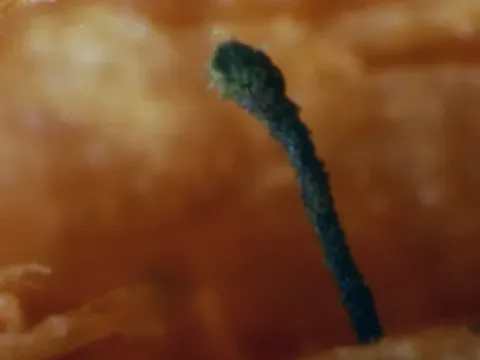
The fungi produce minute, stalked apothecia, which are the primary reproductive structures used for species identification by mycologists in laboratory settings.
Spore dispersal is facilitated by wind currents, allowing the fungus to find and colonize new lichen hosts in undisturbed natural environments.
As biological entities, they serve as specialized components of the ecosystem, interacting specifically with their lichen hosts without affecting the host trees themselves.
The primary symptom of Microcalicium presence is the appearance of tiny, black, pin-head-sized fruiting bodies emerging from the surface of lichen thalli.
Affected lichens often exhibit signs of necrosis or gradual disintegration, leading to patches of discoloration and eventual death of the lichen colony.
Because the fruiting bodies are extremely small (often less than 1 mm), they are difficult to observe without magnification or specialized field equipment.
There are no visible signs on the tree bark itself, as the fungal activity remains restricted to the epiphyte layer and does not penetrate into the cambium or wood.
- Black, club-shaped or pin-like apothecia.
- Degradation and whitening of the lichen host.
- Localized patches on bark surfaces covered by lichens.
The development of Microcalicium is highly dependent on environmental humidity, requiring a moist microclimate for successful spore germination and colony growth.
A stable host population is the most critical condition for its prevalence. Without the presence of suitable lichens, the fungus cannot complete its life cycle.
Shaded, old-growth forests with minimal temperature fluctuations provide the most favorable conditions for these fungi to thrive and reproduce.
Prolonged wet seasons or high-humidity periods are ideal for the development of fungal structures, increasing their visibility and frequency of occurrence.
Changes in air quality can affect lichen communities, which indirectly impacts the population density of Microcalicium species in a given area.
Microcalicium poses no harm to agricultural production, fruit trees, or ornamental plants. It does not possess the mechanisms required to infect higher plants.
The ecological impact is limited to the reduction of specific lichen species, which can affect the overall biodiversity of the forest ecosystem.
There is no economic damage caused by this genus, as it does not degrade timber quality or reduce tree vigor in any commercial forestry scenario.
The fungus is ecologically neutral in terms of crop protection, making it irrelevant to the standard practices of integrated pest management.
It remains a purely scientific subject of interest, primarily studied within the field of mycology and lichenology rather than commercial phytopathology.
No control measures are necessary for Microcalicium. As it does not threaten crops or trees, any intervention would be considered unnecessary and ecologically unsound.
Prevention is not a priority for land management because the organism does not interfere with forest health or production activities.
In conservation studies, the goal is to document the presence of such fungi rather than to eliminate them, as they are part of the natural fungal diversity.
The use of fungicides or other chemicals to suppress lichenicolous fungi is strictly discouraged, as it can cause unintended damage to the local ecosystem.
Focusing on general habitat health and preserving old-growth conditions is sufficient to maintain the natural balance between these fungi and their lichen hosts.