
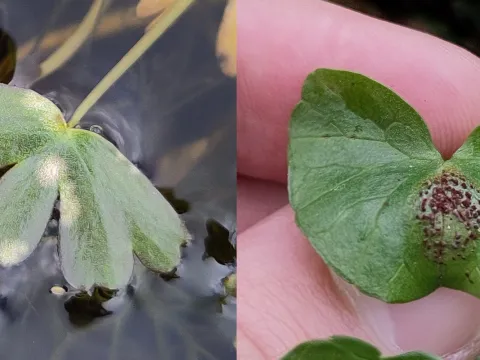
Microbotryomycetes smut
Microbotryomycetes
The primary symptom of the infection is the replacement of the plant's reproductive organs with a mass of fungal teliospores. As the disease progresses, flower heads or anthers turn into characteristic dusty pustules filled with spore powder.
What the section contains
Microbotryomycetes smut
The color of the spore mass usually ranges from dark brown to black, making the affected plant parts easily visible against healthy tissues. Deformation of infected organs and premature drying are common manifestations.
In some cases, the infection leads to sex reversal in flowers, such as the development of anthers in female flowers of dioecious plants. The plant often appears stunted and loses its ability to flower or fruit normally.
Infected shoots frequently develop abnormal shapes, and stems may become twisted or shortened. It is easiest to detect the disease visually during the heading or flowering stages of the agricultural crop.
In the final stages, tissues break down completely, releasing vast quantities of spores that are spread by wind, insects, or rain to neighboring healthy plants.
The pathogens causing this disease are basidiomycetes from the order Microbotryales, belonging to the class Microbotryomycetes. These are highly specialized parasites that primarily affect vascular plants, including grasses.
Fungi of this class are characterized by complex life cycles, often involving host alternation or specific resting stages in the soil. They exhibit significant biological activity within host tissues.
The pathogen invades the plant through meristematic tissues, spreading systemically throughout the intercellular spaces. The mycelium absorbs nutrients from the host, leading to overall plant exhaustion.
The metabolic characteristics of Microbotryomycetes allow them to effectively manipulate the hormonal balance of the host plant. This ensures optimal conditions for sporulation within specific floral organs.
Reproduction occurs through the formation of teliospores, which remain viable under adverse environmental conditions for extended periods of time.
Disease development is directly linked to meteorological factors, particularly humidity and temperature during critical growth stages. Excessive moisture during flowering promotes mass infection.
The temperature optimum for spore germination varies, but most species prefer moderately warm weather with frequent precipitation. Favorable conditions allow spores to germinate and penetrate tissues rapidly.
The presence of free moisture on plant surfaces is a critical condition for disease spread. Dew, fog, and rain facilitate the transfer of spores from infected individuals to healthy ones.
Agronomic factors also play a role, as dense stands create a specific microclimate with high humidity within the crop canopy. This accelerates the epiphytotic spread of the fungus.
The primary source of infection is usually the soil, where spores persist, or contaminated seeds collected during the harvest process.
The main damage consists of a complete loss of marketable grain or seeds in affected plant areas. Since the pathogen targets reproductive organs, yield decreases in proportion to the number of infected stems.
Beyond direct yield loss, there is a reduction in product quality, which may become toxic due to fungal metabolites. Using such grain for food or feed is hazardous.
Infected plants become weakened and more susceptible to secondary infections or unfavorable environmental factors, leading to a breakdown in the plant's physiological balance.
Economic losses include costs for additional control measures, the culling of seed stock, and the necessity for crop rotation to sanitize infested fields.
The dispersal of spores across fields complicates disease control, as the pathogen has a high capacity for rapid spread over large areas under favorable weather conditions.
The foundation of protection is the use of resistant varieties and hybrids, which possess genetic mechanisms to prevent pathogen penetration. This is the most effective and eco-friendly control method.
Pre-sowing seed treatment with systemic fungicides plays a vital role in preventing primary seedling infection. Seed dressing helps protect the plant during early growth stages.
Adhering to crop rotation cycles helps significantly reduce the soil's infectious background by excluding susceptible hosts for several consecutive years.
Agronomic measures include deep incorporation of crop residues, timely destruction of weeds—which may act as infection reservoirs—and choosing optimal sowing dates to avoid critical infection windows.
During the growing season, if the disease risk is high, fungicide spraying is applied. Using formulations based on modern active ingredients allows for effective blockage of mycelial development.