
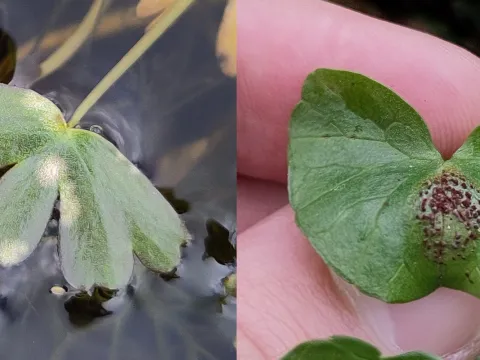
Microbotryaceae smut fungi
Microbotryaceae
The causative agents of this disease are fungi from the Microbotryaceae family, which belong to the basidiomycetes. The most famous representative of the group is Microbotryum violaceum, which causes anther smut in members of the Caryophyllaceae family.
What the section contains
Microbotryaceae smut fungi
These fungi are obligate parasites. Their life cycle is closely linked to the development of the host plant, with the mycelium often infecting the generative organs of the plant, infiltrating meristematic tissues.
A distinctive feature of the pathogen is its ability to infect plants through the stigmas of the pistils. The fungus mimics pollen, spreading with the help of pollinating insects, which allows it to efficiently colonize new individuals in the population.
During the maturation of spores, the fungus transforms the plant's anther tissues into a mass of teliospores. These spores have a characteristic dark color, which gave the group the name "smut" due to their resemblance to soot.
Microbotryaceae fungi are highly specialized. Each species of fungus is usually limited to a narrow range of host plants, which requires careful identification of the pathogen to select a management strategy.
The main sign of the infection is a change in the color of the anthers, which become purple, brown, or black due to spore accumulation instead of the typical yellow or white color for the species.
In infected plants, a change in sexual dimorphism is often observed. For example, in dioecious species, the fungus can induce the development of stamens in female flowers, turning them into hermaphrodites or functionally male individuals.
Externally, the plant may look stunted. Disruption of normal flowering, deformation of buds, and premature opening under the influence of the fungal mycelium are often observed.
Under microscopic examination of the spores, their characteristic wall ornamentation is noticeable, which serves as a diagnostic criterion for determining the specific species of fungus within the family.
Infected flowers often stop producing nectar or change its composition, which affects the behavior of pollinating insects, facilitating the transfer of spores to healthy plants.
The development of the disease is closely correlated with the plant flowering period. Humid and warm weather at this time promotes spore germination and successful entry into the pistil styles.
The spread of spores in field conditions occurs mainly through the active participation of insects. The higher the population density of pollinators, the faster the infection spreads across the crops.
Dense plantings and the presence of weeds create a favorable microclimate for the survival of infectious propagules in the soil and on plant debris, increasing the risk of re-infection.
The pathogen is capable of maintaining viability for a long time, surviving adverse conditions in the form of dormant spores that are resistant to temperature fluctuations.
The level of crop infection increases significantly when crop rotation is violated and susceptible crops are returned to the same area in less than 3–4 years.
The main damage consists of the complete or partial sterilization of the infected plants. Since the fungus replaces the anther tissues, the production of viable pollen becomes impossible.
On a field or population scale, this leads to a sharp decrease in seed productivity. Plants fail to produce a full crop of seeds, which undermines the reproductive potential of the crop.
Indirect harm is manifested by a reduction in the overall vigor of the plants. Infected specimens become more susceptible to other diseases and adverse environmental factors.
Disruption of pollination and metabolic processes in flowers negatively affects the ornamental quality of floral crops, making them unsuitable for commercial sale or breeding programs.
Economic losses in agriculture from mass smut outbreaks can reach critical levels, requiring the destruction of entire plots of agricultural crops.
The primary control measure is the use of healthy, certified seed material free from fungal spores. Seed treatment with systemic fungicides significantly reduces the risk of primary infection.
Strict adherence to crop rotation is necessary, including crops that are not hosts for specific Microbotryaceae species to break the infection cycle.
Agronomic practices, such as deep autumn plowing, help bury plant debris where fungal spores may survive, accelerating their decomposition.
When infection outbreaks are detected, it is recommended to conduct thorough weeding and removal of infected plants, followed by their destruction away from the field.
Application of fungicides during the budding and early flowering stage helps prevent infection through the stigmas, although this method requires precise timing of treatments for maximum efficiency.