
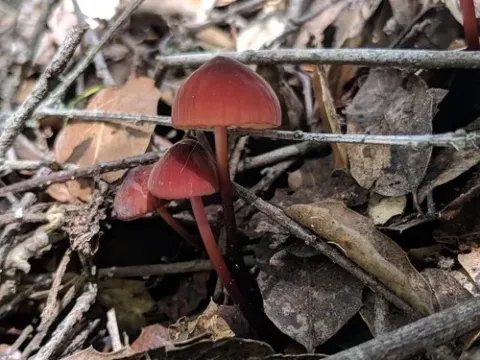
Marasmius plicatulus
Marasmius plicatulus
The causal agent is the fungus Marasmius plicatulus, a member of the Marasmiaceae family. While primarily a saprotroph living on organic matter, it can exhibit pathogenic behavior, infecting vulnerable or weakened plant tissues.
What the section contains
Marasmius plicatulus
The mycelium of the fungus persists in the soil and on crop residues. It is capable of forming dormant structures that allow it to survive long periods of environmental stress, making it a persistent threat in agricultural fields.
Morphologically, the fungus produces small, plicate (folded) caps during moist conditions. Spore dispersal is facilitated primarily by wind and splashing water, allowing it to spread across fields effectively during the growing season.
The fungus produces extracellular enzymes that degrade plant cell wall components. This enzymatic activity allows the pathogen to penetrate host tissues and establish a nutrient-absorbing network within the plant’s roots or stems.
It often acts as a secondary pathogen, taking advantage of plants already stressed by nutrient deficiencies, pest damage, or other infections, thus exacerbating the overall decline of the crop stand.
Initial symptoms are often observed at the stem base, where the fungus causes localized rotting. Tissues may appear softened, discolored, and covered with thin, mycelial strands that signal the presence of the pathogen.
As the infection progresses, systemic symptoms such as wilting and leaf yellowing become apparent. These changes typically start in the lower foliage and work their way up as the root system becomes increasingly compromised.
Inspection of the root system often reveals root browning and decay. The presence of white or grayish fungal threads surrounding the root zone is a common diagnostic indicator of severe infestation.
In high-humidity conditions, small, delicate fruiting bodies (mushrooms) may emerge from the soil or the base of the plant. These act as significant sources of airborne spores, increasing the risk of secondary infections.
Internal examination of infected stems often shows dark vascular streaks. This indicates that the fungus has moved into the plant's conductive tissues, disrupting the transport of water and essential nutrients.
The primary driver for the development of Marasmius plicatulus is persistent soil and air moisture. Extended periods of rainfall and cloudy, humid weather are ideal for spore germination and rapid mycelial spread.
High planting densities create a microclimate characterized by reduced air circulation and high humidity at the soil level. These conditions significantly favor the establishment of the fungus in the lower canopy.
Accumulated plant debris left on the soil surface serves as a primary reservoir for the pathogen. Failure to incorporate crop residues into the soil provides a steady food source for the fungus to persist from one season to the next.
Temperature plays a crucial role in the lifecycle of the pathogen, with moderate warmth combined with high humidity stimulating the formation of reproductive structures and increasing the rate of infection.
Physical injuries to the root system, often caused by tillage tools or soil-borne pests, create entry points for the fungus. This makes wounded plants significantly more susceptible to colonization compared to intact ones.
The economic impact of this disease is reflected in reduced biomass and yield loss. In cases of severe infestation, the death of young plants can lead to significant thinning of the crop, forcing replanting efforts.
By interfering with root function, the pathogen induces physiological drought. Even with sufficient soil moisture, infected plants cannot effectively absorb water, leading to wilting and reduced vigor during critical growth stages.
Produce from infected areas may suffer from poor quality, affecting marketability. The persistent nature of the fungus in the soil makes it a long-term problem for growers managing specific field plots.
Infected crops are also more prone to opportunistic pests, creating a complex disease-pest interaction that makes management significantly more expensive and labor-intensive for the farmer.
Cumulative damage across multiple seasons can lead to severe soil degradation in terms of microbial balance, making it difficult to maintain healthy crops without intense agronomic intervention.
A robust crop rotation strategy is the cornerstone of managing Marasmius plicatulus. Alternating susceptible crops with non-host plants helps starve the fungus and reduces the overall inoculum level in the soil.
Deep plowing to bury crop residues is highly effective. By incorporating debris into deeper soil layers, the pathogen is deprived of the surface environment required for its active growth and spore formation.
Systemic fungicides, when applied preventively during periods of high humidity, can curb the development of the pathogen. These treatments are essential in fields with a known history of the disease.
- Ensuring adequate row spacing to improve ventilation.
- Removing and destroying infected plant debris.
- Applying biological control agents, such as Trichoderma species, to suppress fungal growth.
- Avoiding excessive nitrogen fertilization that promotes lush, succulent growth susceptible to fungi.
Balanced fertilization strengthens plant cell walls and enhances natural resistance, making it harder for the pathogen to penetrate host tissues. Healthy plants are far more resilient against sporadic fungal attacks.