
March mushroom
Hygrophorus marzuolus
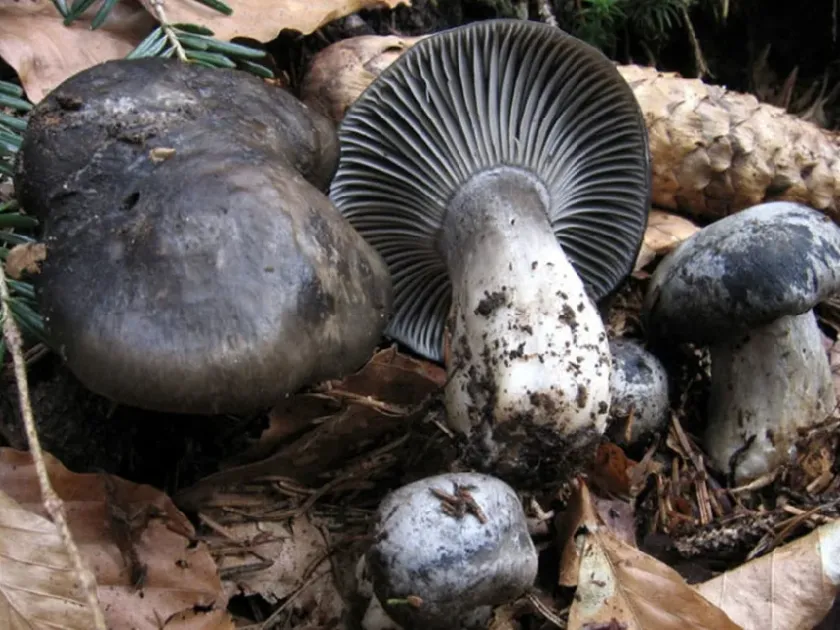
Description
Pathogen
It is crucial to clarify that the March mushroom (scientific name: Hygrophorus marzuolus) is not a plant disease, a pathogen, or a threat to agricultural crops.
This organism is a species of edible fungus in the family Hygrophoraceae and serves as a natural component of forest ecosystems.
The fungus maintains a mycorrhizal relationship with various tree species, acting as a beneficial symbiont rather than a parasitic agent.
It does not produce toxins that could harm plant tissues, nor does it act as an infectious agent that compromises crop health.
In any agronomic context, classifying Hygrophorus marzuolus as a disease-causing agent is a scientific error that does not align with its actual biological role.
Conditions for development
The growth of the March mushroom is fundamentally linked to the presence of coniferous or deciduous trees, specifically those that support ectomycorrhizal associations.
Optimal environmental conditions occur in early spring, when the snow melts and the soil temperature begins to rise in forest-adjacent areas.
The fungus thrives in soils rich in organic matter and leaf litter, which provide the necessary nutrients for the development of the fungal mycelium.
It prefers shaded, moderately humid habitats where the microclimate remains stable enough to protect the delicate fungal network.
Unlike true plant pathogens, this fungus does not spread through windborne spores to healthy crops and does not form infections in cultivated fields.
Why it matters
The March mushroom causes absolutely no harm to plants and is not categorized as a threat in agricultural or silvicultural literature.
Its biological activities, such as nutrient exchange with tree roots, actually contribute to the overall vitality of the forest environment.
There are no recorded instances of crop yield loss, plant necrosis, or physiological stress associated with the presence of this fungus.
Confusion between this symbiotic fungus and parasitic mold often leads to unnecessary concern, but the two are biologically distinct.
As a mycorrhizal fungus, its impact on the soil environment is positive, promoting better nutrient availability and uptake for local vegetation.
Protection
Since the March mushroom is not a disease, there are no control measures, chemical treatments, or eradication strategies required for this species.
The use of fungicides to eliminate mycorrhizal fungi like Hygrophorus marzuolus is strongly discouraged as it damages soil microbial life.
Agricultural professionals should focus on accurate identification to avoid unnecessary expenses and ecological disruption caused by treating a beneficial organism as a pest.
No preventive measures are necessary, as the presence of this fungus is an indicator of a healthy, non-depleted soil ecosystem.
The recommended approach for land management is to preserve the natural biodiversity, as the March mushroom plays a constructive role in the soil structure.
Discussion
No discussions yet — be the first.