
Marasmius siccus
Marasmius siccus
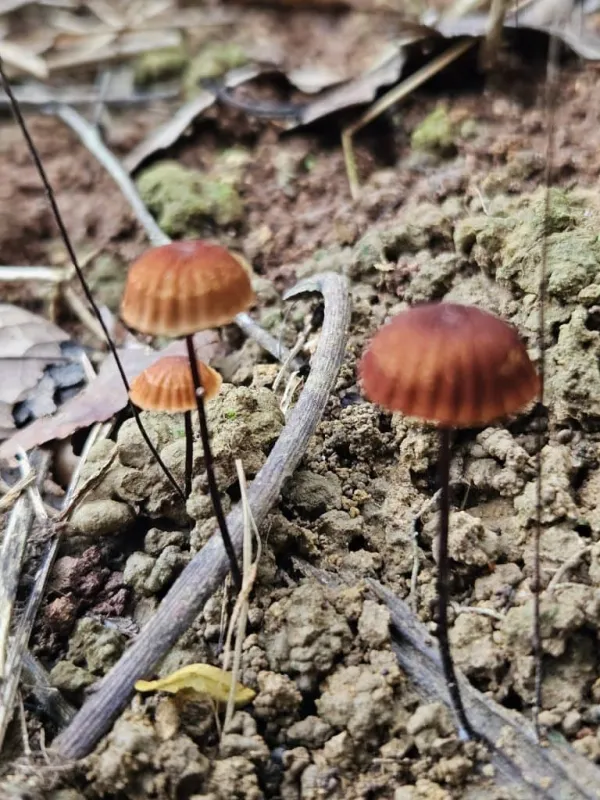
Description
Symptoms
Symptoms often manifest as localized yellowing or chlorosis of the foliage. This is typically followed by wilting, even when soil moisture appears adequate, indicating impaired water transport within the plant.
At the base of the stem or root collar, dark necrotic lesions may develop. In high humidity, a fine, thread-like white mycelium may become visible on the surface, serving as a distinct diagnostic feature of the infection.
Root systems of infected plants often show signs of decay, appearing brittle or discolored. Severe infections lead to the total collapse of the plant due to the structural damage to the vascular root tissues.
Under persistent wet conditions, small, delicate fruiting bodies of Marasmius siccus may emerge from the infected plant tissues near the soil line. This is a definitive confirmation of the presence of the fungus.
Uniformly stunted growth and poor crop vigor within specific patches of a field are common signs of an underlying pathogen presence, necessitating prompt field inspection and laboratory analysis.
Pathogen
Marasmius siccus is a saprotrophic fungus within the Marasmiaceae family. While primarily recognized as a decomposer of organic matter, under specific agricultural conditions, it can display pathogenic behavior, impacting the health of various plant species.
Belonging to the class Agaricomycetes, the fungus is highly adaptive. It utilizes complex enzymatic pathways to break down cellulose and lignin, which can lead to the colonization of living plant tissues when the host is stressed or weakened.
The pathogen spreads through the production of spores and the expansion of its mycelial network. In moist environments, this mycelium can permeate the root system and vascular tissues of susceptible host plants.
Persistence is a key survival strategy for this fungus. It can remain dormant in soil or on crop residues for extended periods, waiting for favorable conditions to reactivate and complete its life cycle.
Understanding its biological nature as a facultative parasite is crucial for effective management. It does not always kill its host, but it significantly hinders metabolic processes required for optimal plant development.
Conditions for development
High humidity and consistent moisture are the primary drivers for the development of Marasmius siccus. The fungus thrives in microclimates where water drainage is poor and surface humidity remains high.
Temperature plays a significant role, with moderate ranges between 15°C and 22°C facilitating optimal mycelial expansion. These mild temperatures allow the fungus to colonize host tissues rapidly.
Overcrowded planting environments significantly increase infection risk. Restricted airflow prevents the drying of the soil surface and plant bases, creating ideal conditions for spore germination and colonization.
Fields with significant crop debris accumulation are more prone to outbreaks. Unincorporated plant material provides a continuous food source for the fungus to multiply and spread to healthy plants.
Poorly drained soil or soil with high organic content that remains saturated for extended periods promotes the survival of the fungus and increases the frequency of infection events.
Why it matters
The economic impact of this fungus is primarily due to reduced plant stand density. Large patches of infected plants die prematurely, leading to significant yield losses in commercial agricultural settings.
Infected crops that do not die outright often suffer from reduced quality. The physiological strain caused by the infection decreases the nutritional value and marketability of the harvested product.
The pathogen can persist in the soil for several years, imposing limitations on future crop rotations. This forces farmers to avoid planting susceptible species, which can disrupt established production plans.
Management costs increase substantially when dealing with an outbreak. The need for specialized fungicide applications and increased field labor adds to the total cost of production, reducing profitability.
Indirect losses include the degradation of soil health where the fungus has become established, potentially affecting the long-term productivity of the land if management practices are not adjusted.
Protection
Implementing a strict crop rotation schedule is the most effective long-term strategy. Rotating away from susceptible hosts for at least three seasons helps deplete the fungal spore bank in the soil.
Thorough soil preparation, including deep plowing and proper residue management, is essential. Burying plant debris speeds up decomposition and disrupts the fungal lifecycle by depriving it of a substrate.
Optimizing plant spacing to ensure adequate aeration is critical. Good canopy ventilation keeps the soil surface drier and significantly reduces the probability of Marasmius siccus establishing itself.
When necessary, chemical control using broad-spectrum fungicides can manage active outbreaks. Application should be timed with the first appearance of symptoms to maximize effectiveness.
- Monitor fields regularly for signs of wilting or mycelial growth.
- Use certified disease-free seeds and planting material.
- Ensure balanced nutrition to strengthen plant natural resistance mechanisms.
Discussion
No discussions yet — be the first.