
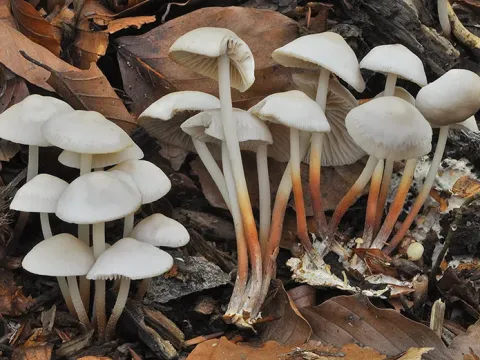
Marasmius wynnei
Marasmius wynnei
Marasmius wynnei is a species of saprotrophic fungus belonging to the Marasmiaceae family. It is not a phytopathogen that attacks living plant tissues; instead, it plays a vital ecological role in breaking down organic matter.
What the section contains
Marasmius wynnei
Biologically, this fungus acts as a decomposer, feeding on dead organic material. In an agricultural or horticultural context, its presence typically indicates high soil moisture and a significant accumulation of undecomposed plant debris.
The mycelium of this fungus actively colonizes fallen leaves, small twigs, and woody fragments. By secreting specialized enzymes, it breaks down cellulose and lignin, gradually converting surface litter into humus.
Unlike parasitic fungi, Marasmius wynnei does not form haustoria to feed on living host cells. Its entire life cycle is strictly dependent on the saprotrophic intake of nutrients from the substrate it occupies.
While this fungus does not harm crops, its dense growth is sometimes mistaken for root rot symptoms. It is crucial to correctly identify the species to avoid unnecessary and ineffective chemical treatments in the garden.
The primary factor for the development of Marasmius wynnei is high humidity in the soil and leaf litter. It thrives in shaded areas where moisture is retained for extended periods and direct sunlight does not dry out the substrate.
Optimal temperatures for mycelial growth range from 15 to 22 degrees Celsius. In temperate regions, active fruiting occurs during the summer and autumn months, particularly following periods of heavy or consistent rainfall.
The fungus prefers acidic to neutral soils rich in organic matter. It is often found in gardens with dense plantings where air circulation is poor and deep layers of mulch have accumulated without undergoing efficient decomposition.
Abundant woody debris, such as wood chips or fine branches, serves as an ideal nutritional source. Its presence is a clear indicator that humification processes on the site are taking place under conditions of excessive soil moisture.
Compacted soil and lack of regular cultivation create the micro-climatic conditions necessary for the fungus to establish large colonies. It rarely develops on dry, exposed, or well-ventilated areas where moisture levels drop rapidly.
Specific control measures against this fungus are generally unnecessary as it does not pose a direct threat to cultivated plants. However, if excessive mycelium accumulation occurs, standard agronomic practices can be employed.
The first step is to improve the site's water management. Enhancing soil drainage helps to reduce overall moisture levels, making the environment less favorable for the growth and spread of saprotrophic fungal colonies.
Regular sanitation of the site is recommended, including the collection of excess plant debris and the proper composting of fallen leaves. Reducing the volume of accumulated organic matter directly limits the food source for the mycelium.
Ensuring proper aeration in the root zone through regular soil loosening prevents moisture stagnation. This practice also encourages the activity of beneficial soil bacteria that compete with the fungus for organic resources.
Using fungicides to manage this fungus is considered economically unjustifiable and environmentally inappropriate. Instead, gardeners should focus on improving site hygiene and managing moisture levels to prevent the conditions that encourage fungal growth.