
Mal secco
Plenodomus tracheiphilus
The causal agent of mal secco is the fungus Plenodomus tracheiphilus. This pathogen is highly specific to citrus species, with lemons being particularly susceptible to its devastating effects.
What the section contains
Mal secco
The fungus is a vascular pathogen that invades the xylem tissues. Once inside, it colonizes the water-conducting vessels and releases toxic metabolites that hinder the movement of water and nutrients.
The mycelium grows within the host tissue, leading to a systemic infection. Over time, the fungus blocks the vessels completely, which inevitably results in the wilting and death of the affected plant part.
The disease survives in infected woody tissues. Under humid conditions, it produces pycnidia — specialized fruiting bodies that release conidia, which are the primary spores for spreading the infection.
Dissemination is largely facilitated by rain splash, wind, and contaminated pruning tools. Movement of infected wood or nursery stock is the main cause of long-distance outbreaks.
Initial symptoms often start with chlorosis (yellowing) of the leaves at the tips of shoots. This yellowing progresses rapidly, often leading to total defoliation of the branch.
The characteristic wilting pattern is why the disease is named "mal secco," meaning "dry disease." The dieback moves from the terminal twigs down towards the main branches and the trunk.
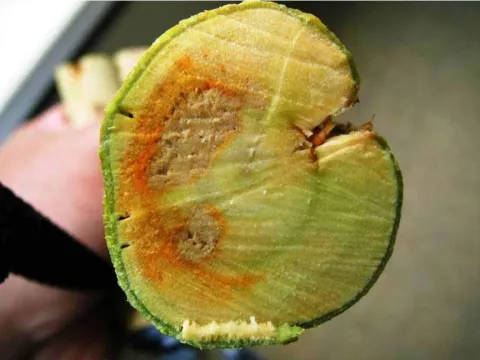
If you remove the bark from an affected branch, the wood underneath often shows a distinct salmon-pink or reddish-brown discoloration, which is a classic sign of vascular infection.
In many cases, the disease affects only one side of the canopy initially, giving the tree a lopsided, sickly appearance. This uneven dieback is a strong indicator of the pathogen's presence.
As the infection becomes systemic, the root system also deteriorates. Once the root system is severely damaged, the entire tree will collapse and die within a relatively short period.
The optimal temperature range for Plenodomus tracheiphilus activity is 15–25°C. This climate makes spring and autumn the most critical periods for infection in many citrus-growing regions.
High relative humidity and rainfall are essential for the germination of spores. Moist conditions allow the pathogen to move easily from the surface of the plant into open wounds.
Mechanical damage is a key factor in infection. Wounds caused by hail, heavy wind, or poor pruning practices provide direct entry points for the fungal spores to colonize the tree.
Stressed trees, particularly those suffering from malnutrition or pest infestations, are significantly more susceptible to infection compared to healthy, well-maintained trees.
Poor orchard management, such as lack of ventilation in the canopy or excessive moisture around the base of the trees, can create an environment conducive to the rapid spread of the fungus.
Mal secco is arguably the most destructive disease affecting lemon production globally. It has forced the abandonment of many traditional citrus-growing regions due to total tree loss.
The financial impact is severe, as the disease is difficult to eradicate once it is established in an orchard. Entire plantations can be rendered unproductive in just a few years.
The hidden nature of the infection means that by the time visible dieback occurs, the vascular system is already extensively damaged, making remedial chemical treatment very challenging.
Quarantine regulations associated with mal secco severely restrict the movement of citrus nursery stock. This significantly complicates the international trade of citrus plants and materials.
The loss of mature, productive trees creates a long-term deficit in production, as replanting with resistant varieties requires significant time before the new trees reach commercial maturity.
The primary control strategy is the use of genetically resistant rootstocks and scion varieties. This remains the most effective long-term solution for managing the disease.
Sanitation is crucial. All dead or dying branches must be pruned promptly and burned immediately. Pruning should only be performed during dry weather to prevent spore transmission.
Disinfection of all pruning tools using alcohol or quaternary ammonium solutions is mandatory after each individual tree to prevent the spread of the fungus throughout the orchard.
Copper-based fungicides are widely used to create a chemical barrier on the bark and pruning wounds, which helps to prevent the pathogen from entering the tree during risky weather conditions.
- Regular orchard inspections for early signs of leaf yellowing.
- Avoidance of mechanical injuries to the bark during cultivation.
- Balanced fertilization to maintain strong, vigorous trees that resist infection.