
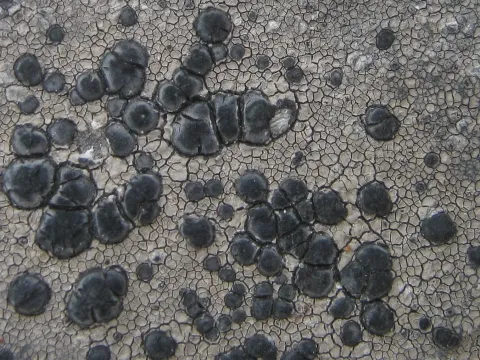
Lecidea fuscoatra
Lecidea fuscoatra
Lecidea fuscoatra is not a plant pathogen or a disease-causing organism in agriculture or horticulture.
What the section contains
Lecidea fuscoatra
It is a biological species of lichen belonging to the Lecideaceae family, existing as a mutualistic association.
This organism does not parasitize plant tissues, as it relies on atmospheric sources rather than plant fluids for nutrition.
The lichen functions as an epiphyte, using the bark or rock surfaces merely as a substrate for attachment.
In terms of plant protection science, it is considered a harmless component of the local ecosystem rather than an infection risk.
The presence of Lecidea fuscoatra is identified by crust-like thalli that appear as grey, brown, or black patches.
These patches often feature a granular or slightly bumpy texture, tightly adhering to the bark surface.
Small, dark, apothecia (fruiting bodies) are typical features that may be scattered across the surface of the thallus.
The lichen does not penetrate the living cells or the vascular system of the host tree, remaining strictly on the surface.
Older tree trunks with slower-growing bark provide the most common sites for this species to colonize.
Development of this lichen thrives under conditions of stable moisture and moderate light exposure.
It is highly sensitive to air quality, making it a natural indicator of low pollution levels in the environment.
High humidity and consistent atmospheric moisture are key factors supporting the growth and reproduction of the species.
The lichen requires a long-term stable substrate that is not subjected to frequent shedding or mechanical disturbance.
Spore dispersal is primarily driven by wind and physical movement, allowing it to establish on surfaces over time.
Lecidea fuscoatra does not inflict any physiological damage or metabolic harm on crops or ornamental plants.
It does not extract nutrients from the plant host, nor does it interfere with photosynthesis or respiration.
The only potential harm is indirect, as dense lichen cover might provide minor shelter for dormant pest stages.
Excessive moisture retention under the lichen layer may theoretically accelerate bark aging, but this is rarely a significant issue.
For most agricultural applications, the lichen is viewed as a natural phenomenon rather than a threat to production.
There are no chemical or systemic control measures recommended for Lecidea fuscoatra because it is not a pathogen.
Good garden management, such as regular pruning, promotes airflow and naturally prevents dense lichen growth.
Sanitary pruning of aging wood is the most effective cultural method to maintain healthy tree bark conditions.
If aesthetic removal is desired, mechanical scrubbing with a soft tool during damp weather is the preferred approach.
Fungicides should never be applied for the purpose of removing lichens, as this is ineffective and environmentally harmful.