
Lecidella
Lecidella
Description
Symptoms
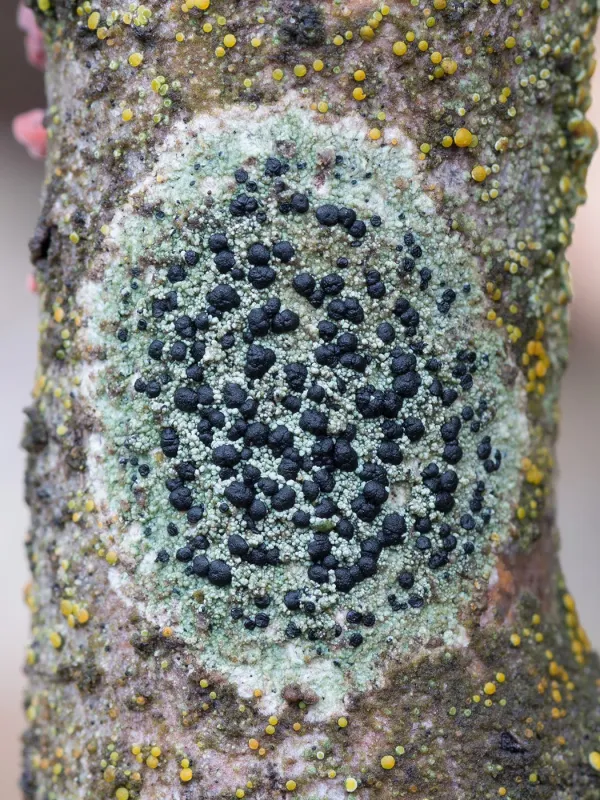
Lecidella is a genus of crustose lichens that typically appear as flat, thin, and hard patches on the bark of various trees.
The visual appearance often includes small, black, disk-like fruiting bodies known as apothecia, which are scattered across the lichen thallus.
These lichens vary in color, ranging from greyish or white to yellowish, depending on the specific species and the environmental conditions.
They are tightly adhered to the bark, making them a permanent feature of the tree trunk surface until physical intervention is applied.
The lichen is most commonly found on the rough, mature bark of older trees, where the surface texture provides stable anchorage.
Pathogen
Lecidella is not a plant pathogen in the strict sense, as it is a lichen, a complex symbiotic association between a fungus and algae or cyanobacteria.
The fungus provides the structure and protects the algae, while the algae supply the carbon compounds through photosynthesis.
It does not feed on the tree's sap or nutrients and does not penetrate deep into the living cambium layer of the bark.
The organism reproduces through spores dispersed by wind or through thallus fragments that may be spread by mechanical contact or animals.
Taxonomically, the genus is diverse, with species adapted to colonize different types of bark surfaces based on pH levels and moisture availability.
Conditions for development
High humidity and poor air circulation around the tree trunk are the primary environmental conditions that favor the development of Lecidella.
Shaded areas or branches that do not receive direct sunlight are prone to faster colonization compared to exposed, sun-drenched parts of the tree.
Trees in low-lying areas or near water bodies create a microclimate that remains moist for longer periods, promoting lichen growth.
Bark with deep fissures or roughness is ideal, as it traps dust and microscopic particles that serve as nutrients for initial establishment.
The presence of Lecidella is often considered an indicator of relatively clean air, as many lichens are sensitive to industrial sulfur pollution.
Why it matters
Lecidella does not cause direct rot or death to the plant tissue; however, heavy coverage can interfere with the bark's normal gas exchange.
The main indirect harm is that the lichen structure can harbor overwintering insect pests, mites, and spores of harmful parasitic fungi.
Excessive lichen growth often indicates that a tree is lacking vigor or that its growth rate has significantly slowed down over the years.
Its presence can mask the early symptoms of actual bark diseases, making it difficult for growers to monitor the plant's true health status.
While harmless by itself, its rapid spread is a signal to review orchard management practices to ensure better tree vitality.
Protection
Management focuses on maintaining tree vigor and improving environmental conditions through proper horticultural practices.
Regular pruning to thin the canopy is the most effective way to increase airflow and sunlight penetration, which naturally discourages lichen growth.
Mechanical removal with a wire brush during the dormant season can help clean the bark, provided it is done carefully without injuring the tree.
- Applying dormant sprays like iron sulfate to sanitize the bark surface.
- Whitewashing trunks with lime-based paints to prevent surface colonization.
- Implementing a balanced fertilization program to boost tree immunity.
Periodic inspection of the bark remains essential to distinguish between benign lichens and potentially dangerous necrotic lesions or pest infestations.
Discussion
No discussions yet — be the first.