
Lecidella elaeochroma
Lecidella elaeochroma
Description
Symptoms
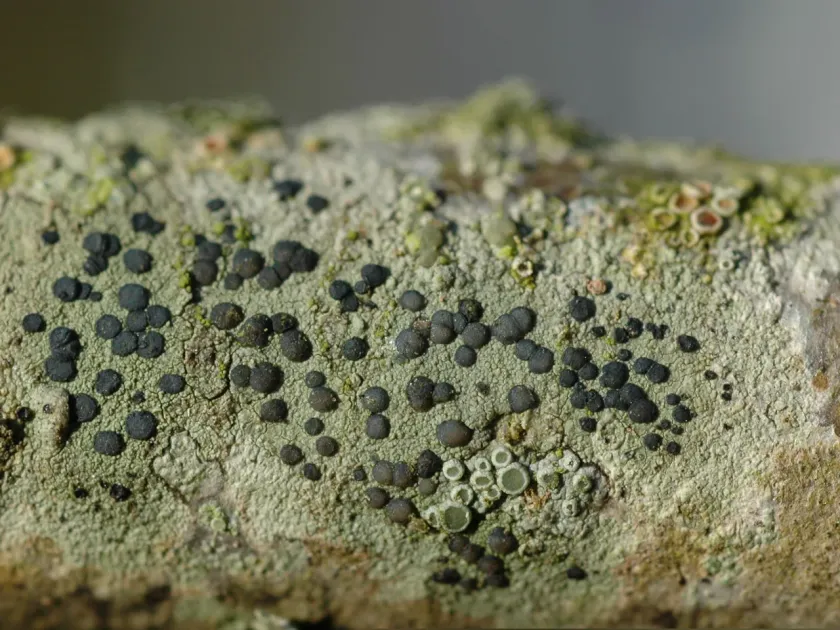
The most visible sign of Lecidella elaeochroma is the presence of irregular, crust-like patches on the bark of trunks and main branches. These patches often expand and coalesce over time.
Tiny black structures known as apothecia (fruiting bodies) can be observed scattered across the surface of the lichen. These are essential for the scientific identification of the species.
The lichen is usually found on older parts of the tree where the bark is not shedding or cracking frequently. Young, fast-growing branches usually remain free of this lichen.
The thallus is tightly attached to the bark, giving it a rough, crusty appearance. Unlike some leaf-like or shrubby lichens, this species remains flush with the surface.
The appearance of the lichen fluctuates with moisture levels; it may look dull and brittle during dry spells but becomes more vibrant and visible after rainfall.
Pathogen
Lecidella elaeochroma is a species of crustose lichen belonging to the Lecanoraceae family. It is crucial to clarify that this organism is not a pathogenic disease but rather an epiphytic lichen that uses the tree bark as a solid surface for growth.
The lichen forms a thin, crust-like thallus that adheres tightly to the surface of the bark. It typically displays colors ranging from grey to olive-green. It does not penetrate the host tree tissues or extract nutrients from the wood.
As a symbiotic association of fungi and algae, it relies on photosynthesis and atmospheric moisture for survival. It does not cause internal necrosis or rot in the trees it inhabits.
This species is widely distributed in temperate regions across the globe. It is commonly found in forests, parks, and old orchards, favoring mature trees with stable bark textures.
From an agronomic perspective, its presence is more of an indicator of environmental conditions, such as high humidity and slow bark growth, rather than a symptom of a primary plant pathology.
Conditions for development
Lecidella elaeochroma thrives in humid, shaded environments with poor air circulation. This explains why it is frequently found in neglected orchards or dense tree stands.
Trees that are experiencing slow growth or have aged bark provide an ideal stable substrate for the lichen to colonize, as the surface is not being actively shed.
Clean air quality often supports higher lichen diversity, as many species are sensitive to air pollution; therefore, their abundance can sometimes reflect a relatively healthy local environment.
The lichen is adapted to temperate climates, showing high resilience to seasonal temperature changes and entering a dormant state during extreme weather.
Lack of maintenance, specifically the absence of crown thinning and proper pruning, creates the microclimate conditions that favor the proliferation of various epiphytic lichens.
Why it matters
While Lecidella elaeochroma is not a parasite, its dense growth can provide protective cover for minor pests like scale insects or mites, which may hide underneath the lichen thallus.
In cases of excessive growth, the lichen might partially obstruct the lenticels (small pores for gas exchange) on the bark, potentially causing minor physiological stress to the tree.
The visual presence of thick lichen crusts is often interpreted by growers as a sign of poor tree maintenance, which can affect the perceived quality of the orchard.
The moisture-retaining nature of the lichen can keep the bark surface damp for longer periods, which may indirectly encourage the colonization of secondary fungal pathogens.
Overall, while the direct harm is negligible, the secondary effects of lichen accumulation can contribute to a decline in the tree's bark health if left unmanaged for many years.
Protection
Mechanical removal is the most direct control method. Using a soft plastic or wooden scraper during damp weather allows for the gentle removal of the lichen without damaging the living tissue of the tree.
Proper crown management through regular pruning is the most effective preventative measure, as it improves sunlight exposure and airflow, making the bark surface less hospitable for lichen growth.
Whitewashing the trunks with a lime mixture containing copper sulfate is a traditional and highly effective practice for disinfecting the bark and inhibiting the recurrence of lichens.
Promoting vigorous growth through proper nutrition and watering helps the tree maintain a healthy, active bark shedding process, which naturally prevents lichen colonization.
- Regular sanitary pruning of the tree crown.
- Manual cleaning of the bark surface with brushes.
- Application of lime-based whitewash.
- Maintaining optimal tree vitality with balanced fertilization.
- Reducing humidity around the tree by clearing surrounding weeds.
Discussion
No discussions yet — be the first.