
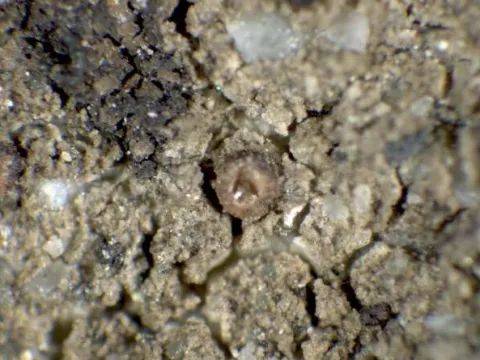
Lecania erysilbe
Lecania erysilbe
Lecania erysilbe manifests as flat or slightly raised crusty patches on the bark of fruit tree trunks and branches. These growths are often mistaken for common lichens and are frequently overlooked by gardeners in the early stages of infestation.
What the section contains
Lecania erysilbe
The appearance of the colonies can vary from ash-gray to brownish, blending seamlessly with the natural texture of the bark. Over time, as the colony expands, the underlying bark may lose its elasticity, leading to premature cracking or hardening, which disrupts the tree's vitality.
Close inspection, especially with a magnifying lens, reveals small, point-like fruiting bodies scattered within the crusty patches. While not a parasite in the traditional sense, the organism alters the surface environment of the tree, creating a persistent, depressed appearance on the affected areas.
The colonies often trap surface moisture, keeping the bark perpetually damp. This creates a secondary micro-environment that can harbor various pests, such as scale insects or mites, which find protection from environmental stressors and pesticides underneath the lichen layer.
In cases of severe infestation, the tree may show signs of general stress, including reduced vigor and delayed vegetative growth. Because the organism does not kill the tree rapidly, the long-term impact on the tree's overall physiology is often cumulative and insidious.
Lecania erysilbe is a lichenized fungus that adopts an epiphytic lifestyle on woody plants. It primarily uses the tree as a substrate for attachment, obtaining its nutrients from atmospheric moisture, dust, and organic debris trapped on the bark surface.
The organism reproduces via spores, which are disseminated by wind, rain, and occasionally by human activity during orchard maintenance. Its biological strategy involves slow, steady colonization of bark, allowing it to survive periods of drought by entering a dormant state.
Being a lichen, it possesses a high level of tolerance to harsh conditions, making it resistant to most standard agricultural fungicides. Its resilience is due to the symbiotic relationship between the fungal component and the photosynthetic algae or cyanobacteria within the thallus.
Growth is significantly influenced by the condition of the host's bark. It colonizes older, rougher bark more effectively than smooth, young bark, as the cracks and crevices provide excellent anchor points for the development of new thalli.
Understanding the biology of this organism is essential for management, as it demonstrates that while it may not be a primary pathogen in the sense of causing rapid rot, it creates an ecological niche that is fundamentally antagonistic to the health of an intensive orchard.
The development of Lecania erysilbe is driven by high air humidity and poor air circulation. Orchards with dense, unpruned canopies are particularly susceptible, as the trapped moisture creates an ideal environment for spore germination and colony expansion.
Trees located in low-lying areas or near water bodies often experience heavier infestations due to frequent fogs and persistent dew. These conditions maintain the level of hydration necessary for the lichen's active metabolism throughout most of the growing season.
Mechanical damage to the bark, such as sunscald or frost cracks, acts as a primary entry and colonization point. The buildup of necrotic tissue and organic dust in these wounds provides a concentrated source of nutrients that facilitates the initial establishment of the organism.
Neglected orchards where sanitary practices are absent provide a constant source of inoculum. Dust and organic debris settling on tree branches create a nutrient-rich surface that promotes the rapid growth of epiphytic lichens compared to clean, well-tended trees.
While temperatures in temperate climates vary, Lecania erysilbe is highly adapted to such environments. It remains dormant during extreme cold and resumes active growth as soon as humidity and moderate temperatures return in early spring.
The main harm caused by Lecania erysilbe is the physiological strain it imposes on the host tree. By covering the bark, it impedes normal gas exchange through lenticels and potentially interferes with the metabolic processes of the outer bark tissues.
The lichen layer provides an effective shield for various wood-dwelling pests, complicating the use of insecticides. This protection makes it difficult for spray treatments to reach target pests, leading to higher levels of insect infestation in affected areas of the tree.
Physical stress caused by the lichen can lead to micro-fissures in the bark. These wounds often become entry points for more aggressive fungal or bacterial pathogens, such as black rot or Cytospora canker, which can cause significant limb dieback.
Reduced vigor often translates into decreased fruit quality and yield. As the tree diverts resources to cope with the stress of the epiphytic colonization, it has less energy available for fruit production, flower bud development, and overall tree structural maintenance.
Economically, the presence of these lichens increases the cost of orchard management. Growers must invest additional labor and resources into mechanical cleaning and extra applications of wash treatments to maintain the health and productivity of the trees.
Mechanical cleaning remains the most direct and effective control measure. Carefully scraping the bark with a stiff-bristle brush or specialized metal tool during the dormant season removes the majority of the colonies without damaging the living bark layers.
Post-cleaning treatment with a 3–5% solution of ferrous sulfate or copper sulfate is highly recommended. This disinfection process helps neutralize any remaining fungal spores and prevents immediate re-colonization of the cleaned bark surface.
Preventative cultural practices are paramount. Regular pruning to thin the canopy is essential to improve airflow and light penetration, which naturally suppresses the development of epiphytes and keeps the bark surface dry.
Applying a horticultural whitewash (lime-based mixture) to the trunks serves as an excellent barrier against new colonization. This treatment makes the bark surface inhospitable for spore adhesion and serves as a prophylactic measure against various bark-related issues.
- Perform regular orchard sanitation to monitor bark health.
- Remove and destroy heavily infested branches that cannot be cleaned.
- Maintain optimal tree nutrition to enhance natural defense mechanisms.
- Promptly treat any bark damage with appropriate wound sealants.