
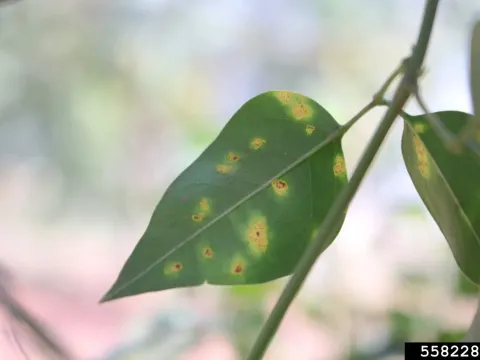
Lambertella leaf spot
Lambertella jasmini
The causal agent of this disease is the fungus Lambertella jasmini, an ascomycete pathogen that specifically targets plants within the Oleaceae family, particularly jasmine species.
What the section contains
Lambertella leaf spot
The fungus functions as an obligate or facultative parasite, invading the host tissues and utilizing enzymatic digestion to break down plant cell walls for nutrient absorption.
Its life cycle involves both asexual reproduction, through conidia dispersed by rain splashes or insects, and the formation of resistant structures like sclerotia in plant debris.
These fungal structures allow the pathogen to survive during winter months in the soil or under fallen leaves, ensuring the persistence of the disease in the same location year after year.
Once the spores land on susceptible host tissue, they germinate under favorable conditions, and the mycelium begins to colonize the leaf parenchyma, causing characteristic lesions.
The primary symptom of the infection includes the appearance of small, circular to irregular brown spots on the leaves, which are often surrounded by a lighter, pale-colored halo.
As the infection progresses, these necrotic spots tend to enlarge and coalesce, eventually causing significant portions of the leaf to die and drop prematurely.
A distinctive sign of the fungus is the presence of an olive-colored or grayish mold on the underside of the leaves, corresponding to the active sporulation areas.
In cases of severe infestation, young shoots may show signs of wilting, curvature, and necrosis, which disrupt the overall growth and structure of the jasmine shrub.
- Circular brown leaf spots with pale halos.
- Olive-grey fungal sporulation on the leaf underside.
- Premature yellowing and leaf abscission.
- Distortion and necrosis of tender young shoots.
High relative humidity, typically above 75%, is the most critical environmental factor required for the successful germination and spread of Lambertella jasmini spores.
The disease thrives within a moderate temperature range of +18°C to +24°C, which is common during spring and early summer periods across many temperate regions.
Poor air circulation within dense, overgrown shrub plantings creates a stagnant microclimate that traps moisture on foliage and promotes rapid fungal proliferation.
Overhead irrigation, especially during the evening hours, keeps the leaves wet for extended periods, providing a perfect incubation environment for the fungal spores.
Inadequate sanitation in the garden, such as failing to remove infected plant debris from the previous season, creates an ideal reservoir for the fungus to restart its cycle.
The primary economic and aesthetic damage caused by Lambertella jasmini is the severe reduction in the ornamental value of jasmine plants, rendering them unsuitable for landscaping.
The loss of functional leaf surface area drastically reduces the plant's photosynthetic efficiency, which directly impairs its vitality, growth rate, and future flower production.
Chronic infection weakens the shrub's natural defense systems, making it significantly more susceptible to secondary fungal pathogens and infestations by sap-sucking insects.
Severe and untreated cases can lead to the death of branches or, in extreme instances, the entire plant, especially if environmental stress is present.
For commercial nurseries, an outbreak of this disease can result in significant financial losses due to the need for quarantine, pesticide treatments, or the disposal of stock.
Rigorous garden sanitation, including the thorough removal and destruction of all fallen leaves and infected plant parts, is the most effective way to reduce the primary inoculum.
Implementing a regular pruning schedule to thin out the canopy ensures better air movement and sunlight penetration, which helps keep the foliage dry and prevents fungal growth.
When symptoms are first detected, the application of appropriate systemic or copper-based fungicides can help manage the spread and protect healthy leaves from new infections.
Focusing on balanced plant nutrition, particularly avoiding excessive nitrogen and ensuring adequate potassium, helps strengthen the shrub's internal resistance to the pathogen.
Preventive treatments using bio-fungicides during the early stages of spring growth can establish a healthy phyllosphere, making it difficult for the fungus to gain a foothold.