
Lamium septoria leaf spot
Septoria lamiicola
Description
Symptoms
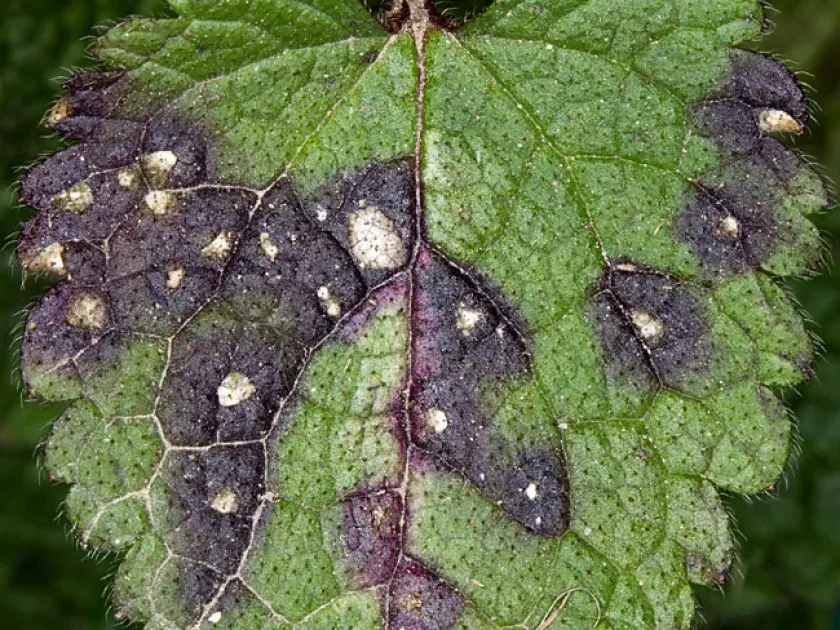
Initial symptoms of the infection appear as small, discrete spots on the leaves. These spots are typically irregular in shape and possess a grayish to brown coloration.
As the disease progresses, a distinct darker margin often forms around the infected area. In the center of the spot, tiny, pinpoint-sized black dots become visible to the naked eye.
These black dots are the fruiting structures (pycnidia) of the fungus. Their presence is a definitive sign of Septoria infection and differentiates it from other types of leaf spots.
Affected leaves often show yellowing (chlorosis) around the necrotic spots, and eventually, the entire leaf may wither and drop prematurely if the infection intensity is high.
The infection usually manifests on the lower leaves first, where the microclimate is typically more humid and favorable for the fungus to establish its initial colony.
Pathogen
The disease is caused by the imperfect fungus Septoria lamiicola, which belongs to the order Sphaeropsidales. It is a specialized pathogen that primarily targets plants within the Lamiaceae family.
The life cycle of this fungus involves the production of pycnidia, which are small, flask-shaped fruiting bodies. These structures serve as the primary reservoir for asexual spores known as pycnidiospores.
These spores are highly efficient at dispersal, often relying on splashing rain or overhead irrigation to move from infected debris to healthy plant tissue during the growing season.
The pathogen survives the winter months primarily within infected plant tissues left on the ground, persisting in the form of dormant mycelium or mature pycnidia until conditions become favorable.
Septoria lamiicola utilizes specific enzymes to penetrate leaf cuticles and colonize the internal cell structure, leading to the characteristic development of necrotic spots.
Conditions for development
High relative humidity and moderate temperatures ranging between 15°C and 22°C provide the perfect environment for the germination of fungal spores on leaf surfaces.
Prolonged periods of damp weather or frequent morning dew significantly accelerate the infection rate, as moisture is essential for the movement and survival of spores.
Poor air circulation, often caused by overly dense planting or lack of proper pruning, allows moisture to remain on leaves for extended periods, increasing disease risk.
The pathogen thrives in areas where debris from previous seasons is not removed, as these remnants provide the necessary moisture and inoculum to initiate new infections.
Any environmental stress on the plant, such as nutrient deficiencies or poor drainage, weakens its natural defenses and makes it significantly more susceptible to fungal colonization.
Why it matters
The primary impact of the disease is the destruction of photosynthetic tissue, which reduces the plant's ability to produce energy and limits its overall growth and vigor.
Severe infestations can lead to significant defoliation, which causes the plant to become stunted and reduces its aesthetic appeal, especially in landscape or ornamental settings.
When the plant's leaf surface area is reduced, its ability to store carbohydrates for the winter is compromised, often leading to poor spring growth or complete mortality.
For species of Lamium harvested for medicinal or herb use, the quality of the foliage is severely degraded, rendering the product unsuitable for use due to necrotic damage.
The continuous presence of the fungus in a garden bed creates an ongoing cycle of reinfection, making it difficult to maintain healthy plants without consistent management practices.
Protection
Sanitation is the most effective management strategy; this involves carefully removing and destroying all infected plant parts as soon as symptoms are noticed.
Practicing crop rotation or changing planting sites for susceptible Lamiaceae species helps break the fungal cycle and reduces the buildup of inoculum in the soil.
Improving air circulation through proper spacing and pruning helps leaves dry out more rapidly, which is a major deterrent to the development of fungal pathogens.
If chemical intervention is deemed necessary, applying appropriate fungicides at the first sign of symptoms can help limit the spread of the infection throughout the garden.
Maintaining optimal plant health through balanced fertilization and correct watering practices ensures the plant can better resist and recover from fungal challenges.
Discussion
No discussions yet — be the first.