
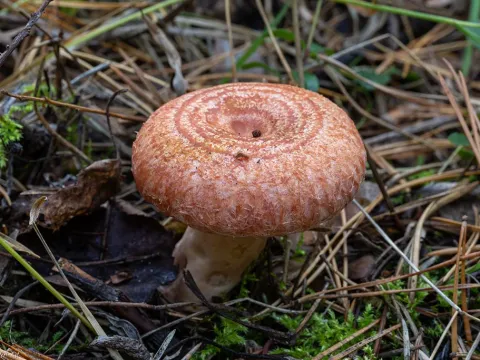
Woolly milk-cap
Lactarius torminosus
The woolly milk-cap (Lactarius torminosus) is a gilled mushroom species that is not classified as a plant pathogen or a disease-causing agent in agriculture.
What the section contains
Woolly milk-cap
It is an ectomycorrhizal fungus that lives in a symbiotic relationship with the root systems of birch trees, rather than attacking them as a parasite.
The fungal mycelium forms a sheath around the fine roots of the birch, enhancing the absorption of water and minerals from the soil for the host tree.
In exchange, the tree provides the fungus with the sugars and carbohydrates produced through photosynthesis, ensuring a mutualistic survival strategy.
Therefore, Lactarius torminosus is a beneficial organism for forest health and does not cause damage to plant tissues or agricultural crops.
The development of this fungus is strictly dependent on the presence of birch trees, as it cannot complete its life cycle without this specific host.
Optimal environmental conditions include high humidity and moderate temperatures, typically occurring in late summer and early autumn.
The fungus thrives in forest ecosystems where the soil is moist and slightly acidic, favoring the expansion of the mycelial network.
Adequate rainfall is the primary trigger for the production of sporocarps, allowing the fungus to spread its spores across the forest floor.
Maintaining a healthy, undisturbed soil environment around birch trees is essential for the continued presence and growth of this mycorrhizal species.