
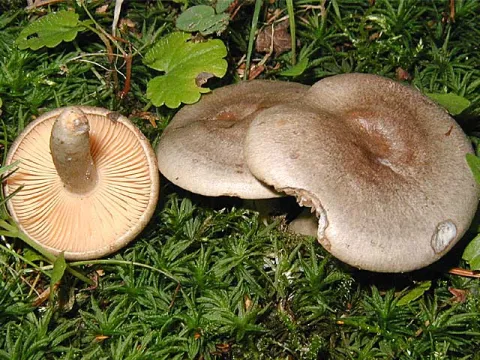
Lactarius pyrogalus
Lactarius pyrogalus
Lactarius pyrogalus, commonly known as the fiery milk cap, is not a plant pathogen. It is a basidiomycete fungus that forms an essential mycorrhizal relationship with various tree species.
What the section contains
Lactarius pyrogalus
This fungus primarily associates with the root systems of trees in the genus Corylus, specifically the common hazel (Corylus avellana).
The symbiotic bond between the fungus and the tree allows for an exchange of nutrients, where the tree provides carbon to the fungus, and the fungus enhances water and mineral uptake for the tree.
Unlike parasitic fungi that cause plant diseases, Lactarius pyrogalus supports the host tree's overall health and vitality within forest ecosystems.
In agricultural and silvicultural contexts, this species is considered a beneficial organism rather than a threat, contributing to forest floor biodiversity.
The fruiting bodies of Lactarius pyrogalus feature a cap that measures 4 to 10 cm in diameter, often depressed or funnel-shaped as it matures.
The cap surface is typically greyish-brown to ochre, often displaying concentric zones or bands, which is a key diagnostic feature for identification.
Gills are decurrent, spaced, and cream-colored; when bruised or cut, they exude a copious, white, and notably pungent-tasting latex.
The stem is generally short, cylindrical, and slightly lighter in color than the cap, sometimes exhibiting a smooth or slightly pitted texture.
The flesh is firm but brittle, and the overall odor is often described as mild or slightly fruity, though the taste is intensely acrid.
Lactarius pyrogalus requires the presence of its specific host trees, most notably hazel, to establish its subterranean mycelial network.
It thrives in soils that are rich in organic matter and maintains a preference for moist, temperate habitats such as deciduous forests and scrublands.
The development of fruit bodies is most abundant during the late summer and autumn months, responding to rainfall and moderate temperatures.
Soil pH plays a role, with the species favoring neutral to slightly acidic soil conditions commonly found in its natural woodland environment.
Spore dispersal occurs via wind, allowing the fungus to colonize new areas where suitable hosts and environmental conditions align.
This fungus poses no risk to commercial crops or garden plants, as it does not engage in pathogenic activity against economically significant plants.
There are no reports of Lactarius pyrogalus causing economic losses or interfering with agricultural production systems.
As a mycorrhizal symbiont, it does not destroy plant tissue, meaning it does not cause necrotic or chlorotic symptoms typically associated with plant diseases.
For landowners and foresters, the presence of this fungus is an indicator of healthy soil and well-established root systems in the surrounding trees.
It has no harmful impact on forest productivity, making it entirely non-detrimental to forestry management practices.
No control measures are required or recommended for Lactarius pyrogalus, as it is a beneficial part of the forest ecosystem.
Applying fungicides to eliminate this species would be counterproductive, as it would disrupt the beneficial mycorrhizal networks critical for tree health.
Mechanical removal of the fruiting bodies is only necessary in cases where they appear in public areas or private gardens for purely aesthetic reasons.
Agro-technical management should focus on maintaining the health of the host trees rather than monitoring or managing the fungal population.
Conservation of natural habitats is sufficient to sustain the ecological balance in which this fungus plays a supportive, non-pathogenic role.