
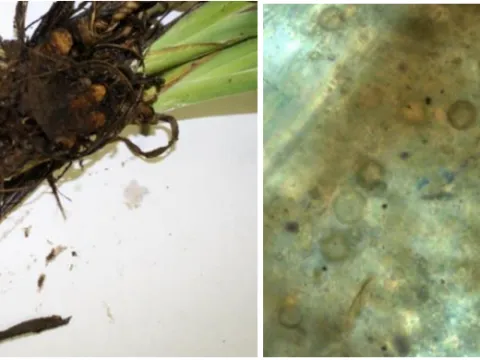
Lagenidium root rot
Lagenidium
The causative agents of Lagenidium root rot are oomycetes belonging to the genus Lagenidium. These are specialized, fungus-like microorganisms that can act as parasites of both invertebrates and various plant species, causing severe root system degradation.
What the section contains
Lagenidium root rot
Biologically, these pathogens fall under the class Oomycetes. Their complex life cycle includes the production of motile zoospores, which utilize water films to actively swim toward and infect the root tissues of host plants.
Reproduction occurs through the formation of sporangia, which release a large number of zoospores into the environment. This mechanism facilitates the rapid spread of the disease across a field or within a greenhouse under favorable moisture conditions.
The pathogen infects plants through wounds, natural openings, or direct penetration of root hairs. Once inside, the fungus colonizes the intercellular spaces and produces enzymes that break down plant cell walls, leading to tissue decay.
Laboratory diagnosis usually involves microscopic examination of infected root samples. The identification of characteristic branching hyphae of the oomycete is crucial for differentiating Lagenidium from other common root rot pathogens like Pythium or Phytophthora.
The primary symptom is root rot, where the root system becomes dark, soft, and necrotic. As the roots lose their ability to transport water and nutrients, the plant begins to show clear signs of distress.
Above-ground symptoms include wilting during the day, even when soil moisture is adequate. The foliage may develop chlorosis, turn yellow, and eventually undergo total necrosis, leading to plant death.
In seedlings, the disease often manifests as damping-off, where the base of the stem becomes constricted and blackened, causing the plant to collapse. This happens quite suddenly in high-moisture environments.
Under high humidity, a faint, grayish, or brownish growth might be visible at the crown of the plant or on the surface of the growing medium, indicating active sporulation of the pathogen.
Advanced stages of the disease are characterized by the complete disintegration of the root system. Upon pulling the plant from the soil, the feeder roots are typically missing, leaving only the central vascular core, which appears thin and stringy.
The most critical factor for the development of Lagenidium root rot is excessive soil moisture. The pathogen relies on standing water to facilitate the motility of its zoospores, which seek out host roots.
The optimal temperature range for the development and spread of this disease is between +20°C and +28°C. During this window, the pathogen's metabolic activity is at its peak, and colonization occurs rapidly.
Poor soil aeration and the use of heavy, poorly draining substrates are major contributors to outbreaks. This is particularly problematic in greenhouse environments where watering regimes are not strictly managed.
The pathogen can survive in the soil for long periods as dormant structures, especially when crop residues are not properly cleared. This provides a consistent reservoir of infection for subsequent planting cycles.
High plant density and inadequate ventilation create a microclimate that promotes humidity around the base of the plants, which can accelerate the transition of the pathogen from the soil to the host tissues.
Lagenidium root rot can be devastating, particularly in greenhouse cultivation, where it can result in the loss of up to 90% of a crop batch if not addressed promptly upon the first appearance of symptoms.
In cases where plants survive initial infection, their productivity is severely compromised. Growth is stunted, yields are reduced, and the quality of the fruit or foliage is significantly diminished.
Because the disease is difficult to reverse once symptoms appear in the canopy, it poses a significant threat to production stability. It can quickly spread through irrigation water, affecting an entire facility.
The pathogen is easily transmitted via contaminated tools, equipment, and footwear, making it a persistent challenge for management. It requires strict adherence to hygiene protocols to prevent secondary outbreaks.
The persistence of the pathogen in the growing medium often necessitates drastic remediation steps, such as complete soil replacement or intensive chemical sterilization, which significantly increases operating costs.
Effective management begins with strict irrigation control. Ensuring proper drainage and avoiding waterlogged conditions in the root zone is the most successful preventative strategy for managing oomycetes.
The application of systemic fungicides specifically targeted at oomycetes can help manage the infection. It is vital to use these in accordance with labels and rotate chemical classes to prevent the development of resistance.
Maintaining high standards of sanitation, including the regular disinfection of greenhouse structures, pots, and irrigation lines after every crop cycle, is essential for reducing the overall pathogen pressure.
Crop rotation using non-host plant species helps break the pathogen's life cycle and naturally reduces the concentration of zoospores and dormant spores within the soil profile over time.
Biological control agents, such as beneficial Trichoderma or Bacillus species, can be used to colonize the rhizosphere, effectively competing with Lagenidium for space and nutrients, thereby suppressing its growth.