
Lagynion ampullaceum
Lagynion ampullaceum
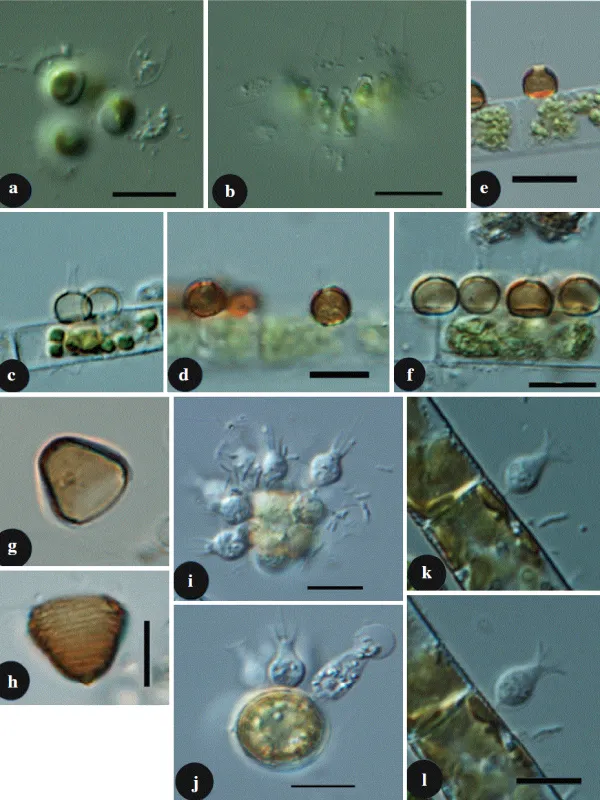
Description
Symptoms
The primary symptom of infection is the appearance of small, clear, or pale yellow flask-shaped structures attached to the surface of the algal thallus.
Infected algae display a noticeable loss of pigmentation, turning from vibrant green to a dull, chlorotic color as the parasite degrades the chloroplasts within the host cells.
In cases of heavy infestation, the surface of the host becomes covered in a dense film of parasitic cells, which interferes with photosynthesis and essential metabolic gaseous exchange.
Microscopic examination reveals the distinct arrangement of the flask-shaped cells, often found in clusters, which clearly distinguishes this parasite from other superficial contaminants.
As the disease progresses, visible signs of tissue necrosis occur, characterized by the shriveling and physical deformation of the algal filaments or leaf-like structures.
Pathogen
The causal agent of this disease is the microscopic protist Lagynion ampullaceum, which is classified within the group of golden algae (Chrysophyceae). It acts as an ectoparasite that adheres firmly to the cell walls of host algae.
Morphologically, the organism possesses an ampulla-shaped (flask-like) body. It uses this specialized structure to anchor itself to the host, facilitating a stationary lifestyle while actively extracting nutrients.
The life cycle involves the production of motile zoospores equipped with heterokont flagella. These zoospores swim through the water column to locate and colonize new, healthy host surfaces.
The feeding mechanism is unique; the parasite employs pseudopodia to pierce or interact with the host's cell wall, siphoning off cytoplasmic contents and essential nutrients required for the host's metabolism.
In phycological studies, Lagynion ampullaceum is recognized for its ability to significantly disrupt the cellular physiology of host organisms, making it a critical subject in aquatic plant pathology.
Conditions for development
The development and proliferation of this pathogen are highly dependent on water chemistry, particularly the presence of sufficient dissolved organic matter.
Optimal growth conditions involve stable, moderately warm water temperatures, which enhance the motility of zoospores and increase the frequency of infection cycles.
Stagnant or low-flow water environments are ideal for the parasite, as these conditions allow for a high concentration of zoospores to gather in a limited volume, increasing the probability of host contact.
Light intensity acts as an indirect factor; lower light levels stress the host algae, making them more susceptible to parasitic colonization and less resilient to nutrient depletion.
Seasonal fluctuations in nutrient availability can trigger rapid outbreaks, as the parasite capitalizes on the metabolic changes in the host population.
Why it matters
The most significant impact of Lagynion ampullaceum is the systemic inhibition of the host's photosynthetic capacity, which directly results in reduced biomass production.
By draining energy resources, the parasite suppresses the host's growth rate and reproductive potential, leading to a overall decline in the density and health of the algal population.
Weakened tissues serve as entry points for secondary microbial infections, which often accelerate the necrosis process and may lead to the total collapse of the colony.
In aquaculture settings, an outbreak compromises the economic utility of the algae, rendering them unsuitable for use as animal feed or biomass processing.
The ecological disruption caused by the parasite can alter the community structure of a pond or tank, often favoring opportunistic microbes over the desired primary production.
Protection
Effective management begins with maintaining high water quality standards and avoiding the overaccumulation of organic waste that fuels parasite reproduction.
Physical intervention, such as the regular filtration of water and the manual removal of heavily infected biomass, is highly effective in lowering the pathogen load.
Implementing strict quarantine protocols for new algal stock helps prevent the accidental introduction of Lagynion ampullaceum into pristine systems.
In specialized settings, chemical control agents can be used, though they must be applied carefully to avoid causing collateral damage to the host algae.
- Regular monitoring using microscopic sampling to detect early stages.
- Enhancement of water circulation to prevent stagnant hotspots.
- Thorough disinfection of tools and equipment after each maintenance cycle.
Discussion
No discussions yet — be the first.