
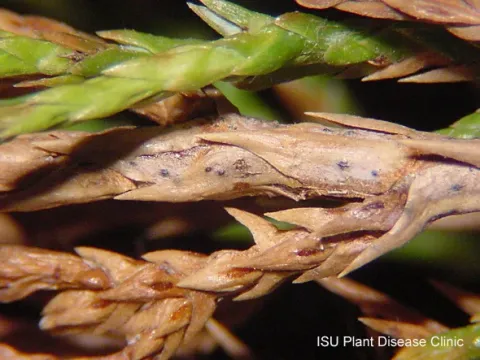
Kabatina needle blight
Kabatina thujae
The disease is caused by the pathogenic fungus Kabatina thujae, which specifically targets Thuja species and related conifers. This fungus is a common cause of foliage blight, particularly in nurseries and decorative landscapes.
What the section contains
Kabatina needle blight
The fungus develops within the host tissues, disrupting vascular functions and causing cell death. It thrives during periods of fluctuating temperatures and high humidity, which are characteristic of the transition between winter and spring.
Reproduction occurs through conidial sporulation, where the fungus breaks through the epidermal layers of the needles and twigs. These spores are disseminated by wind and splashing rain, allowing the disease to spread rapidly through a hedge.
The fungus remains viable within infected twigs, serving as a reservoir for recurring infections. This ability to persist in the host tissue makes it essential to perform thorough sanitary measures when symptoms are first observed.
Understanding the biology of Kabatina thujae is crucial for effective control, as the mycelium can be deeply embedded. Management strategies must prioritize preventing the initial establishment of the pathogen in healthy plants.
The primary symptom is the browning or reddening of the tips of young shoots in early spring. Unlike seasonal needle drop, this damage is clearly localized and often follows the path of infection down the branch.
Small, greyish-black sporulation structures (acervuli) appear at the boundary between healthy and necrotic tissue. Identifying these structures is key to distinguishing the disease from environmental damage like winter desiccation.
As the infection progresses, the browning extends from the shoot tips toward the woody parts of the branch. Affected needles become brittle, wither, and eventually fall off, leading to a thin, sparse crown appearance.
In cases of severe infestation, entire branches may die, causing unsightly gaps in the hedge. The progression of the blight is typically uneven, affecting some branches while others may appear relatively healthy for a time.
If untreated, the aesthetic value of the Thuja is permanently damaged. Regular monitoring is necessary during the active growth phase, as early signs of blight are easily overlooked until the foliage turns brown.
High humidity and cool, damp weather provide ideal conditions for the development and spread of Kabatina thujae. The fungus is most active when moisture persists on the foliage for extended periods.
Poor air circulation, often caused by overly dense planting or lack of pruning, exacerbates the spread of the disease. A moist, stagnant environment within the canopy is the perfect habitat for fungal colonization.
Plants under physiological stress, such as those suffering from improper irrigation or nutrient deficiencies, are significantly more susceptible to infection. Maintaining optimal tree health is the first line of defense.
Mechanical injuries resulting from shearing or environmental damage serve as entry points for the fungal spores. Sterile tools are vital to prevent the unintentional spread of the pathogen during maintenance work.
Waterlogging in the root zone can also contribute to a general decline in the tree's vigor, indirectly facilitating the blight process. Proper site selection and soil management are essential for long-term tree protection.
The main harm caused by Kabatina blight is the severe degradation of the tree's ornamental appearance. For landscaping purposes, the loss of form and density can necessitate the complete replacement of affected plants.
Chronic infections weaken the tree, making it vulnerable to secondary pests and other pathogens. If the blight is left to progress, it can lead to the systemic decay of the plant and eventual tree mortality.
The disease poses a constant threat to surrounding conifers, as the spores travel easily. A single infected plant can quickly become a center for a wider outbreak within the garden or nursery environment.
Restoration of a damaged Thuja is a long-term process requiring significant investment of time and labor. Even with successful treatment, regrowth in bare areas may be slow or incomplete, leaving permanent gaps.
The economic impact on nursery operations can be significant due to the loss of marketable stock. Preventing the establishment of the fungus is far more cost-effective than attempting to treat established infections.
- Sanitary pruning of all blighted shoots, cutting 5-10 cm into healthy wood to remove mycelium.
- Rigorous disinfection of pruning shears with alcohol or antiseptic solutions after each cut.
- Immediate removal and burning of all infected plant debris to eliminate spore sources.
- Application of copper-based fungicides early in the spring to protect new growth.
- Use of systemic fungicides labeled for conifer diseases to manage active outbreaks.
Proactive care involves thinning the canopy to promote better airflow and reduce humidity around the foliage. Balanced fertilization helps the trees build natural resistance against seasonal outbreaks.
Applying mulch around the base of the tree reduces the likelihood of soil-borne spores splashing onto the lower branches. Consistent surveillance allows for rapid intervention before the blight can cause significant damage.