
Kalaharituber pfeilii
Kalaharituber pfeilii
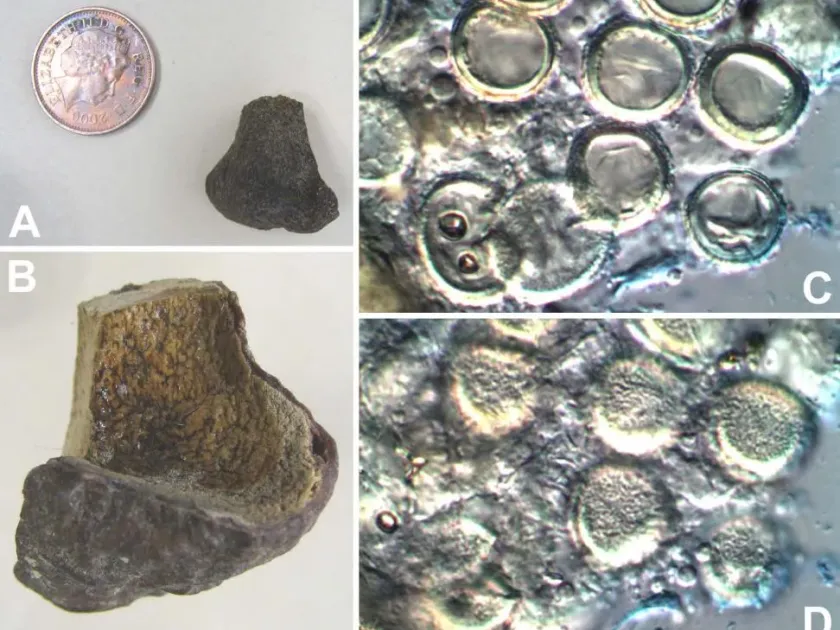
Description
Symptoms
Identifying this infection is difficult because the primary symptoms occur underground. Above-ground signs are often subtle and can be mistaken for simple drought stress.
Symptoms include yellowing of the foliage (chlorosis), wilting despite adequate subsoil moisture, and a general loss of vigor in the infected plant compared to its healthy neighbors.
Direct examination of the root system reveals characteristic lesions or abnormal swellings on the roots, which are indicative of the fungus's physical presence and feeding activity.
The presence of spherical, aromatic fungal fruiting bodies in the soil near the root crown is the most definitive clinical sign of an established infection.
Accurate diagnosis requires DNA-based testing or microscopic analysis of root tissues to distinguish this pathogen from other soil-dwelling organisms common in sandy desert soils.
Pathogen
Kalaharituber pfeilii is an ascomycete fungus belonging to the Pezizales order, specialized for the harsh environment of the Kalahari Desert. It is known for its ability to survive in arid soils for extended periods.
The fungus exists primarily as subterranean fruiting bodies. Its biology is centered on forming symbiotic or parasitic relationships with roots of desert flora, allowing it to acquire necessary nutrients.
The life cycle of the pathogen is strictly seasonal, triggered by infrequent, heavy rainfall events that stimulate the germination of spores dormant in the deep soil layers.
Kalaharituber pfeilii is highly adapted to thermal stress. Its mycelium maintains metabolic activity even in high-temperature soil environments, provided there is enough moisture at the root zone.
Research into this fungus highlights its role in desert ecology, as it interacts with local vegetation in ways that are still being classified by mycologists worldwide.
Conditions for development
The development of the fungus is contingent on specific environmental windows. Heavy, irregular rainfall after a long dry spell is the primary catalyst for spore activity.
Temperature plays a crucial role. The fungus requires specific soil warming trends typical of the post-rainy season to promote the growth of its fruiting structures.
Soil structure is a determining factor for distribution. Loose, aerated sandy soils facilitate the movement of hyphae towards the root systems of preferred host plants.
The presence of specific host vegetation is required for the survival of the pathogen. If hosts are absent, the fungus enters a dormant state that can last for years.
Anthropogenic disturbance, such as road building or intense grazing, can disrupt soil layers and facilitate the spread of spores into previously unaffected areas.
Why it matters
The fungus causes damage primarily by impairing the root's ability to transport water and minerals. This drastically reduces the plant's resilience during peak heat periods.
Infected plants suffer from stunted growth and are more susceptible to secondary environmental stresses, which frequently leads to premature death of the organism.
Ecologically, the fungus can alter the composition of local plant communities by disproportionately affecting sensitive species, thereby reducing overall biodiversity.
In terms of land usage, the presence of the pathogen in pastures is undesirable as it can degrade the nutritional value and availability of forage for desert herbivores.
While the impact is localized, persistent infection cycles can degrade the quality of topsoil, making it harder for native plants to re-establish themselves after a disturbance.
Protection
There are currently no chemical fungicides approved or specifically designed for the control of Kalaharituber pfeilii, making integrated management essential.
The most effective strategy is the restriction of soil movement. Preventing the transport of soil from infected regions to healthy ones is the primary preventative action.
Regular surveillance of vegetation in endemic zones helps in identifying hotspots of infection, allowing for the isolation of the area from further disturbance.
Land management practices that promote soil stability and maintain natural drainage can reduce the likelihood of optimal conditions for the fungus.
- Avoid clearing land in areas with known populations of the fungus.
- Implement decontamination protocols for equipment moved between desert sites.
- Use native, resistant flora for rehabilitation of degraded lands.
Discussion
No discussions yet — be the first.