
Kamchatka cedar rust
Cronartium kamtschaticum
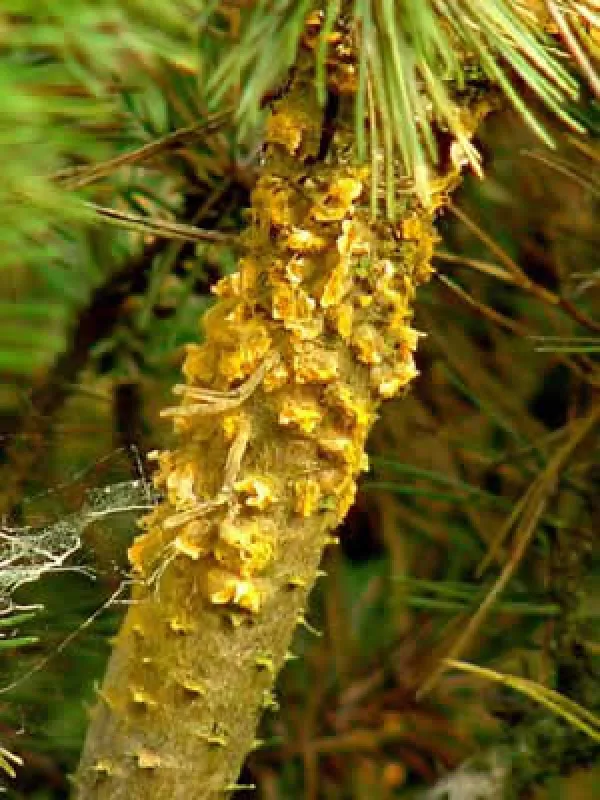
Description
Symptoms
The most visible symptom is the development of blister-like swellings on the branches or stems of the cedar trees.
These blisters eventually burst, releasing large quantities of orange-yellow or golden aeciospores into the surrounding air.
Needles on infected branches typically exhibit chlorosis, turn yellow, and eventually drop off, leading to sparse crown appearance.
In advanced stages, severe resinosis occurs at the site of the infection, marking the tree's defensive response to fungal colonization.
The physical structure of the tree becomes deformed, often leading to top kill or the death of the entire tree if the trunk is girdled.
Pathogen
The causal agent of this disease is the rust fungus Cronartium kamtschaticum, which primarily targets five-needled pine species.
This fungus is heteroecious, meaning it requires two unrelated host plants to complete its complex biological life cycle.
The pathogen reproduces through several stages of spores, which are disseminated by wind currents, allowing for regional spread.
Once the fungal mycelium establishes itself within the host tissue, it acts as an obligate parasite, draining nutrients from the tree.
The fungus is highly resilient, capable of persisting in the bark and cambium of infected trees for many years.
Conditions for development
The development of the fungus is highly dependent on high atmospheric humidity, particularly during the spring germination period.
Densely planted forests with poor ventilation maintain moisture on the bark surface, providing an ideal environment for spore attachment.
The presence of intermediate hosts, specifically plants in the Pedicularis genus, significantly increases the local infection pressure.
Mild to moderate temperatures favor the metabolic activity of the rust fungus and the subsequent spread of the mycelium.
Young, rapidly growing trees or those stressed by environmental factors are often more susceptible to successful fungal infection.
Why it matters
Kamchatka cedar rust causes substantial damage by reducing the photosynthetic capacity of the tree, leading to stunted growth.
It significantly impacts forest economy by damaging timber quality and increasing mortality rates in young cedar plantations.
The loss of foliage reduces the aesthetic value of the trees, which is particularly detrimental in landscape and park management.
Infected trees become physiological weak points, making them more vulnerable to secondary attacks by wood-boring beetles.
Persistent infestations can lead to the total collapse of cedar populations within an affected forest ecosystem over time.
Protection
The most effective strategy is the eradication of alternate host plants (such as Pedicularis) within the immediate vicinity of cedar stands.
Strict silvicultural management, including the removal and destruction of symptomatic trees, is essential to curb the spread of spores.
In nurseries, prophylactic application of systemic fungicides can protect young seedlings from early infection stages.
Planning new plantations with sufficient spacing and appropriate site selection helps to mitigate the risk of disease transmission.
Ongoing monitoring and rapid identification of the first signs of rust are crucial for the successful containment of the disease.
Discussion
No discussions yet — be the first.