
Kansas rust
Puccinia kansensis
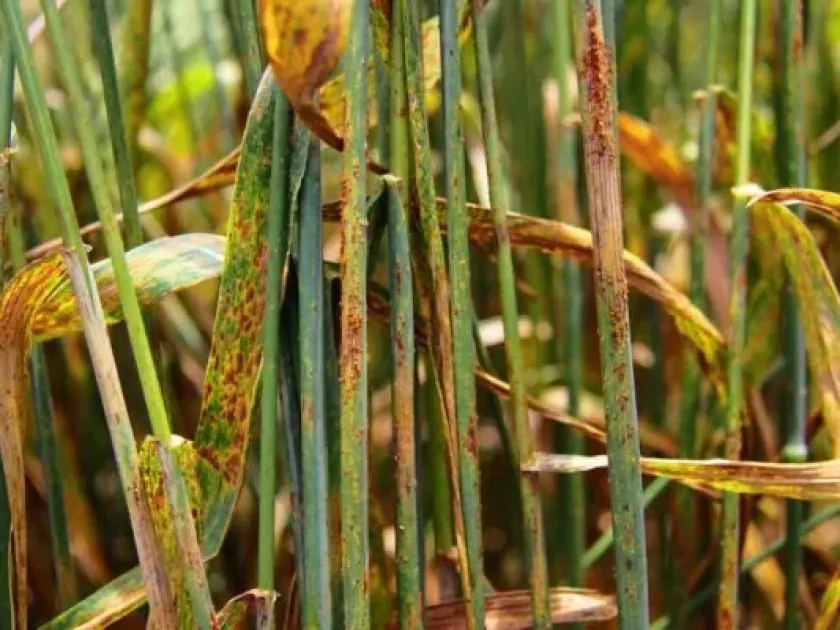
Description
Symptoms
The first signs of infection appear as small pustules, known as uredinia, on the leaf blades. These pustules are typically rust-colored, a characteristic feature of this genus of fungi.
As the disease progresses, the pustules rupture the plant's epidermis, releasing masses of spores that are easily spread by the wind. This visual appearance is often described as a dusty coating on the leaves.
Over time, the foliage turns yellow and withers prematurely, which significantly reduces the plant's photosynthetic capacity. Infected tissues lose moisture rapidly, leading to leaf necrosis.
In later developmental stages of the pathogen, darker pustules may appear on stems and leaves, where teliospores are formed. This transition is a key diagnostic indicator for researchers.
The plant appears stunted and weakened, with delayed development of the grain head. This results in poor grain formation, leading to significant yield losses in terms of both weight and quality.
Pathogen
The causal agent of this disease is the microscopic fungus Puccinia kansensis, which belongs to the basidiomycetes group. This pathogen is a specialized parasite that primarily affects cereal crops by penetrating plant tissues.
The life cycle of this fungus involves several stages, which allow it to propagate efficiently under favorable conditions. Infection is primarily spread through spores, which are transported by wind currents over long distances.
The fungus develops within the intercellular spaces of the host plant, utilizing specialized structures called haustoria to extract nutrients. This process severely depletes the host's metabolic energy.
Unlike other common rust species, Kansas rust has specific genetic requirements for its host. Understanding these interactions is essential for breeding cultivars resistant to this specific fungal strain.
The fungal mycelium can survive the winter on crop debris or volunteer plants in specific climatic zones. In spring, when conditions become favorable, the spores trigger a new cycle of infection in emerging crops.
Conditions for development
The development of Kansas rust is heavily dependent on high humidity and the presence of moisture on the leaf surface. These conditions are ideal for the germination of urediniospores.
Moderate temperatures during the stem elongation and heading phases of cereals promote rapid disease spread. During these periods, the pathogen can cover vast areas of fields within a few days.
Conditions such as fog, heavy dew, and intermittent rain create the perfect microclimate for the fungus to thrive. Conversely, hot and dry weather suppresses fungal activity and halts the progression of the disease.
Dense crop stands increase the risk of infection because they restrict airflow, maintaining higher humidity levels within the canopy. This allows spores to persist and infect neighboring plants more effectively.
Crop residue management is critical, as infected plant debris left on the field serves as a primary source of inoculum for the next growing season, significantly increasing the risk of early-season infection.
Why it matters
The primary damage caused by Kansas rust is a drastic reduction in crop yield. Severe infections can lead to significant losses in grain weight as plants struggle to fill the kernels.
The disease negatively impacts the commercial quality of the grain, including lower test weight and reduced protein content. This makes the harvest less suitable for industrial milling and processing.
Infected plants exhibit reduced resistance to other pathogens and environmental stressors. The overall physiological decline makes the crops more susceptible to lodging and secondary infections.
Economic losses are compounded by the costs of chemical control, as frequent fungicide applications become necessary to mitigate the impact of an epidemic. This reduces the overall profitability of the farming operation.
The wide dispersion of spores creates ongoing risks for agricultural regions, requiring persistent monitoring and management strategies to keep the pathogen under control in intensive farming systems.
Protection
The most effective strategy for managing Kansas rust is the use of resistant crop cultivars. Breeding programs focus on genetic resistance to reduce reliance on chemical interventions during the growing season.
Implementing proper crop rotation is a fundamental practice to break the pathogen's life cycle. Avoiding the consecutive planting of susceptible crops in the same field helps reduce local inoculum levels.
Agronomic practices, including the deep incorporation of crop residues and the control of volunteer weeds, are essential for eliminating potential overwintering sites for the fungus.
Chemical control involving the timely application of fungicides is necessary when disease pressure is high. It is crucial to rotate different fungicide modes of action to prevent the development of resistant fungal strains.
- Regular field scouting to detect early symptoms.
- Application of systemic fungicides at critical growth stages.
- Balanced fertilization to improve overall crop vigor and resistance.
- Elimination of alternative host weeds within the vicinity of the fields.
Discussion
No discussions yet — be the first.