
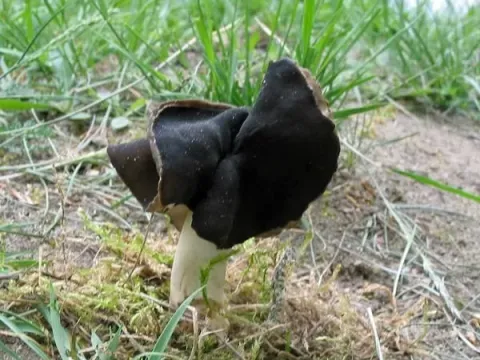
Helvella leucopus
Helvella leucopus
Helvella leucopus is a species of fungi belonging to the Ascomycota phylum. It is primarily a saprotrophic organism, meaning it feeds on decaying organic matter, though it is often studied in forest pathology due to its presence in sensitive agricultural zones.
What the section contains
Helvella leucopus
The fungus is characterized by its distinctive saddle-shaped, dark-colored pileus (cap) and a clean, white-to-cream colored stipe (stalk), which serves as its primary identification feature among other Helvella species.
The mycelium resides in the soil or leaf litter, effectively breaking down organic compounds. In an agricultural setting, its existence is often an indicator of high organic matter accumulation and moisture in the soil profile.
Reproduction occurs through spores produced in asci, which are released into the atmosphere and transported by air currents to new substrates. This rapid colonization allows the fungus to appear quickly when environmental conditions become favorable.
It is important to note that while some Helvella species are considered edible after proper preparation, they contain toxic compounds that require specific processing to remove, and they should be handled with caution.
The development of Helvella leucopus is heavily dependent on high soil moisture and moderate temperatures. The fungus thrives in shaded areas with loose, well-aerated, and nutrient-rich soil.
It is most frequently found in proximity to deciduous trees, specifically in damp environments under willow or poplar canopies. A thick layer of mulch or decaying leaf debris is essential for maintaining the humidity required for growth.
The peak fruiting period typically occurs during the spring and early summer months when temperatures remain consistently between 10 and 18 degrees Celsius.
Poor soil drainage and the lack of proper ventilation in greenhouses or nurseries create optimal microclimates that promote the emergence of fruiting bodies. Excessive irrigation often exacerbates the spread of this fungus.
Sudden changes in environmental humidity, such as prolonged drought, lead to the immediate suppression of mycelial activity and the cessation of mushroom formation.
The harmfulness of Helvella leucopus is largely indirect. As a saprotroph, it does not typically attack healthy plant tissues but competes with beneficial soil microorganisms for nutrients and space.
In forest nurseries and orchards, dense mycelial growth can lead to soil compaction around the root zone, reducing oxygen availability for seedling roots and hindering overall plant vigor.
The presence of this fungus is often a diagnostic sign of improper soil management or waterlogged conditions, which are known precursors for the development of more serious, pathogenic root diseases.
Metabolic byproducts released by the fungus during organic decomposition can slightly alter soil pH levels, potentially affecting the availability of essential trace elements for crop uptake.
While rarely a direct threat, its presence in large numbers signals an imbalance in the ecosystem, requiring growers to assess the sanitation and drainage of their planting sites.
The most effective strategy for managing Helvella leucopus is cultural control. This includes the thorough removal of leaf litter, woody debris, and other organic waste that provides a substrate for the fungus.
Improving soil drainage and implementing regular soil aeration techniques will lower the moisture content to levels unsuitable for the fungus to persist.
Adjusting the soil pH through liming can sometimes inhibit the development of this specific fungus, as it tends to favor slightly acidic or neutral conditions provided by decaying organic layers.
In commercial nursery settings, if the fungus becomes problematic, general-purpose fungicides targeting soil-borne organisms may be used, though this should be a last resort to preserve soil health.
- Sanitary removal of organic debris
- Enhancement of soil drainage and aeration
- Moisture management to avoid waterlogging
- Regular monitoring and removal of visible fruiting bodies