
Hemimycena
Hemimycena
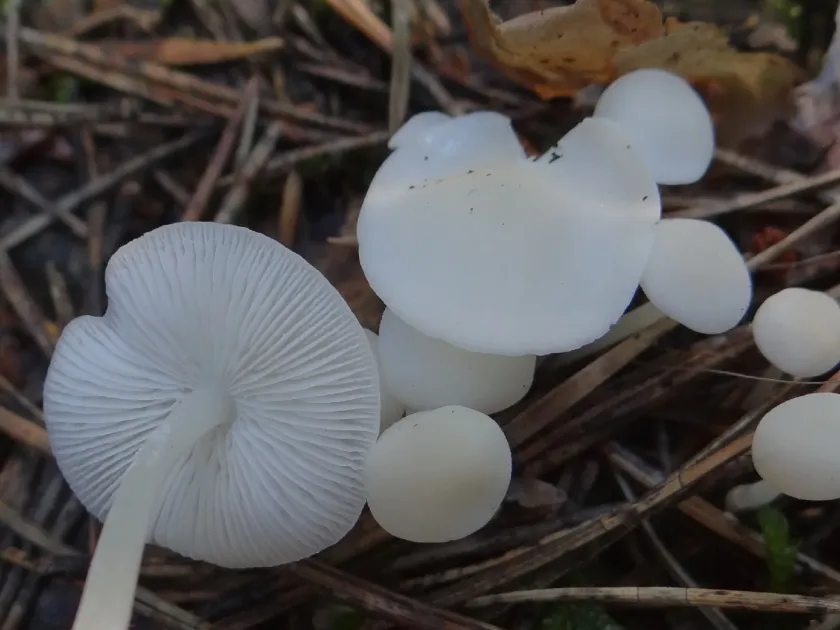
Description
Symptoms
The most common sign is the appearance of delicate, whitish, or translucent fruiting bodies (mushrooms) on plant stems or moist soil surfaces.
Infected areas of the plant tissue may appear softened, discolored, and water-soaked, often indicating the onset of secondary rot.
A thin, cobweb-like white mycelium may become visible on the surface of leaves or stems during periods of high humidity.
Symptoms often include premature yellowing of lower leaves and a general decline in the plant's vigor without a clear primary cause.
Growth of the fungus is usually concentrated around the base of the plant where organic residue accumulation is highest.
Pathogen
The genus Hemimycena includes small gilled fungi belonging to the Mycenaceae family. Most species are saprotrophic, meaning they derive nutrients from decaying organic matter.
These fungi play a crucial role in soil health by breaking down complex organic compounds like cellulose and lignin in plant debris.
In agricultural settings, they are typically considered non-pathogenic, yet they may exhibit opportunistic behavior under specific stress conditions.
The transition from a saprotrophic lifestyle to an opportunistic colonization of weakened living plant tissues is a known phenomenon in humid environments.
Taxonomically, the genus is complex, and research into their interaction with commercial crop species remains an ongoing area of study.
Conditions for development
The primary factor for Hemimycena proliferation is sustained high humidity, frequently exceeding 80% in the immediate plant environment.
Mild to moderate temperatures, typically between 15°C and 22°C, provide the ideal metabolic window for mycelial growth and fruit body formation.
Overcrowded plantings and lack of airflow create microclimates that trap moisture and prevent soil surfaces from drying effectively.
Presence of abundant crop residue or leaf litter serves as the primary substrate and nutritional foundation for the fungal population.
Poor soil drainage and waterlogging significantly increase the risk of fungal establishment and subsequent spread to plant tissues.
Why it matters
Direct harm is often limited, but the fungi can disrupt nutrient uptake by degrading the organic matter essential for the plant's rhizosphere health.
The colonization of stems and roots by mycelium can weaken the structural integrity of the plant, leading to lodging or stunted growth.
By causing superficial tissue damage, Hemimycena facilitates the entry of more virulent bacterial and fungal pathogens, leading to severe rot.
In high-density greenhouse systems, these fungi can be a nuisance by degrading mulching materials and affecting the health of young seedlings.
Overall yield losses are primarily attributed to the weakening of plant vitality, making them more susceptible to environmental stressors.
Protection
Effective management focuses on site sanitation, specifically the removal of debris that provides a substrate for the fungus to thrive.
Improving soil aeration and optimizing irrigation schedules are critical to preventing the moist conditions required for fungal growth.
Fungicidal treatments can be employed if the colonization becomes aggressive, focusing on soil drenches or systemic applications where appropriate.
- Maintain proper plant spacing to ensure adequate air circulation.
- Use well-drained growing media for greenhouse cultivation.
- Incorporate biological control agents such as Trichoderma species.
Strategic fertilization helps maintain robust plant growth, which naturally increases the plant's resistance to opportunistic fungal colonization.
Discussion
No discussions yet — be the first.