
Gymnoconia
Gymnoconia
The causal agent of this disease is the fungus Gymnoconia peckiana, a member of the Basidiomycota phylum. It is an obligate parasite, which means it requires a living host to survive and complete its life cycle.
What the section contains
Gymnoconia
The pathogen is characterized by systemic infection. Once it enters the host, the mycelium spreads throughout the vascular system, effectively colonizing the entire plant, including the roots and canes.
The fungus produces several types of spores, most notably aeciospores. These spores are bright orange and are responsible for the rapid spread of the disease during the spring months when environmental conditions are optimal.
Because the fungus is systemic, it overwinters within the host plant tissue. This allows the disease to emerge year after year from the same infected canes, progressively weakening the host plant's structure.
The biological nature of Gymnoconia peckiana is closely tied to the host's metabolic processes. By intercepting nutrients intended for the plant, the fungus ensures its own survival while depriving the host of energy.
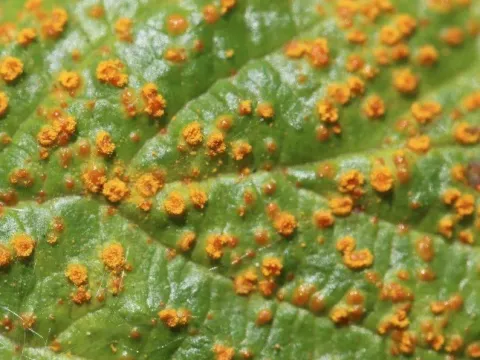
The most distinctive sign of infection is the appearance of bright orange, powdery aecia on the underside of the leaves. These pustules are often the first visible symptom appearing in early spring.
Affected canes often show severe malformations. They typically appear stunted, deformed, and brittle, with shorter internodes compared to healthy plant tissues growing under the same conditions.
As the season progresses, the orange pustules may be replaced or accompanied by darker telia. These teliospores represent a later stage in the fungal life cycle and indicate advanced colonization.
Foliage on infected plants tends to turn yellow and curl prematurely. This chlorosis significantly hampers photosynthesis, leading to reduced vigour and overall decline of the berry bush.
In advanced cases, the entire bush exhibits a sickly, flattened growth habit. Because the infection is systemic, these symptoms are typically consistent throughout the plant rather than being localized.
High humidity and cool to moderate temperatures during the spring are the primary triggers for Gymnoconia development. Moisture on the leaf surface is essential for spore germination.
Poor airflow within the planting site significantly increases the risk of the disease. Densely packed bushes trap humidity, creating a perfect microclimate for spores to land, germinate, and infect new leaves.
Poorly drained soils or sites located in low-lying areas often experience higher dew formation. This extra moisture availability supports the longevity and infectivity of the spores.
Cultural practices, such as excessive nitrogen application, can encourage succulent growth that is more susceptible to penetration by fungal hyphae. Balanced nutrition is crucial for maintaining plant resistance.
The presence of weeds and lack of sanitation around the bushes allow moisture to linger longer in the canopy. This increases the exposure time for potential infection from nearby sources.
The primary harm caused by Gymnoconia is the total loss of productivity. Because the fungus depletes the plant's resources, infected bushes rarely produce viable fruit, or the fruit produced is severely stunted.
The systemic nature of the pathogen means that infected plants are essentially incurable. They act as permanent reservoirs of infection, shedding millions of spores that can threaten nearby healthy specimens.
The fungus causes severe physiological stress, leading to the gradual death of the root system and canes. Over time, an infected plant will lose its ability to overwinter or produce new growth.
For commercial growers, the economic impact is high due to the necessity of complete removal and destruction of infected bushes. This leads to gaps in rows and the need for costly replanting.
The disease undermines the long-term sustainability of the plantation. Without rigorous control, an unchecked outbreak can spread through an entire orchard, rendering the production unviable.
The most critical control measure is the immediate removal of any plant showing signs of the disease. Infected bushes must be dug out, including their root systems, to prevent regrowth.
All infected plant debris should be destroyed, preferably by burning, away from the plantation site. Do not include diseased material in general compost piles, as spores may survive and reinfect the garden.
Establishing new plantings with certified disease-free nursery stock is the foundation of prevention. Always inspect new plants for any signs of abnormalities before introducing them into the orchard.
Maintaining adequate spacing between plants and performing regular pruning ensures good ventilation. This helps the foliage dry quickly after rainfall, reducing the likelihood of infection.
Fungicide applications have limited success against systemic rust infections. While they might reduce surface sporulation, they cannot eliminate the fungus residing deep within the plant tissues.