
Gymnopilus
Gymnopilus
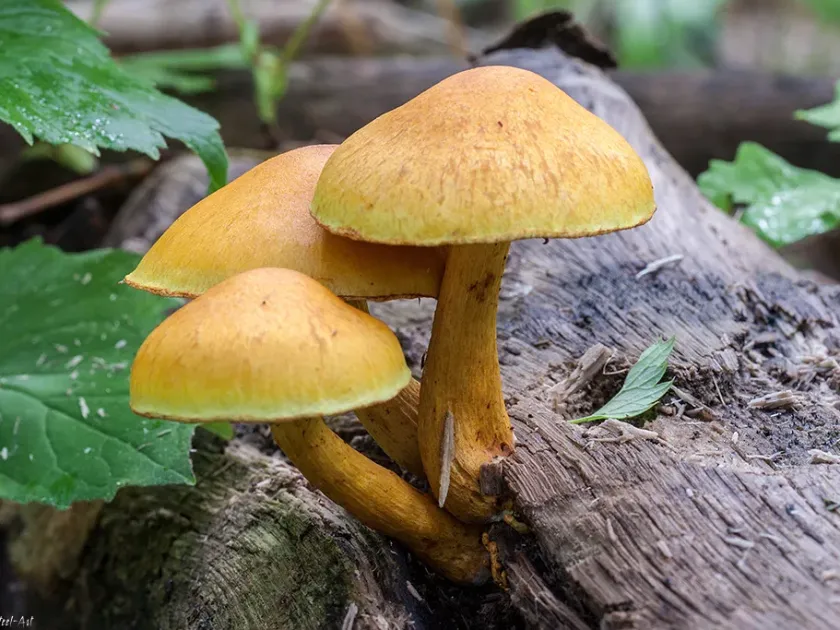
Description
Symptoms
The most prominent sign of a Gymnopilus infestation is the presence of clusters of rusty-orange or brownish mushrooms growing on the trunk, roots, or stumps.
Internal wood decay is characterized by a darkening of the heartwood, which eventually becomes brittle and prone to cracking into cubical fragments.
Above-ground symptoms often include a decline in tree vigor, characterized by thinning foliage, chlorosis, and the dieback of upper canopy branches due to compromised circulation.
Cracks and fissures may appear on the bark where the fungal mycelium has colonized the underlying tissue, often accompanied by resin exudation in conifers.
In advanced stages of infection, the overall structural stability of the tree decreases, making it prone to snapping under wind pressure or heavy snow loads.
Pathogen
Gymnopilus is a genus of gilled fungi that act as wood-decay pathogens. While often found on rotting wood, they can infect weakened living trees, causing significant internal damage.
The pathogen spreads through its mycelium, which infiltrates the wood tissues, specifically targeting structural components like lignin, leading to severe cell wall degradation.
This fungus is responsible for a form of brown rot. The destruction process involves the depletion of cellulose and lignin, leaving behind a brittle, dark-colored wood structure.
Gymnopilus fungi reproduce via spores released from their distinct fruiting bodies. These spores are dispersed by wind and can travel significant distances to find new hosts.
As facultative parasites, they easily transition from a saprotrophic phase on dead organic matter to an invasive phase on stressed host trees through open wounds or cracks.
Conditions for development
Gymnopilus thrives in environments with high humidity and moderate temperatures, which are essential for spore germination and mycelial expansion.
Open wounds are the primary entry points for infection. These can be caused by improper pruning, pest damage, frost cracks, or mechanical trauma during garden maintenance.
Stumps, fallen logs, and accumulated debris serve as vital reservoirs for the fungus, allowing it to persist in the environment and infect neighboring trees.
Poorly drained soils and sites with restricted air circulation increase the risk of infestation, as moisture persists on the tree bark, facilitating fungal growth.
Trees already stressed by drought, poor nutrition, or secondary pest infestations are significantly more susceptible to colonization by Gymnopilus species.
Why it matters
The primary damage caused by Gymnopilus is the loss of structural integrity, which presents a significant hazard in both residential gardens and managed forests.
Affected trees suffer from reduced physiological function, leading to decreased yields in orchards and inhibited growth in young or ornamental specimens.
The economic impact is high, as the decay makes the wood unusable for timber or structural purposes, and affected trees often require expensive removal.
The continuous spread of spores creates a cycle of infection that can rapidly affect an entire orchard if not managed through proper sanitation protocols.
Infection often predisposes the host to secondary colonizers, including wood-boring insects, which further accelerate the deterioration of the tree's vascular system.
Protection
Management begins with rigorous sanitation: promptly removing and destroying infected tree parts or entire trees before the fungi reach the reproductive stage.
All pruning wounds and mechanical injuries must be treated with appropriate fungicides or wound sealants to prevent the entry of fungal spores into the wood tissue.
Regular maintenance of the area, including the complete removal of stumps and decaying organic debris, is crucial for eliminating potential breeding sites.
Maintaining tree health through proper fertilization and irrigation helps trees develop stronger defense mechanisms, making them less vulnerable to fungal attack.
Sterilizing gardening tools between trees is an essential practice to prevent the accidental transmission of mycelium or spores throughout the garden or nursery.
Discussion
No discussions yet — be the first.