
Gymnopilus junonius
Gymnopilus junonius
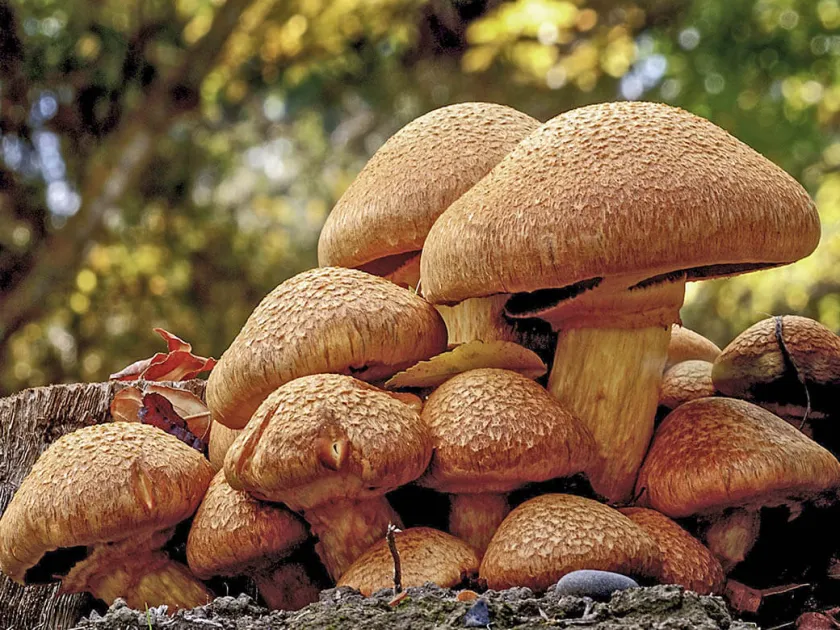
Description
Symptoms
The most evident sign of infestation is the emergence of large, orange, scaly-capped fruiting bodies at the base of the trunk or on the tree's surface. These mushrooms typically feature a prominent ring on the stem.
Visually, the infected wood undergoes a significant change in texture and color. It becomes soft, spongy, and brittle. The bark often begins to crack, peel, or break away, revealing the decaying tissues underneath.
When the trunk is tapped or struck, it often produces a hollow or dull sound rather than a solid one. This acoustic change indicates that the internal wood has been severely compromised by the mycelial network of the fungus.
The tree’s overall health usually declines as the infection progresses. Symptoms include yellowing leaves, premature leaf drop, stunted shoot growth, and a general loss of vigor, reflecting the tree's inability to transport nutrients effectively.
- Clusters of orange mushrooms at the tree base.
- Softening and discoloration of wood tissue.
- Cracking and peeling of the bark.
- Overall tree stress and crown decline.
Pathogen
The causative agent is the fungus Gymnopilus junonius, which belongs to the division Basidiomycota and class Agaricomycetes. In an agronomic context, it acts as a wood-decaying fungus, typically functioning as a saprotroph or a facultative parasite that colonizes wood.
The fungus consists of a vegetative mycelium that penetrates deep into the wood tissue. It secretes enzymes that break down lignin and cellulose, which are the main structural components of trees, leading to the gradual structural failure of the plant.
The fruiting bodies of Gymnopilus junonius are distinctive, featuring golden-orange or brownish caps. They often grow in large, tight clusters, which makes them highly visible once they emerge from the bark or the base of a tree.
The fungus reproduces via spores, which are dispersed primarily by wind and insects. These spores easily land in cracks, crevices, or open wounds of trees, where they germinate and initiate new colonies, especially in moist environments.
This species is not host-specific and can attack a wide variety of woody plants. It is most commonly found on decaying logs, stumps, and the trunks of stressed or damaged deciduous and coniferous trees.
Conditions for development
Gymnopilus junonius development is highly dependent on humidity and moisture levels. High humidity in late summer and autumn creates the ideal environment for the formation of fruiting bodies and active spore release.
The fungus thrives on trees that have sustained mechanical damage. Wounds caused by storms, pruning errors, or sunscald provide the entry points required for the fungal spores to colonize the interior of the tree.
Temperatures ranging from +15 to +25 degrees Celsius are optimal for the growth of the fungal mycelium. It colonizes dead and dying wood quickly, utilizing the material as an energy source to expand its influence.
Lack of proper aeration and dense planting can create microclimates with stagnant, moist air. These conditions are highly favorable for the fungus, as they prevent the drying out of potentially susceptible tree wounds.
Neglected gardens with leftover stumps and rotting logs serve as long-term reservoirs for the fungus. These sources continuously release spores into the surrounding area, increasing the risk of infecting nearby healthy trees.
Why it matters
The primary danger is the development of white rot, which destroys the mechanical strength of the tree. This turns the tree into a safety hazard, as it may break or fall unexpectedly, especially during strong winds.
The damage is systemic and usually irreversible. Once the mycelium has infiltrated the heartwood, the tree’s structural integrity is compromised, often leading to the eventual death of the specimen or the need for removal.
The presence of this fungus on a property represents a severe phytosanitary risk. Because it produces high volumes of spores, it can easily spread to other woody plants, potentially creating an epidemic within the garden or forest.
The fruiting bodies of Gymnopilus junonius contain chemical compounds that are toxic to humans and pets. Their appearance in accessible areas necessitates careful removal to prevent accidental consumption or exposure.
Economic damage includes the loss of aesthetic or productive value of the trees and the significant costs associated with professional tree removal and site sanitation to prevent the spread of the infection to remaining trees.
Protection
The first line of defense is rigorous maintenance and injury prevention. All mechanical wounds on trees should be promptly cleaned, disinfected, and sealed with pruning paste or tree wound sealant to prevent fungal entry.
Sanitary garden practices are essential. All rotting stumps, fallen branches, and severely infected trees should be removed and destroyed by burning or disposal far from the site to eliminate sources of inoculum.
Preventive spraying of copper-based fungicides in the spring and autumn can help reduce the spore load on tree surfaces and provide a protective barrier, especially on trees prone to bark damage.
Promoting tree health through proper irrigation, fertilization, and site management enhances the tree’s natural immunity. Strong, vigorous trees are far more successful at compartmentalizing wounds and resisting fungal intrusion.
If the fungus is detected, all visible fruiting bodies must be removed immediately to prevent spore dispersal. The infected area should then be treated with powerful wood antiseptics, and in severe cases, removal of the entire tree is advised.
Discussion
No discussions yet — be the first.