
Gymnopilus liquiritiae
Gymnopilus liquiritiae
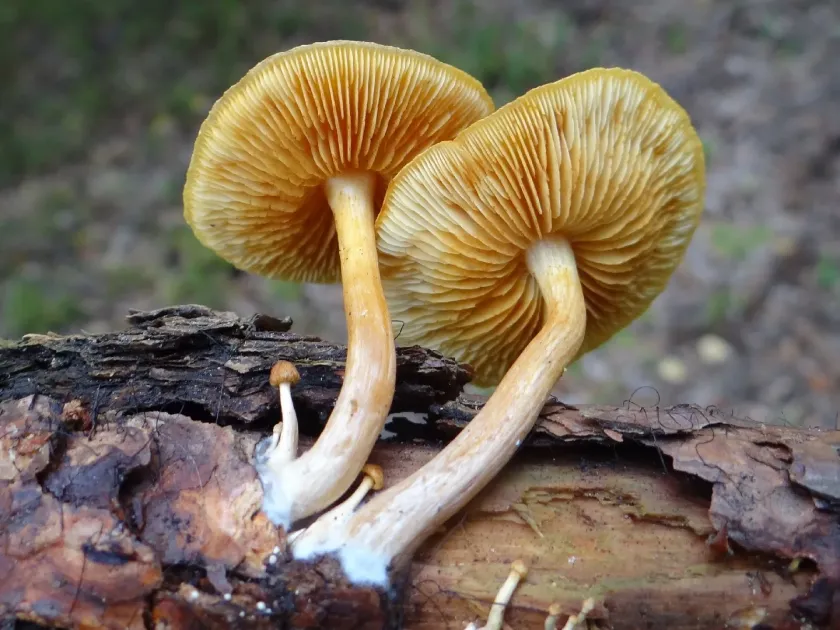
Description
Symptoms
The presence of Gymnopilus liquiritiae is often indicated by the appearance of yellowish-brown to reddish-brown fruiting bodies on stumps and stems.
Affected wood undergoes a noticeable color change, transitioning to a deep brown or reddish-brown hue characteristic of brown rot.
As the infection progresses, the wood loses its tensile strength and begins to crack into distinct, characteristic cubical fragments.
These fragments can be easily broken down by hand, as the fungal enzymes have already depleted the binding lignin components.
In advanced stages, the internal parts of the colonized wood may exhibit white or tan fungal rhizomorphs or mycelial mats between the layers.
Pathogen
Gymnopilus liquiritiae is a species of saprotrophic fungus belonging to the Hymenogastraceae family within the Agaricomycetes class.
It acts as a wood-decay agent, specialized in breaking down complex structural polymers like cellulose and lignin found in woody tissues.
The fungus develops a network of mycelium that colonizes the interior of the wood, systematically destroying its structural integrity over time.
The reproductive strategy of the pathogen involves the emergence of orange-brown mushrooms that release spores into the surrounding environment.
This species is widely known as a brown rot agent, which preferentially targets coniferous tree species, though it can occasionally affect hardwood.
Conditions for development
The fungus thrives in environments with high moisture content, which is essential for both spore germination and mycelial expansion.
Infection primarily occurs through entry points such as bark wounds, pruning cuts, frost cracks, or mechanical damage caused by logging equipment.
Moderate temperatures ranging from 15 to 25 degrees Celsius facilitate the optimal metabolic rate for the fungus to decompose woody substrates.
Forest stands with poor airflow and high humidity levels provide an ideal microclimate for the fungus to persist and propagate.
Stagnant debris and uncleared dead wood within the plantation serve as primary reservoirs for new outbreaks in the local environment.
Why it matters
The primary harm caused by Gymnopilus liquiritiae is the severe degradation of wood quality, rendering logs unsuitable for timber production.
Structural weakening of the tree trunk poses a significant safety risk, as infected trees become susceptible to windthrow and breakage.
The disease contributes to the overall loss of tree vitality, leading to crown thinning, reduced growth rates, and eventually tree mortality.
In urban landscapes, the presence of this fungus requires costly management interventions to prevent accidents caused by falling branches or trees.
The cumulative damage in forest stands results in lower commercial value and ecosystem degradation due to the loss of mature tree stock.
Protection
Effective management requires consistent forest hygiene practices, including the timely removal of infected trees and decaying woody debris.
Preventing physical damage to tree bark during maintenance operations is crucial to closing potential entry routes for fungal spores.
Applying protective fungicides to fresh pruning wounds or tree injuries can serve as an effective preventative measure against colonization.
Maintaining proper tree density and health through selective thinning helps improve airflow and reduces moisture retention within the canopy.
- Regular monitoring of tree health to detect early colonization.
- Immediate removal of fruiting bodies to limit spore distribution.
- Sanitation logging to remove heavily decayed wood sources.
- Avoidance of root and stem injuries during site management.
Discussion
No discussions yet — be the first.