
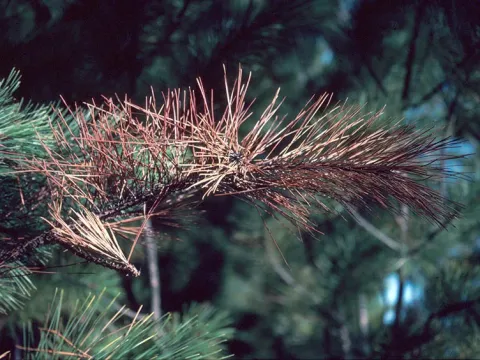
Gremmeniella canker
Gremmenia pini-cembrae
The disease is caused by the fungus Gremmenia pini-cembrae, a specialized pathogen targeting pine species, particularly the Swiss stone pine. It belongs to the group of ascomycetes that infect the needles and shoots of coniferous trees.
What the section contains
Gremmeniella canker
The life cycle of the fungus is closely linked to the presence of weakened or dead tissues on the tree branches. Once spores penetrate the host, the mycelium begins to colonize the plant's tissues, disrupting its normal physiological functions.
The fungus produces small, dark fruiting bodies known as apothecia, which appear on the surface of infected needles or bark. These structures serve as the primary source of inoculum for further infections in the stand.
Dissemination occurs primarily via spores spread by wind and splashing rainwater. High humidity and cool temperatures are crucial for spore germination and the successful colonization of new host tissues.
As a highly adapted parasite, the fungus can persist for long periods in infected branches, waiting for favorable environmental conditions to trigger mass sporulation and disease expansion.
The primary symptom is the discoloration of needles, which turn yellow or reddish-brown. Unlike natural needle drop, affected needles often remain on the branches, creating a blighted appearance on young growth.
Dieback of the terminal shoots is a characteristic sign of the disease. Shoots may bend or become stunted, which leads to significant crown deformation and reduced tree growth rates over time.
Upon closer inspection, dark fruiting bodies (apothecia) can be observed on the bark of infected twigs. These are particularly visible during damp weather when they expand and become more distinct against the bark.
Resinosis, or excessive resin flow, is a common defensive response by the tree in areas where the fungus has penetrated the bark. This resin often crystallizes on the branches, marking the sites of infection.
- Yellowing and browning of needles on young branches.
- Formation of dark, small apothecia on bark and needles.
- Curling and wilting of terminal shoots.
- Excessive resin exudation at infection sites.
- Progressive needle drop and crown thinning.
High relative humidity and cool to moderate temperatures are the primary environmental drivers for this disease. Prolonged rainy periods significantly increase the risk of an outbreak in pine stands.
Dense planting configurations that limit air circulation exacerbate the problem by keeping the canopy humid. Poor ventilation prevents needles from drying out, facilitating fungal spore germination.
Stress factors, such as drought, nutrient deficiencies, or soil compaction, make trees more susceptible to fungal attacks. An unhealthy tree lacks the robust defense mechanisms required to suppress the infection.
The early spring period, characterized by fluctuating temperatures and high moisture levels from melting snow, is a high-risk window for the initial infection of new seasonal growth.
Inadequate forest management, particularly the failure to remove infected pruning waste, leads to a buildup of the pathogen in the immediate environment, increasing the pressure on healthy trees.
The main impact of the disease is a significant reduction in the growth vigor of the affected trees. Loss of needles prevents the tree from photosynthesizing efficiently, leading to overall metabolic exhaustion.
Young trees are at the highest risk of mortality. In forest nurseries and young plantations, Gremmeniella canker can lead to severe losses, requiring extensive replanting and maintenance efforts.
The disease significantly lowers the aesthetic value of stone pines, which is a major concern in landscaping and ornamental forestry. The resulting crown deformation is often permanent.
Infected trees become highly attractive to secondary pests, including bark beetles. The combination of fungal infection and insect infestation often leads to the rapid death of the host tree.
The spread of the pathogen across large areas can disrupt local ecosystems and hinder reforestation efforts, necessitating long-term control measures to protect the integrity of the forest stand.
Sanitation pruning is the most effective initial control measure. All infected branches must be removed and destroyed by burning to eliminate the inoculum source from the site.
The application of fungicides containing copper or systemic compounds can help protect healthy trees during periods of high infection risk. Proper timing and coverage are essential for treatment efficacy.
Maintaining optimal silvicultural standards is vital for prevention. This includes thinning dense stands to improve airflow, ensuring adequate drainage, and providing balanced fertilization to bolster tree immunity.
Regular monitoring of stands is necessary to detect early symptoms. Early detection allows for targeted intervention, which is much more effective than attempting to manage an established, widespread infection.
Utilizing resistant or proven seed sources is the preferred long-term strategy for managing this disease. Breeding programs focusing on resistance can provide sustainable solutions for forest health management.