
Grey coffee rust
Hemileia coffeicola
Description
Symptoms
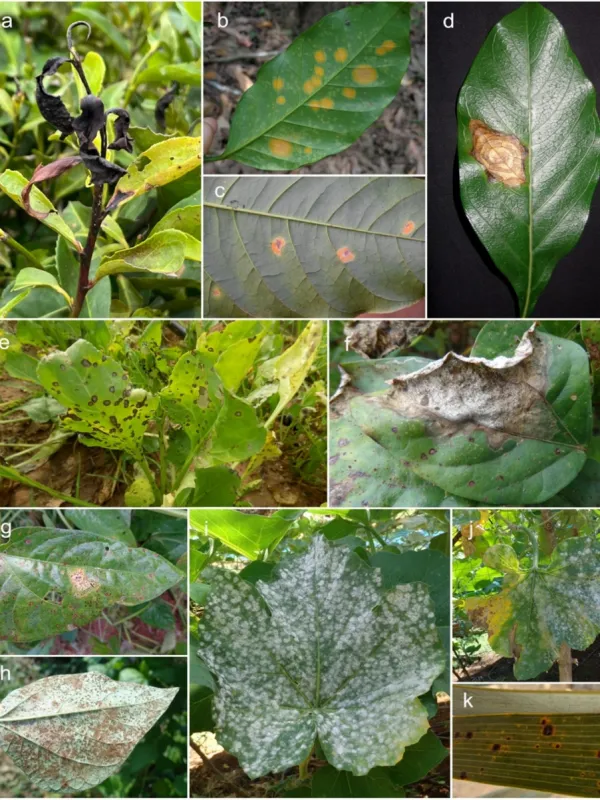
The primary symptom of grey coffee rust is the appearance of greyish to brownish patches on the abaxial (lower) surface of the leaves. These patches are clusters of fungal sporulation structures.
As the infection advances, the leaf tissue in the affected areas becomes chlorotic, showing yellowing patterns. The fungus disrupts the host's photosynthetic ability, leading to localized starvation of the leaf cells.
Severe infestations lead to premature leaf drop, a condition known as defoliation. This process can significantly impact the plant's ability to store energy for the next growing season.
Small, irregular necrotic spots may appear on the upper surface of the leaves, corresponding to the fungal colonies located beneath. If left untreated, these spots coalesce and cover large areas of the leaf blade.
Young twigs and shoots may also become stunted due to the overall loss of vitality in the plant. Chronic infections lead to "dieback" where the coffee branches wither and eventually die.
Pathogen
The causal agent of grey coffee rust is the fungus Hemileia coffeicola, a specialized basidiomycete. Unlike the more common orange rust, this pathogen has distinct morphological characteristics and specific host-parasite interactions.
It is an obligate parasite, meaning it requires living coffee tissues to survive and propagate. The fungus develops its mycelium within the leaf tissue, specifically targeting the mesophyll layers after entering via stomata.
The reproductive phase of the fungus involves the formation of uredinia on the underside of coffee leaves. These structures produce spores that are dispersed by wind and rain splashes to initiate new infection cycles.
Research suggests that Hemileia coffeicola possesses a unique genetic structure that allows it to thrive in specific climatic conditions. It is particularly noted for its presence in high-altitude coffee growing regions.
The pathogen's ability to survive on coffee leaves makes it a persistent threat. Continuous observation of the canopy is necessary to detect the presence of the fungus in its early stages.
Conditions for development
Grey coffee rust development is highly dependent on humidity and temperature. It prefers cooler, moist conditions typical of highland tropical environments where coffee is frequently cultivated.
High relative humidity provides the essential moisture for the spores to germinate. Rain splashes play a dual role by both spreading the spores and maintaining the wet surface required for penetration.
Lack of airflow in the coffee plantation exacerbates the spread of the disease. Densely planted orchards with thick canopies trap moisture, creating a perfect microclimate for Hemileia coffeicola.
Foggy mornings and overcast days frequently coincide with high infection rates. The prolonged presence of moisture on leaves facilitates the fungus's entry into the stomatal apertures.
Seasonal patterns of rainfall often determine the intensity of the outbreak. Farms located in areas with consistent wet seasons are at a higher risk of persistent fungal activity throughout the year.
Why it matters
The most significant impact of grey coffee rust is the drastic reduction in total crop yield. Since leaves are the energy engines of the plant, their loss prevents the berries from developing fully.
In addition to yield loss, the quality of the harvested coffee beans is often compromised. Deficient nutrient accumulation results in smaller, lower-grade beans that fetch lower prices in the market.
The economic burden extends to the costs of disease management, including the purchase and application of fungicides. Sustainable production becomes difficult when constant chemical intervention is required.
Weakened trees are more susceptible to other pests and opportunistic pathogens. This creates a cycle of decline that can lead to the death of entire blocks of coffee plants if not managed properly.
The long-term health of the plantation is jeopardized, as the constant drain of energy prevents the tree from cycling its fruit production effectively over several years.
Protection
Effective control relies heavily on the use of fungicides, particularly those containing copper. These should be applied preventively, based on a schedule synchronized with seasonal weather patterns.
Cultural practices are crucial for long-term suppression. Regular pruning of the coffee trees ensures better airflow and light penetration, effectively drying out the foliage and making the environment less hospitable.
Developing and planting resistant cultivars remains the most effective long-term solution. Breeding programs are focused on identifying genetics that can withstand the attack of Hemileia coffeicola.
Sanitation is a vital component of control. Removing and properly disposing of infected leaves and debris helps to lower the initial inoculum level within the farm.
- Establish a regular scouting program to detect early signs of infection.
- Maintain proper plant spacing to improve canopy aeration.
- Optimize nutrient application to enhance the coffee tree’s natural defenses.
- Implement integrated pest management strategies to reduce reliance on chemicals.
Discussion
No discussions yet — be the first.