
Gremmeniella canker of larch
Gremmeniella laricina
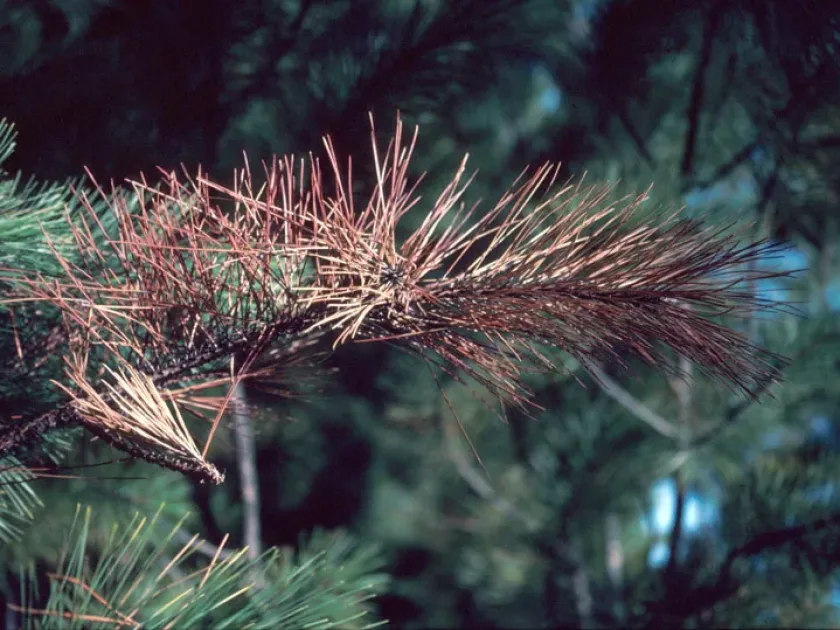
Description
Symptoms
Symptoms often start with the yellowing and browning of needles, which eventually results in premature needle drop across the infected parts.
Visible cankers (lesions) develop on the stems or branches, which may be accompanied by noticeable resin flow as the tree attempts to seal the wound.
Dieback of the leading shoots and tips is a common indicator of a systemic infection, often leading to a distorted and stunted growth form.
Small, colorful fruiting bodies may appear on the bark of deceased twigs during periods of high humidity, confirming the presence of the pathogen.
In advanced stages, branches lose their ability to support foliage, leading to a classic "flagging" effect where isolated sections of the canopy turn brown.
Pathogen
The disease is caused by the fungus Gremmeniella laricina, an ascomycete pathogen that specifically targets larch species, causing severe damage to branches and stems.
The pathogen colonizes the bark and cambium layers of the host tree, interfering with the plant's ability to transport nutrients and water effectively.
Reproduction involves the formation of apothecia on necrotic tissue, which release spores that act as the primary source of infection in favorable conditions.
Transmission occurs through the dispersal of spores by rain splashes and wind, enabling the disease to spread rapidly through plantation stands.
The fungus is capable of surviving within infected tree tissue for multiple seasons, making it a persistent threat in nurseries and young plantations.
Conditions for development
Gremmeniella laricina thrives in environments characterized by cool, wet summers and high relative humidity.
Stressed trees, often suffering from drought or nutrient deficiencies, are significantly more susceptible to successful colonization by the fungus.
High-density planting creates a stagnant microclimate with poor air circulation, which is perfect for fungal spore germination and infection.
Late spring frosts that damage tender bark tissues can provide entry points for the pathogen to establish itself within the tree.
Poorly drained sites with waterlogged soil can weaken root systems, making the entire tree more vulnerable to fungal attacks.
Why it matters
This pathogen causes significant economic losses in forestry by killing young saplings and reducing the growth rates of mature larch trees.
Infected timber loses its commercial value due to the presence of deep necrotic lesions and decay caused by the fungal activity.
The disease reduces the overall biodiversity and resilience of forest stands, making them more prone to secondary pest infestations.
Management of the disease requires intensive monitoring and costly sanitation measures to prevent the spread to adjacent healthy areas.
The loss of nursery stock due to this fungus can disrupt reforestation projects and delay the establishment of new tree stands.
Protection
Sanitation is the most critical control measure; all infected branches and dead trees must be removed and destroyed to limit the spore load.
Ensuring proper spacing and thinning during the planting phase is essential to improve airflow and reduce humidity levels within the stand.
Prioritizing the use of genetically resistant larch varieties in reforestation programs can significantly reduce the risk of future outbreaks.
In nursery settings, applications of appropriate fungicides may be necessary during periods of high risk to protect young seedlings.
Regular forest health monitoring and early detection of canker symptoms are vital for preventing the disease from reaching epidemic levels.
Discussion
No discussions yet — be the first.