
Grey milkcap
Lactarius vietus
Description
Symptoms
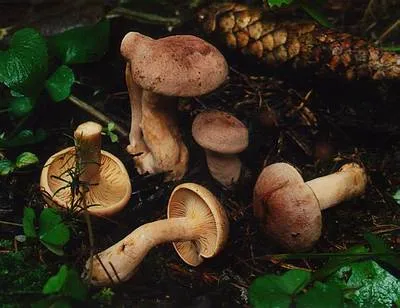
The mushroom features a cap 3–8 cm in diameter, initially convex and becoming depressed or funnel-shaped as it matures.
The cap color ranges from greyish-pink to brownish-lilac, often displaying concentric zones that help in identification.
The gills are crowded and decurrent, showing whitish colors that eventually shift to ochre as the mushroom ages.
When the flesh is damaged, it exudes an abundant white milky latex, which slowly turns greyish-green upon exposure to air.
The stipe is often hollow, cylindrical, and usually lighter in color than the cap, with a surface that can be slightly viscous.
Pathogen
The Grey milkcap (Latin: Lactarius vietus) is a mushroom species belonging to the Russulaceae family. It is vital to state that this organism is not a plant disease.
Biologically, it is a mycorrhizal fungus that forms symbiotic relationships with trees, providing them with nutrients in exchange for sugars.
This fungus does not attack crop plants or trees and does not cause necrotic, vascular, or rot-based diseases.
Its mycelium grows within the soil and leaf litter, maintaining an ecological balance rather than acting as a plant parasite.
Because it lacks the mechanisms to break down live plant tissue, it poses no threat to agricultural productivity or plant health.
Conditions for development
The species favors moist habitats and is commonly found in deciduous or mixed forests, especially in proximity to birch trees.
Fruiting bodies typically appear from late summer through autumn, coinciding with periods of high humidity and moderate temperatures.
It prefers acidic, organic-rich forest soils which facilitate the growth of its vegetative mycelium.
Spores are dispersed by wind currents, ensuring the colonization of suitable forest patches across large areas.
Mycelial development thrives in temperatures between 15°C and 22°C, provided the soil moisture remains consistent throughout the season.
Why it matters
As a non-pathogenic organism, Lactarius vietus causes no economic or agricultural damage.
It does not participate in the degradation of healthy plant tissues or the development of systemic diseases.
There are no recorded instances of this fungus interfering with crop yields or plant growth in horticultural settings.
In forest ecosystems, its role as a mycorrhizal partner is beneficial to tree health rather than harmful.
Consequently, it is not listed in plant pathology databases or pest monitoring programs for agriculture.
Protection
Control measures are unnecessary since the species does not act as a pest or pathogen affecting cultivated plants.
If plant diseases are suspected in a field or garden, professional analysis should be performed to identify the actual causative agents.
The removal or eradication of mycorrhizal fungi from ecosystems is considered counterproductive for soil health and biodiversity.
Preventative strategies are not required for this mushroom, as it does not pose any risk to agricultural or forest resources.
Integrated plant protection programs should focus on managing actual fungal pathogens, such as those causing rusts, blights, or root rots.
Discussion
No discussions yet — be the first.