
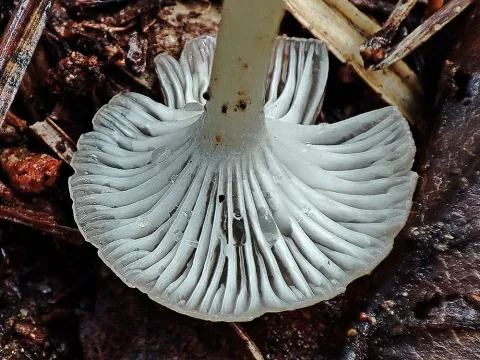
Gerronema
Gerronema
The genus Gerronema consists of basidiomycete fungi that, in an agronomic context, are often treated as facultative parasites or saprotrophs capable of attacking weakened plant tissues.
What the section contains
Gerronema
The pathogen belongs to the Mycenaceae family and is characterized by the formation of fruit bodies on substrates, which often consist of rotting wood or plant debris.
Biologically, the fungus spreads through basidiospores that are carried by air currents, water, or insects, settling on damaged parts of cultivated plants.
The fungal mycelium penetrates deeply into the host plant's tissues, breaking down cell walls through the secretion of cellulolytic and ligninolytics enzymes.
The disease is classified as a type of secondary necrosis or white rot, which develops in the presence of stress factors affecting the plant organism.
A primary symptom of infection is the appearance of a characteristic white or cream-colored fungal mat on the surface of the bark, roots, or root collar of the plant.
In areas where the mycelium has penetrated, tissue softening occurs, accompanied by a color change to a lighter shade, indicating the destruction of lignin.
As the disease progresses, small fruit bodies of the fungus, often funnel-shaped or fan-shaped, may form on the affected areas.
Leaves of the affected plant often turn yellow prematurely, lose turgor, and wilt, as the fungus disrupts the vascular system or destroys the root structure.
In advanced cases, bark detachment and deep cambium damage occur, leading to the total death of branches or the entire plant within one or two seasons.
The development of Gerronema depends directly on environmental humidity levels: optimal values for active fungal growth are between 80% and 95%.
Temperatures ranging from 18 to 25 degrees Celsius are considered most favorable for the rapid proliferation of the pathogen's vegetative body.
The presence of mechanical injuries on the plant, caused by pests or improper pruning, significantly increases the risk of infection.
Dense planting and a lack of proper aeration contribute to creating a microclimate that is ideal for spore germination and the establishment of fungal colonies.
Poor soil drainage and waterlogging in the root zone are critical factors that trigger the development of fungal root rots.
The primary danger of this fungus lies in its ability to rapidly destroy plant structural elements, leading to a significant loss of crop commercial value.
Infection of woody and shrub species leads to irreversible necrotic changes, preventing the plant from photosynthesizing or fruiting effectively.
The fungus facilitates the spread of secondary infections, providing entry points for bacteria and other parasitic microorganisms through damaged tissue areas.
Under intensive horticultural conditions, Gerronema can lead to mass plant mortality, causing severe economic losses for the farm.
The long-term survival of the mycelium in plant debris makes the soil a source of infection for several years, complicating future planting in the same area.
Prevention begins with strictly adhering to good agronomic practices, including timely sanitary pruning and disinfecting tools after working on each plant.
It is necessary to maintain an optimal water balance by preventing soil waterlogging and ensuring effective drainage from the site.
When infection foci are detected, mechanical removal of affected plant parts is recommended, followed by the burning of all debris away from the garden.
The use of systemic fungicides based on copper or specific triazoles is effective in suppressing mycelium growth during the early stages.
Regular application of phosphorus-potassium fertilizers improves the plant's natural immunity, making tissues more resistant to pathogen penetration.