
Ghost fungus
Omphalotus nidiformis
Description
Symptoms
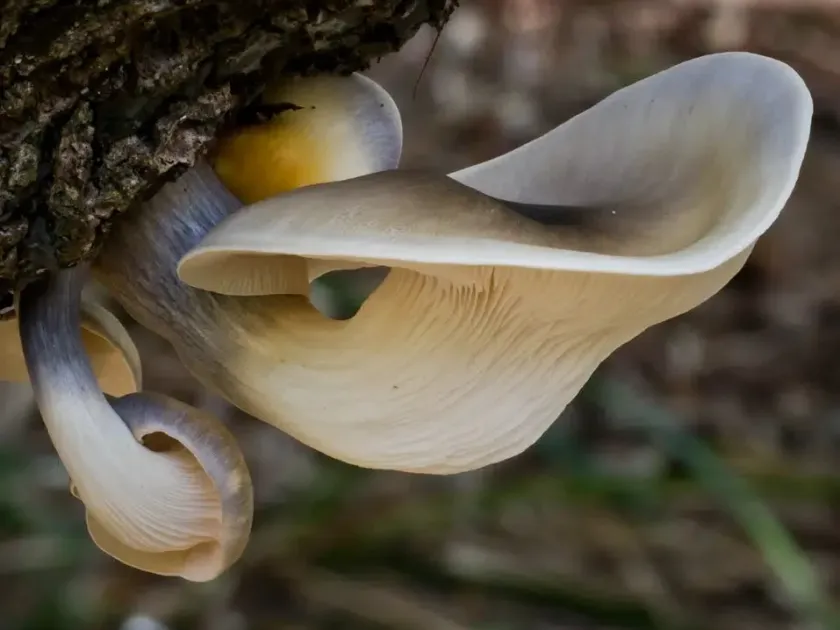
The most distinctive visual signs are the clusters of funnel-shaped mushrooms that appear at the base of trees or on damaged trunks.
The fruiting bodies display a range of colors, from white and cream to brownish-purple, often merging together in large groups.
Internal wood decay, characterized by a white rot, is the primary symptom occurring deep within the heartwood of the tree.
As the infection progresses, affected trees may show signs of canopy thinning, leaf chlorosis, and premature senescence.
Cracking of the bark at the base of the trunk is a common sign indicating that the fungus has deeply penetrated the woody tissue.
Pathogen
The ghost fungus (Omphalotus nidiformis) is a basidiomycete fungus known primarily for its striking bioluminescent properties.
As a pathogen, it acts as a wood-decay fungus that thrives by breaking down structural components like lignin and cellulose within living tree hosts.
The mycelium colonizes the inner bark and sapwood, gradually spreading throughout the trunk and root systems.
It is classified as a facultative parasite, meaning it can survive on dead organic matter but often invades living trees through wounds.
The biological cycle of the fungus involves the production of spores that are spread by air currents to colonize new, susceptible hosts.
Conditions for development
The ghost fungus thrives in high humidity and moderate temperatures, which are common in dense forest environments.
It predominantly targets trees that have already been weakened by environmental stressors, such as drought, fire, or mechanical impact.
The entry points for the pathogen are typically wounds, pruning cuts, or frost cracks that expose the interior wood to spores.
Favorable conditions for growth occur throughout the wetter months of the year when moisture supports mycelial expansion.
The fungus is highly resilient and can persist in soil and woody debris for long periods, waiting for suitable environmental conditions to fruit.
Why it matters
The damage caused by this fungus is primarily structural, as the decay compromises the stability of the tree trunk.
Trees infected by this pathogen face an increased risk of collapse, posing a significant hazard in public areas and forests.
Economic losses are associated with the degradation of timber quality and the necessity of removing large, infested trees.
The pathogen disrupts the transport of water and nutrients, eventually leading to the death of the tree if left untreated.
Ecologically, the presence of this fungus can significantly alter local forest dynamics by thinning out susceptible tree populations.
Protection
Sanitation practices are essential, including the removal and destruction of infected stumps and dead wood to reduce spore loads.
Avoiding mechanical injury to healthy trees during maintenance or construction is a critical preventative measure.
Applying protective wound sealants to any exposed wood after pruning helps prevent the entry of fungal pathogens.
Regular monitoring of forest and orchard health allows for the early detection and management of infected individuals.
Fungicide treatments are generally ineffective against established internal infections, so prevention remains the best defense strategy.
Discussion
No discussions yet — be the first.