
Giant club
Clavariadelphus pistillaris
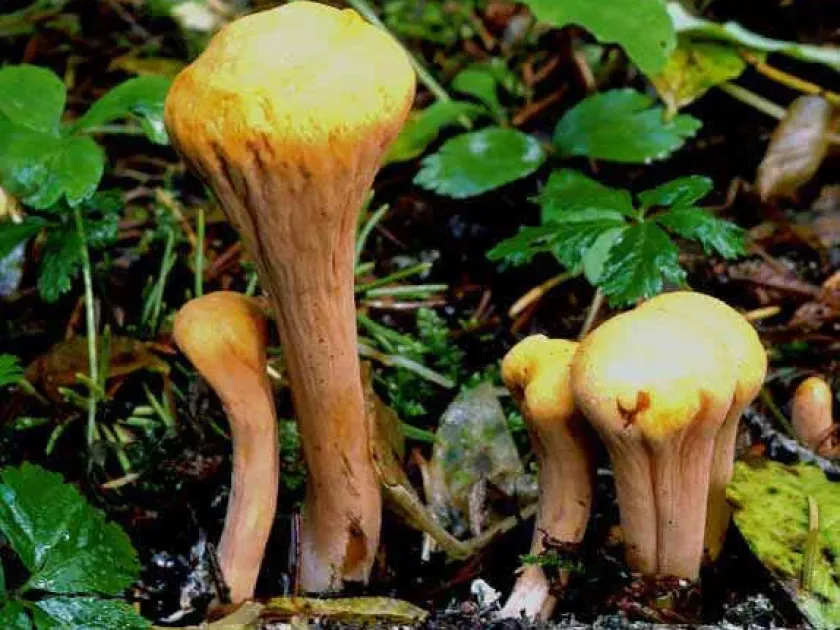
Description
Pathogen
The giant club fungus (Clavariadelphus pistillaris) is not a plant pathogen and does not cause diseases in crops or trees.
It is classified as a saprotrophic fungus, which means it feeds on decaying organic matter rather than living plant tissues.
The fungus plays an essential role in forest ecosystems by decomposing leaf litter and woody debris, facilitating nutrient recycling.
Unlike parasitic fungi that invade plants to extract nutrients, this species lacks any mechanism to damage healthy host plants.
Its biological structure consists of a single, club-shaped fruit body that emerges from the mycelium embedded in the forest soil.
Conditions for development
This fungus typically thrives in mature broad-leaved forests, specifically where beech or oak trees are present.
The development of its fruit bodies is highly dependent on high humidity and the accumulation of a thick layer of leaf litter.
Optimal growth occurs during late summer and autumn when the temperature and moisture levels are most stable in the soil.
Shaded environments with minimal direct sunlight are preferred, providing the necessary microclimate for the mycelium to spread.
Environmental stability is crucial for the fungus, as it is highly sensitive to habitat disturbance or changes in soil structure.
Why it matters
There is no threat posed by Clavariadelphus pistillaris to agriculture, horticulture, or any cultivated flora.
It does not cause any form of rot, wilting, or physiological stress in plants, making it harmless to farmers and gardeners.
In fact, its presence indicates a healthy forest soil profile where organic breakdown is occurring naturally and efficiently.
Protective measures are not required, as the species does not act as a pest or a disease agent in any agricultural context.
On the contrary, this species is considered rare in many jurisdictions and is often protected to maintain biodiversity.
Protection
- No chemical, mechanical, or biological control is needed for this species.
- Avoid destroying its natural habitat in forest areas to preserve local biodiversity.
- Ensure natural leaf litter layers are maintained in forested zones to support saprotrophic fungi.
- Promote awareness that this species is a beneficial part of the ecosystem, not a pathogen.
- Consult local conservation guidelines if managing forest lands where this rare species is present.
Discussion
No discussions yet — be the first.