
Giant gyromitra
Gyromitra gigas
Description
Symptoms
The Giant gyromitra, known scientifically as Gyromitra gigas, is a fungus that is often confused with plant pathogens due to its appearance on agricultural soils. However, it is primarily a saprotrophic organism that thrives on decaying wood.
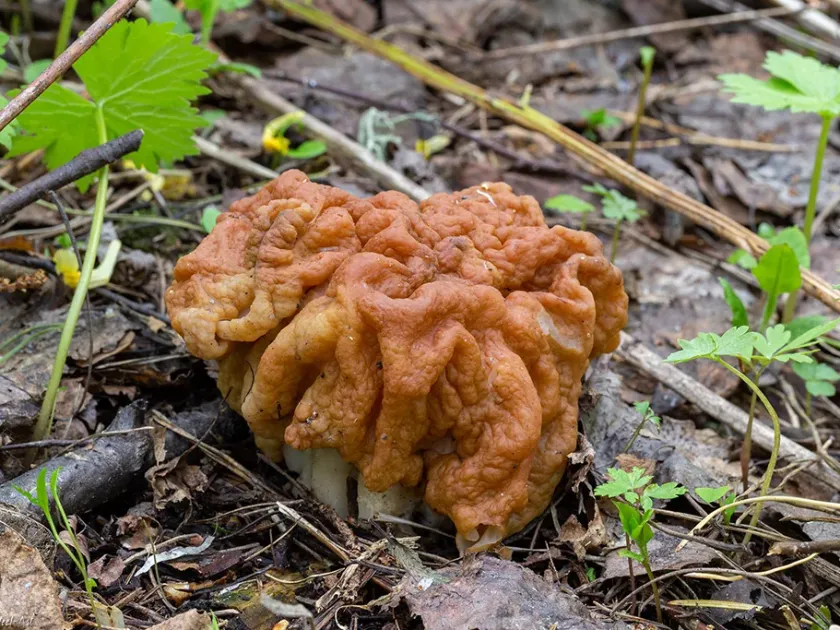
The most visible signs are the large, brain-like fruiting bodies that emerge in early spring. These structures can grow up to 30 cm in diameter and vary in color from light yellowish to tan or brown.
They are frequently found at the base of old spruce or birch trees, where they interact with decomposing organic matter. Their presence is a strong indicator that the soil contains significant woody debris.
While the mushroom is visible, the vegetative part, or mycelium, is hidden within the soil profile or inside rotting wood. It spreads in a network fashion, gradually colonizing suitable nutrient-rich substrates.
Fruiting typically occurs in April and May, coinciding with the warming of the soil. Once the conditions for sporulation are met, the mushrooms appear rapidly, but they do not persist for long in the environment.
Pathogen
The pathogen, or rather the organism in question, belongs to the family Discinaceae. It acts as a primary decomposer, specialized in breaking down cellulose and lignin, which are components of woody tissues.
It is not a formal plant disease pathogen that directly attacks living crops. Nevertheless, its role in nutrient cycling can influence the chemical properties of the soil, which in turn affects surrounding vegetation.
Its life cycle starts with spore dispersal, followed by mycelial colonization of dead wood. The fungus uses enzyme secretion to soften and break down complex organic polymers in the soil.
Unlike parasitic fungi, Gyromitra gigas does not require living host tissues to survive. It finds all necessary nutrients in dead wood, roots, or old forest litter found on agricultural borders.
From a biological standpoint, this fungus is a crucial component of forest health, helping recycle nutrients. Its presence on farms is essentially a sign of environmental processes rather than a crop infection.
Conditions for development
Giant gyromitra requires cool, moist conditions to develop successfully. Optimal temperatures for the emergence of fruiting bodies are between +5°C and +12°C.
High soil moisture is essential for the activation of the mycelium. It prefers areas with acidic soil pH, often found near forest edges or in areas where tree clearing has recently occurred.
Light intensity plays a minor role, as the fungus typically develops in shaded areas. The accumulation of tree stumps and woody fragments is the primary driver for its establishment in a new area.
Wet spring weather with frequent rainfall facilitates the rapid expansion of the fungus. Spores are easily carried by wind, which ensures colonization of any available organic substrate.
The fungus is most common in early spring. As soon as the soil temperatures increase significantly or moisture levels drop, the formation of new fruiting bodies generally ceases.
Why it matters
The primary concern regarding this fungus is not direct crop damage but rather its interference with proper soil management. Its mycelial mat can alter soil structure and nutrient availability for crops.
There is a significant safety concern regarding its toxicity. The fruiting bodies contain gyromitrin, a volatile toxin that is harmful to humans and animals upon ingestion or frequent contact.
In landscaping and gardening, the presence of these fungi can be considered a nuisance. It indicates that the soil needs more thorough cleanup and management to prevent accumulation of wood debris.
While it does not cause direct plant disease, its presence may correlate with poor drainage or over-accumulation of organic matter, which can create favorable environments for true plant pathogens.
Overall, the harm is indirect. The economic impact is minimal unless the fungus is found in high density in areas designated for intensive horticulture or greenhouse nurseries.
Protection
The most effective management strategy is sanitation. Removing dead wood, tree stumps, and branches from the soil surface effectively prevents the fungus from finding a host.
Regular cultivation and aeration of the soil in the spring and fall help break up the mycelial network and promote the decomposition of organic matter by beneficial soil organisms.
Maintaining proper soil drainage is vital to discourage the moisture-loving fungus. Improving the soil aeration will make the environment less hospitable for Gyromitra gigas.
If the fungus appears, the fruiting bodies should be carefully removed and disposed of to prevent them from maturing and releasing more spores throughout the garden.
- Remove all rotting tree stumps.
- Clear away woody debris and litter.
- Aerate the soil to disrupt mycelial growth.
- Ensure adequate field drainage systems.
Discussion
No discussions yet — be the first.