
Gemmed Amanita
Amanita gemmata
Description
Symptoms
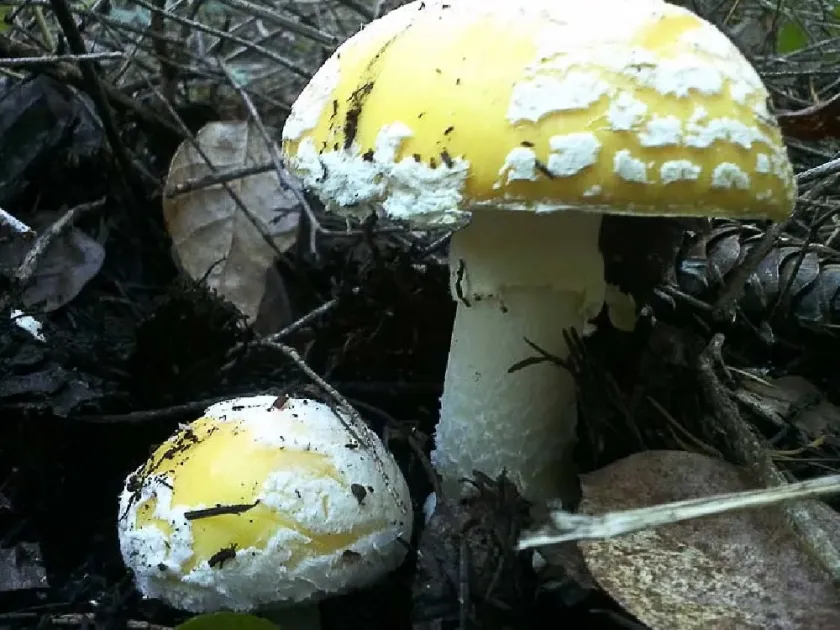
The Gemmed Amanita is characterized by a cap ranging from 3 to 10 cm in diameter, exhibiting bright yellow to ochre hues that make it easily recognizable.
The cap surface is typically adorned with distinct white or pale yellow warts, which are remnants of the universal veil that may wash off after rainfall.
The gills are free from the stem, crowded, and consistently white, providing a reliable diagnostic feature for mycologists and field experts.
The stem reaches a height of 5 to 12 cm and features a distinct volva at the base, which often appears as a small, collar-like rim.
The texture of the cap margin is often finely striate, which adds to the specific appearance of this species compared to other Amanita varieties.
Pathogen
It is crucial to clarify that Amanita gemmata is not a plant pathogen and does not cause any form of agricultural crop diseases.
This fungus functions as a mycorrhizal organism, establishing a beneficial symbiotic relationship with the root systems of various tree species.
Rather than attacking plants, the fungal mycelium helps trees and shrubs uptake nutrients and water more efficiently from the soil.
The organism is an essential component of forest ecosystems, contributing to soil health and the breakdown of organic matter in the forest floor.
Labeling it as a disease or a pathogen is a fundamental misclassification in terms of agricultural and plant pathology standards.
Conditions for development
This species thrives in forest environments, specifically favoring acidic soils often found under pine and deciduous tree canopies.
The development of fruiting bodies is closely tied to periods of high soil moisture and moderate temperatures throughout the summer and autumn.
It prefers well-drained but humid conditions where the fungal mycelium can successfully interact with host tree roots.
The spread of the fungus occurs via spores, which are disseminated by wind and can colonize suitable habitats over large geographical areas.
Environmental stability within the forest ecosystem is a key factor that allows for consistent fruiting of this mycorrhizal species.
Why it matters
The Gemmed Amanita poses no threat to crop yield, quality, or plant health, making it an economically neutral species in agriculture.
The primary concern regarding this fungus is its toxicity, as it contains neurotoxic substances that can cause severe illness if ingested.
There are no known agricultural impacts associated with this species, such as fruit rot, blight, or root damage to cultivated plants.
Field managers do not need to implement any eradication strategies, as the fungus does not interfere with standard farming operations.
Public safety remains the only significant concern, necessitating awareness to prevent accidental consumption by foraging individuals.
Protection
No agricultural control measures, including pesticides or fungicides, are necessary for this fungus as it is not a pest or a disease.
Preventative strategies should focus exclusively on public education regarding the identification and toxicity of wild mushrooms.
Land management practices should maintain the natural balance of forest soil without attempting to remove mycorrhizal fungus colonies.
For safety reasons, individuals working in fields near forest edges should be trained to avoid handling or consuming these mushrooms.
- Educational workshops on mushroom toxicity.
- Proper signage in areas where poisonous species are prevalent.
- Focusing on sustainable forest management instead of eradication.
Discussion
No discussions yet — be the first.