
Fusarium rot (Fusarium cortaderiae)
Fusarium cortaderiae
The causative agent of this disease is the fungus Fusarium cortaderiae, a member of the Ascomycota phylum and part of the Fusarium fujikuroi species complex.
What the section contains
Fusarium rot (Fusarium cortaderiae)
This pathogen is highly adapted to infecting various plant tissues and possesses a complex life cycle, producing microconidia, macroconidia, and chlamydospores for survival.
The biological characteristics of F. cortaderiae allow it to persist in crop residues and soil, acting as a long-term reservoir for potential infections.
It predominantly targets cereal crops, establishing its presence through specialized enzymatic pathways that degrade plant cell walls.
The fungus is notorious for its ability to produce potent mycotoxins, which pose significant safety risks and complicate the management of grain products.
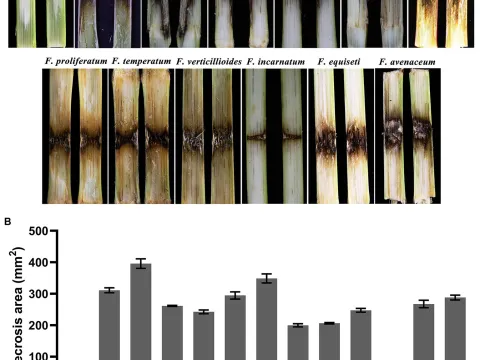
Initial symptoms often include necrotic lesions on the stem base or roots, leading to browning and eventual rotting of the plant tissues.
Under humid conditions, a characteristic mycelial growth, often appearing white to pink, can be observed on the affected organs of the plant.
Spike infection typically leads to premature whitening of the ears, a condition often referred to as blight, resulting in shriveled or empty grains.
As the infection progresses, the internal vascular systems of the plant are compromised, significantly inhibiting the transport of water and nutrients.
- Browning of the crown and stem base.
- Pinkish fungal growth on ears.
- Shriveled and deformed grain development.
- Stunted growth and plant wilting.
The development of Fusarium cortaderiae is heavily influenced by moderate temperatures and high relative humidity during critical growth stages.
The infection process is most active during the anthesis phase of cereal crops, as rainfall and moisture facilitate the movement of spores onto the ears.
Fields with a history of intensive cereal cropping often accumulate high spore loads in the soil, which increases the likelihood of severe outbreaks.
Mechanical damage to the plants, caused by insects, birds, or severe weather conditions like hail, provides entry points for the pathogen.
Lack of proper crop rotation practices helps the pathogen to maintain a high inoculum potential across consecutive growing seasons.
The primary concern regarding this pathogen is the substantial reduction in yield potential, which can lead to significant financial losses for farmers.
Grain contaminated with F. cortaderiae is often unsafe for human or animal consumption due to the presence of harmful mycotoxins.
The disease reduces the vigor of the seedlings, which can lead to poor stand establishment and potential crop failures in the early spring.
Furthermore, the pathogen predisposes infected plants to secondary infections, weakening the overall resilience of the crop population.
Harvesting and processing costs are often increased as specialized cleaning and sorting are required to remove infected, low-quality grains.
Effective control starts with implementing diverse crop rotation programs, replacing cereals with non-host crops to starve the pathogen.
Using certified, fungicide-treated seeds is an essential step to prevent the introduction of the fungus into clean fields.
Proper soil management, including the deep incorporation of crop residues, helps speed up the decomposition of infected debris.
Applying systemic fungicides at the flowering stage is a critical intervention to protect the grain heads from infection during vulnerable periods.
Selecting and planting resistant or tolerant varieties remains the most sustainable approach to long-term disease management in affected regions.